913–943
The Volga route, 913–943
Around 913 a Rus' fleet of 500 ships reaches the Caspian Sea by way of the Black Sea, the Don and the Volga, after promising the Khazar ruler half its plunder. The Rus' raid the coast around Abaskun, Tabaristan and Gilan, cross to Baku and plunder Arran and Shirvan, taking women and children as slaves. On the way home Muslim troops of the Khazars attack them in the Volga delta, and the Arab historian al-Masudi writes that the Burtas and the Volga Bulgars kill those who escape.
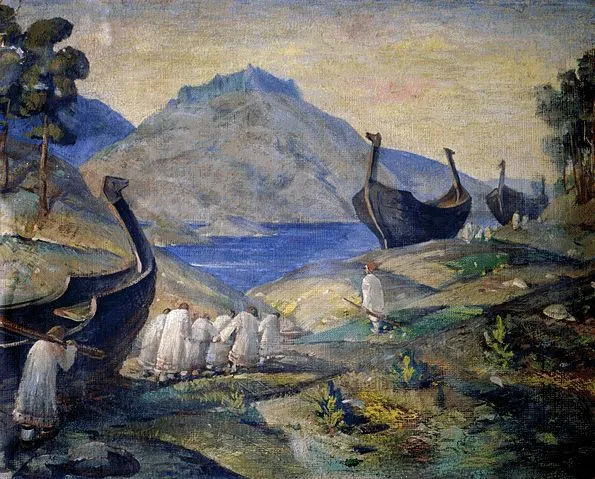 Rus' traders haul their boats over a portage between two rivers, a painting by Nicholas Roerich, 1915Wikimedia Commons, Nicholas Roerich, Public domain (Volok by Roerich.jpg)
In June 921 an embassy of the Abbasid caliph al-Muqtadir leaves Baghdad for Almış, king of the Volga Bulgars, with Ahmad ibn Fadlan as its expert in Islamic law. It travels through Iran and Khwarazm and across the lands of the Oghuz, the Pechenegs and the Bashkirs, and reaches the Bulgar capital on 12 May 922. By the Bulgar camp on the Volga, Ibn Fadlan meets Rus' merchants who have come to sell furs and slave girls.
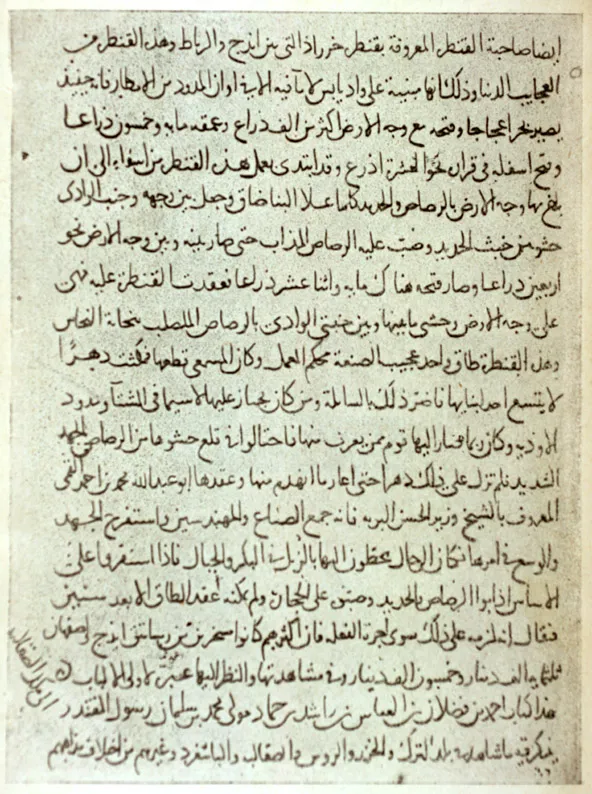 The opening page of Ibn Fadlan’s account in a 13th-century manuscript, Razavi Library, Mashhad, MS 5229Wikimedia Commons, unknown scribe, Public domain (Ibn Fadhlan manuscript.jpg)
He describes them as tall and fair, tattooed from toe to neck, each man with an axe, a sword and a knife. Their women wear boxes of iron, silver, copper or gold on their breasts, and the merchants pray to carved wooden posts for good trade. He watches the funeral of a chieftain who is burned in his ship together with a slave girl killed to follow him.
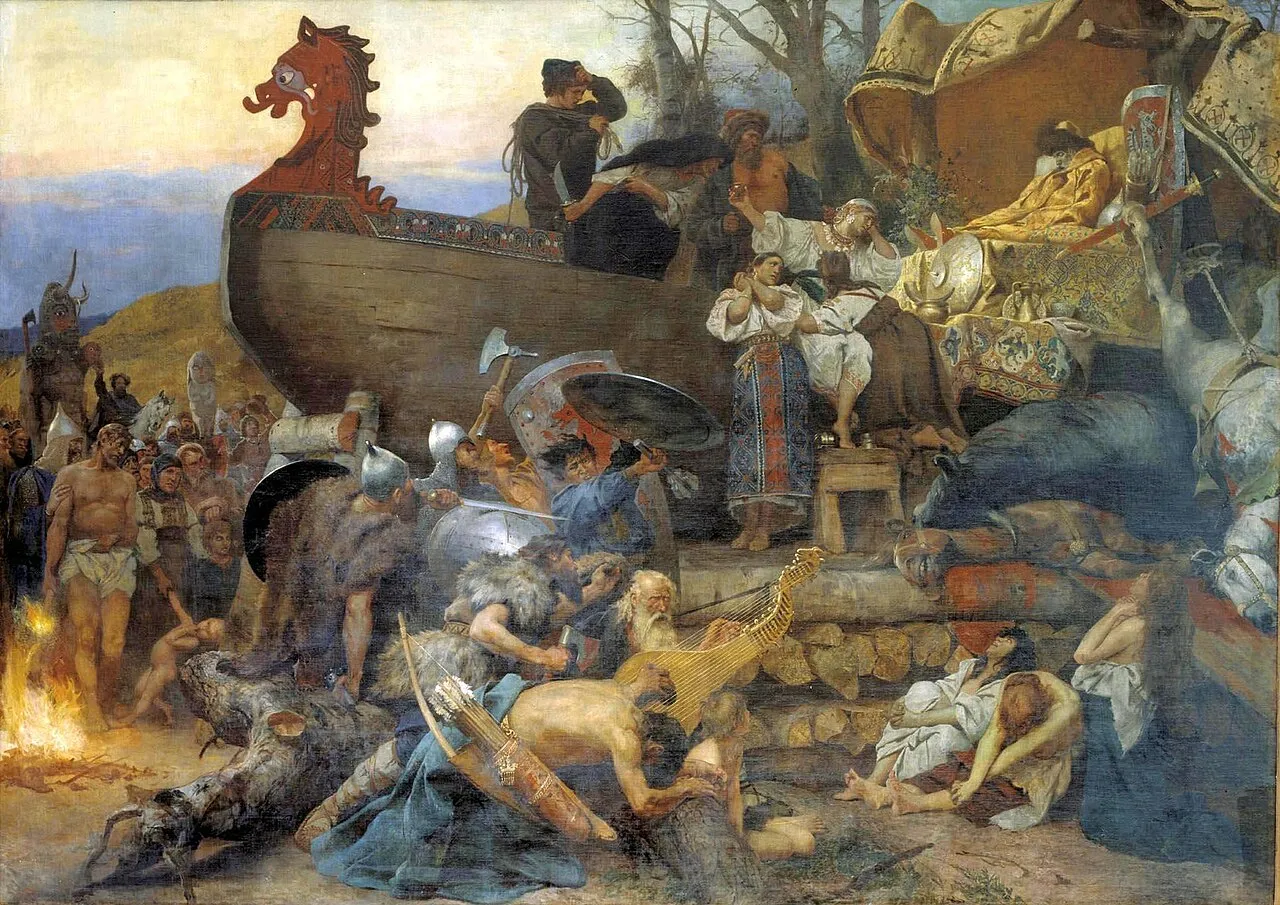 The funeral of a Rus' chieftain as Ibn Fadlan describes it, a painting by Henryk Siemiradzki, 1884Wikimedia Commons, Henryk Siemiradzki, Public domain (Funeral of ruthenian noble by Siemiradzki.jpg)
In 943 the Rus' row up the Kura River into the Caucasus, defeat the troops of Marzuban ibn Muhammad and take Bardaa, the capital of Arran. Ibn Miskawayh writes that they hold the town for several months and plunder the country around until dysentery breaks out among them. Besieged in the fortress, they leave by night with their plunder and captives for their ships on the Kura.
Sources
- Ahmad ibn Fadlan, Mission to the Volga, translated by James E. Montgomery (2017).
- Al-Masudi, The Meadows of Gold, on the Rus' raid on the Caspian of about 913.
- F. Donald Logan, The Vikings in History (2nd ed. 1992).
Prev: Rurik and Oleg, 862–911Next: Igor, Olga and the Greek fire, 941–957