c. 900 – 1100
The thing and the law
The thing is the assembly of the free men of a district. It meets at fixed times in the open, often by a mound or a waterway, to settle disputes, judge cases and decide matters for the district, and a case left unsettled at a local thing goes to a larger regional one. The lawspeaker memorises the law, recites it at the assembly and presides with the chieftain or the king. The Thing of all Swedes meets at Uppsala, where by Snorri Sturluson's account the lawspeaker Þorgnýr reminds King Olof Skötkonung that power lies with the people, a story historians doubt.
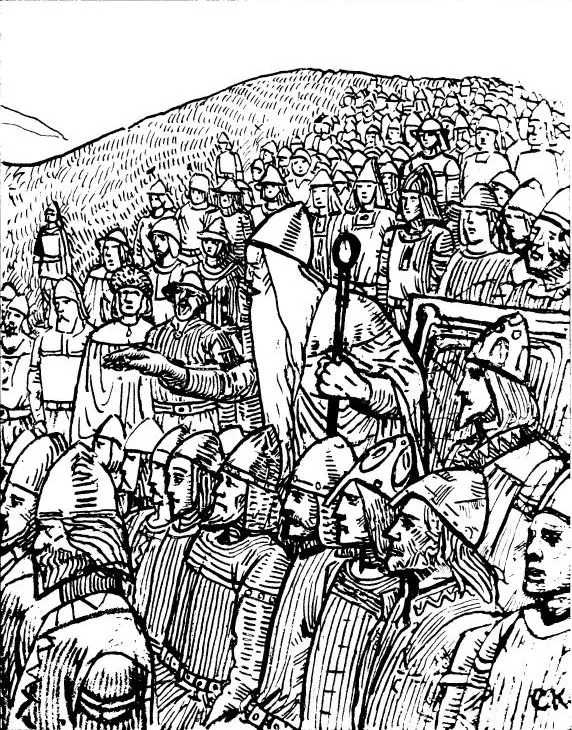 The lawspeaker Þorgnýr addresses King Olof at the thing in Uppsala, a drawing by Christian Krohg for the 1899 edition of HeimskringlaWikimedia Commons, Christian Krohg, Public domain (Olav den helliges saga CK5.jpg)
In Norway four regional things serve as the highest courts and law assemblies. The Gulating meets at Gulen north of Bergen from early in the 10th century for western Norway, and the Frostating meets at Tinghaugen on Frosta for Trøndelag. By Snorri's account Haakon the Good (935–961) takes part in the assemblies at Gulen and adds Rogaland, Agder and Sunnmøre to the Gulating's area. The Older Gulating Law, the oldest Norwegian law code, is probably first written down under Olaf the Peaceful (1066–1093), and it fines the kin of a killer along with the killer himself.
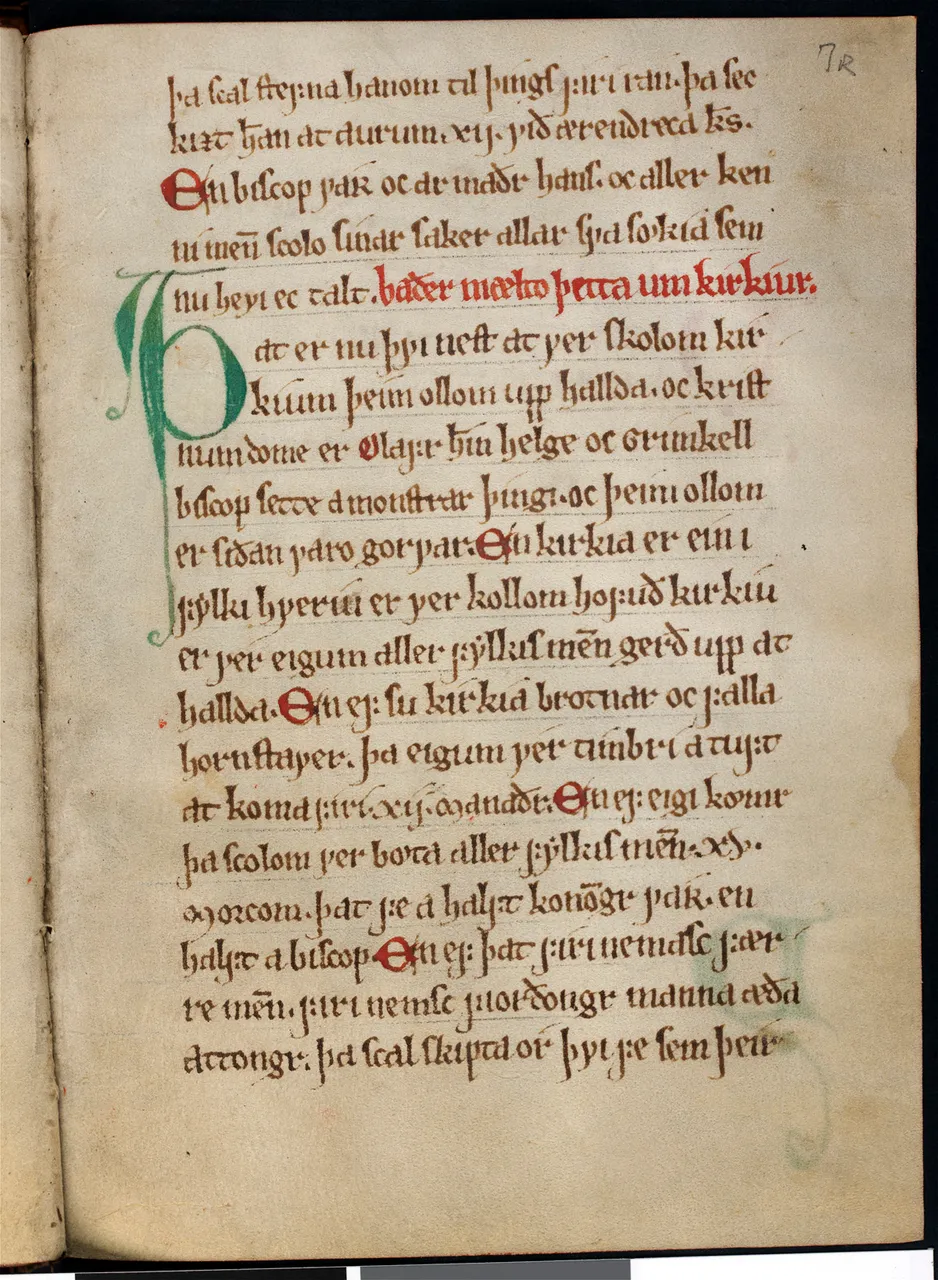 A page of the Older Gulating Law in the Codex Rantzovianus of about 1260, Royal Library, CopenhagenWikimedia Commons, unknown author, Public domain (Gulatingslova.jpg)
Iceland, settled from Norway, has no king, and its Althing meets each summer at Þingvellir from 930. By tradition its first law, brought by Úlfljótr, follows the Gulating law. The lawspeaker, elected for three years, recites a third of the law each summer from the Law Rock, and the 39 chieftains, the goðar, with nine others make the law in the Lögrétta. The thing of the Faroes meets on the point of Tinganes in Tórshavn.
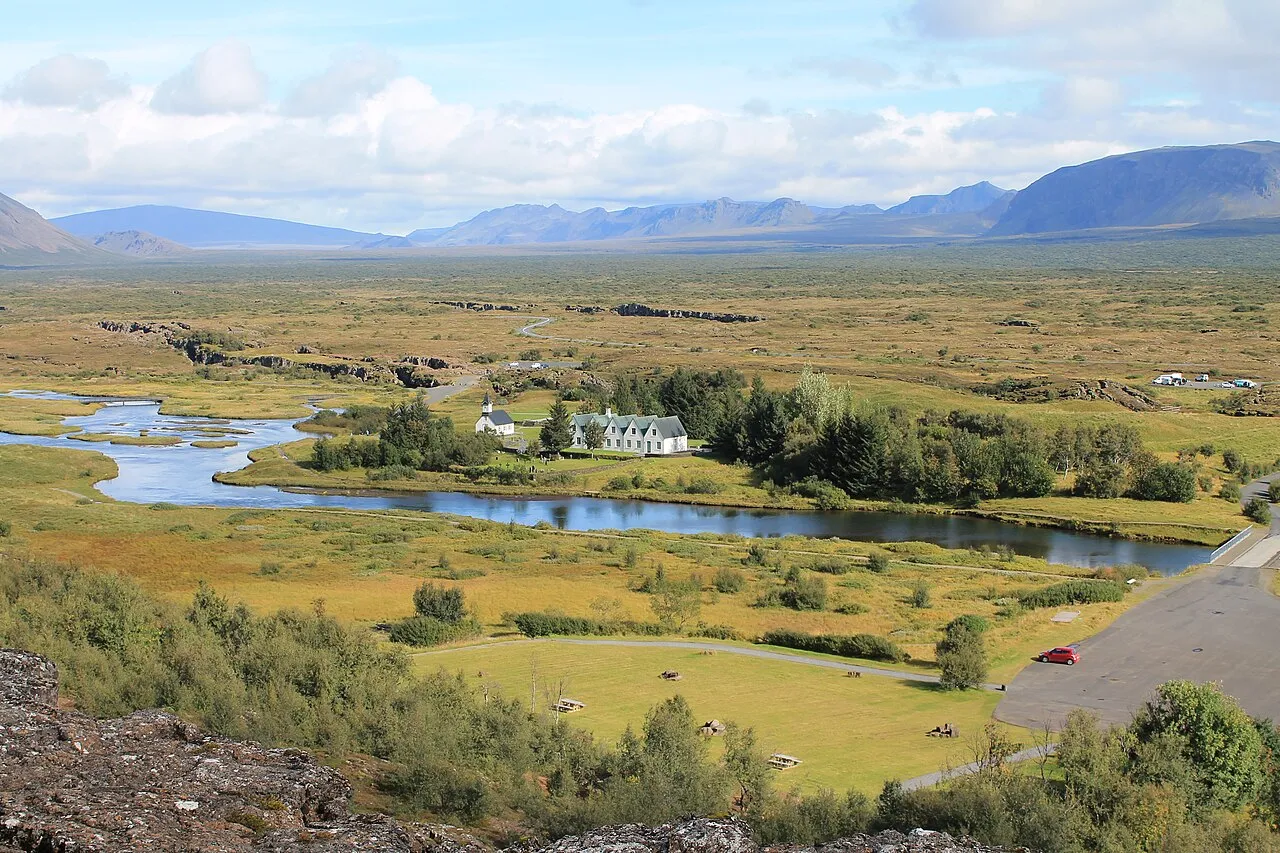 Þingvellir, where the Althing met from 930, seen from the edge of the rift valley in 2012Wikimedia Commons, Ivan Sabljak, CC BY-SA 3.0 (Þingvellir from the information centre.JPG)
Norse settlers take the assembly to the British Isles, and its name survives in places named after the thing field, þingvöllr. Tynwald on the Isle of Man dates from 979 by tradition, though the written evidence begins in the 13th century, and it still meets in the open on Tynwald Hill each July. Dingwall in Ross, Tingwall in Shetland, Tinwald in Dumfriesshire and Thingwall on the Wirral, Tuigvelle in the Domesday Book of 1086, share the name. In Dublin the Thingmote, an assembly mound 40 feet high, stands until 1685, and in the Danelaw the meeting place of Thynghowe in Sherwood Forest is identified in 2005.
Sources
- Erik Simensen (ed.), The Older Gulathing Law (2021).
- Lester B. Orfield, The Growth of Scandinavian Law (1953).
- Gunnar Karlsson, The History of Iceland (2000).
Prev: Jarls, farmers and thrallsNext: Gods, temples and ship burials