20 – 25 September 1066
Harold marches north
Harold Godwinson spends the summer of 1066 on the south coast, waiting for an invasion from Normandy, and dismisses the militia on 8 September. When he learns of the Norwegian landing he marches north with his housecarls and as many thegns as he can gather, travelling day and night. He covers the 300 km from London to Tadcaster in about four days and arrives on 24 September, the day York surrenders to Harald.
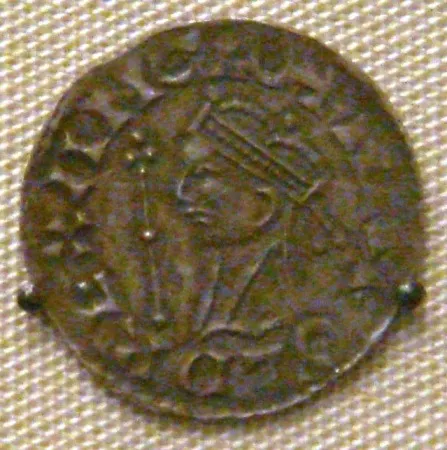 A silver penny of Harold II, struck in 1066Wikimedia Commons, PHGCOM, Public domain (Harold II 1066.jpg)
Harald has left no troops in York, and the Northumbrians are to bring the hostages and supplies to Stamford Bridge, a crossing of the Derwent about 11 km east of the city. On the morning of 25 September Harold marches through York towards it. The same morning Harald and Tostig leave Riccall with two thirds of the army. A third stays with the ships under Harald’s son Olaf, Eystein Orri and the earls of Orkney.
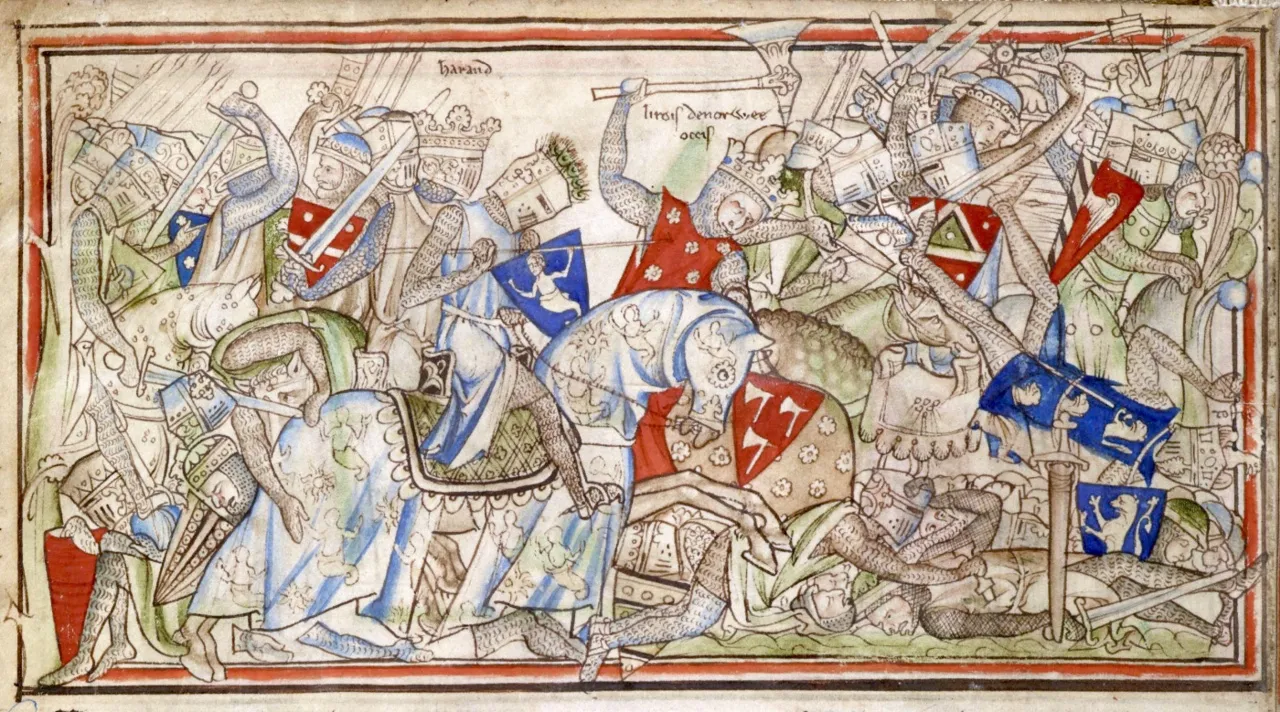 The Battle of Stamford Bridge in Matthew Paris’s Life of King Edward the Confessor, about 1250–1260, Cambridge University Library, MS Ee.3.59Wikimedia Commons, Matthew Paris, Public domain (Battle of Stamford Bridge, full.png)
The Norwegians expect no fighting, and by Snorri’s account the day is hot, so many leave their mail shirts at the ships. They wait on both banks of the river and know nothing of an English army until it comes into view.
Manuscripts C, D and E of the Anglo-Saxon Chronicle name Stamford Bridge. Tradition places the main fight on Battle Flats, the rising ground east of the river. Charles Plummer reads the Chronicle’s words “beyond the bridge” from the Norwegian side, which puts the fight on the west bank. In 2020 metal detectorists found Viking military objects near Low Catton, 1.6 km south on the east bank, and take them for traces of the battle.
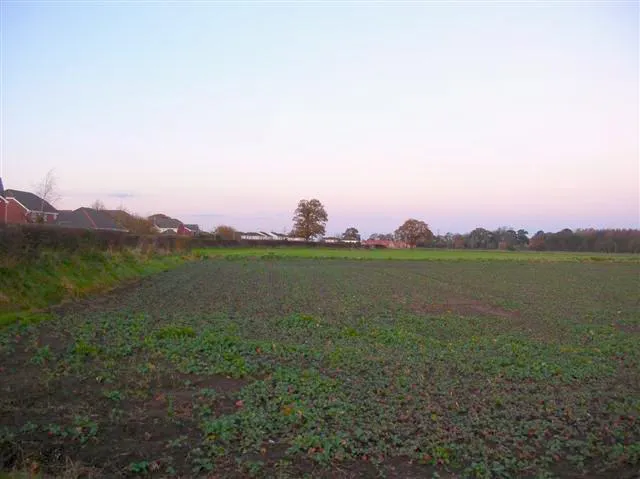 Battle Flat, the field east of Stamford Bridge where tradition places the battle, in 2006Wikimedia Commons, DS Pugh, CC BY-SA 2.0 (Battle Flat - geograph.org.uk - 285158.jpg)
Sources
- Michael Swanton (ed. and tr.), The Anglo-Saxon Chronicles (2nd ed. 2000), pp. 196 to 198.
- Kelly DeVries, The Norwegian Invasion of England in 1066 (1999), p. 268.
- Charles Plummer and John Earle (eds.), Two of the Saxon Chronicles Parallel (1899), vol. 2, p. 256.
Prev: Riccall and Fulford, 1066Next: The fight at the bridge