786 – 1009
Silver and trade
Scandinavians pay in silver by weight, and only trading towns such as Ribe and Hedeby use coins. Traders carry small folding scales and weights, cut coins, ingots and arm rings into hacksilver and nick the pieces to test the metal. Silver is counted in marks of about 200 g, and many arm rings are made to half a mark.
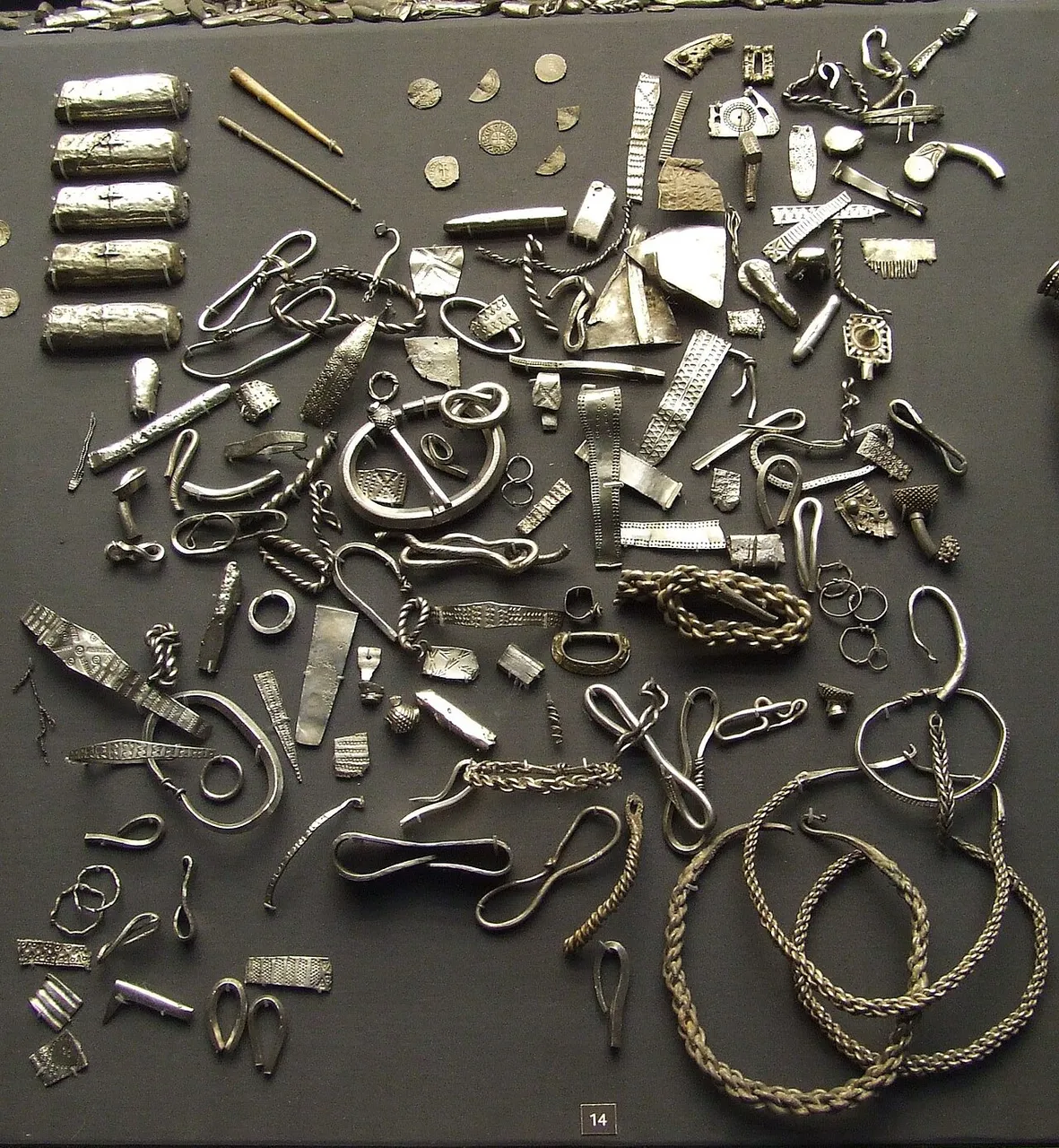 Ingots, hacksilver, jewellery and coins from the Cuerdale hoard, buried about 905, British Museum, LondonWikimedia Commons, unknown photographer, CC BY-SA 3.0 (Cuerdale hoard viking silver british museum.JPG)
Most of the silver comes from the Islamic world. Rus' traders bring furs and slaves down the Volga to Bulgar and to the Khazar city of Atil, and some cross the Caspian and go on by camel to Baghdad, as Ibn Khordadbeh writes about 885. Dirhams reach Scandinavia from at least 786 to 1009, and Gotland alone has yielded more than 700 silver hoards with 168,000 coins from the Arab world, North Africa and Central Asia. The largest, found at Spillings near Slite in 1999, holds 67 kg of silver with 14,200 dirhams from 69 mints, the latest struck in 870.
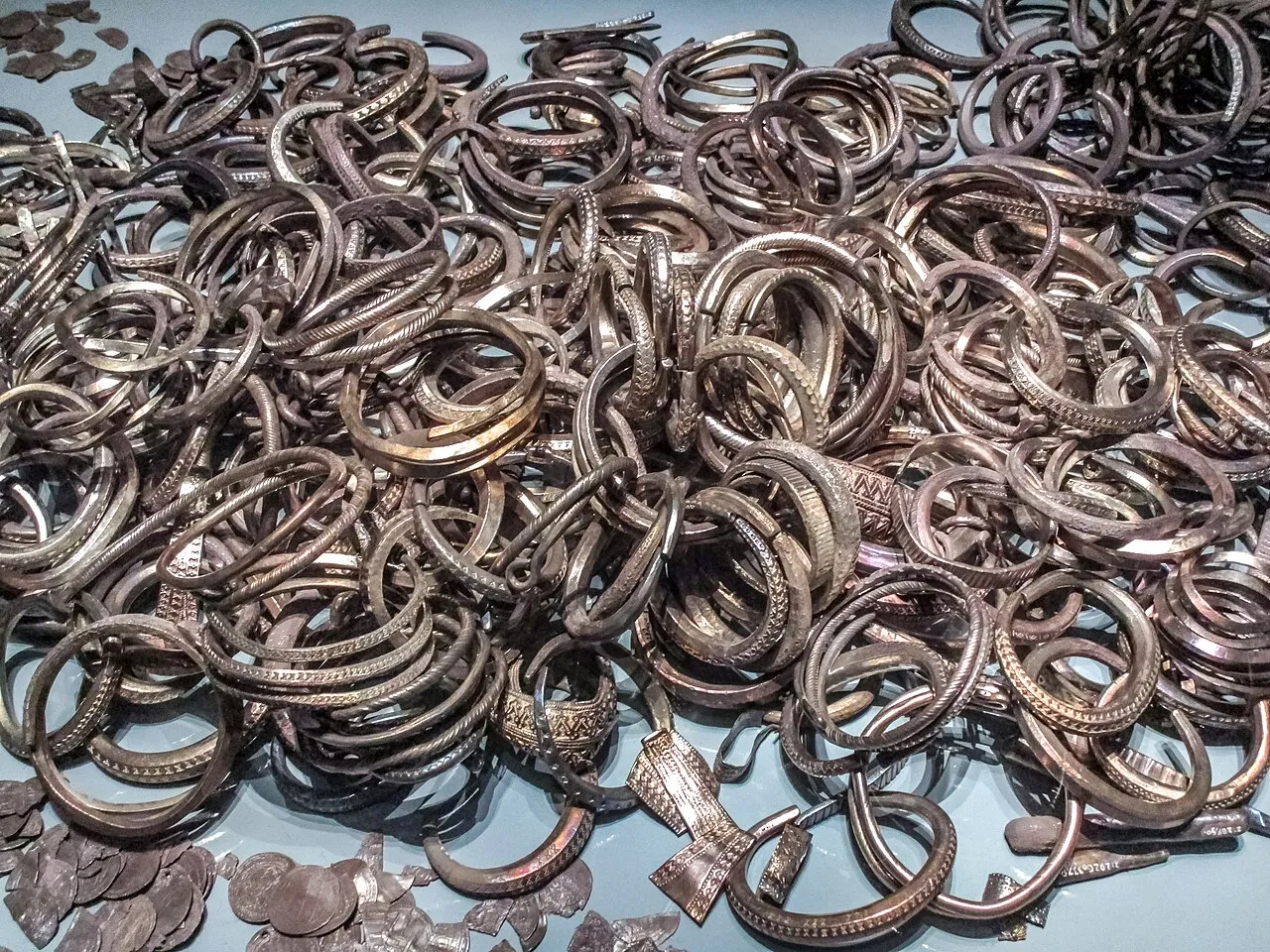 Arm rings and coins from the second cache of the Spillings hoard, Gotland Museum, VisbyWikimedia Commons, W.carter, CC BY-SA 4.0 (Spillings Silver Hoard 2 closeup.jpg)
From the north come furs, down, walrus ivory and ropes of whale and seal hide. Ohthere of Hålogaland tells King Alfred about 890 that the Sámi pay him tribute in marten, reindeer and bear skins, feathers and ship's ropes, and that he sails round the Kola Peninsula into the White Sea chiefly to hunt walrus for their tusks. He gives Alfred walrus ivory and describes his voyage south by way of Sciringes heal, probably Kaupang, to Hedeby. Amber from the shores of the Baltic and the North Sea is worked into beads and sold.
In the west, hoards mix silver from raids, tribute and trade. The Cuerdale hoard, buried beside the Ribble near Preston between 903 and 910, holds more than 8,600 coins, ingots, jewellery and pieces of hacksilver, with coins of the Viking kingdoms of eastern England, of Alfred's Wessex and of Frankish, Islamic and Byzantine mints. The Vale of York hoard, found near Harrogate in 2007, fills a gilt silver cup from a Carolingian workshop with 617 coins and 65 other objects from places as far apart as Samarkand and Ireland.
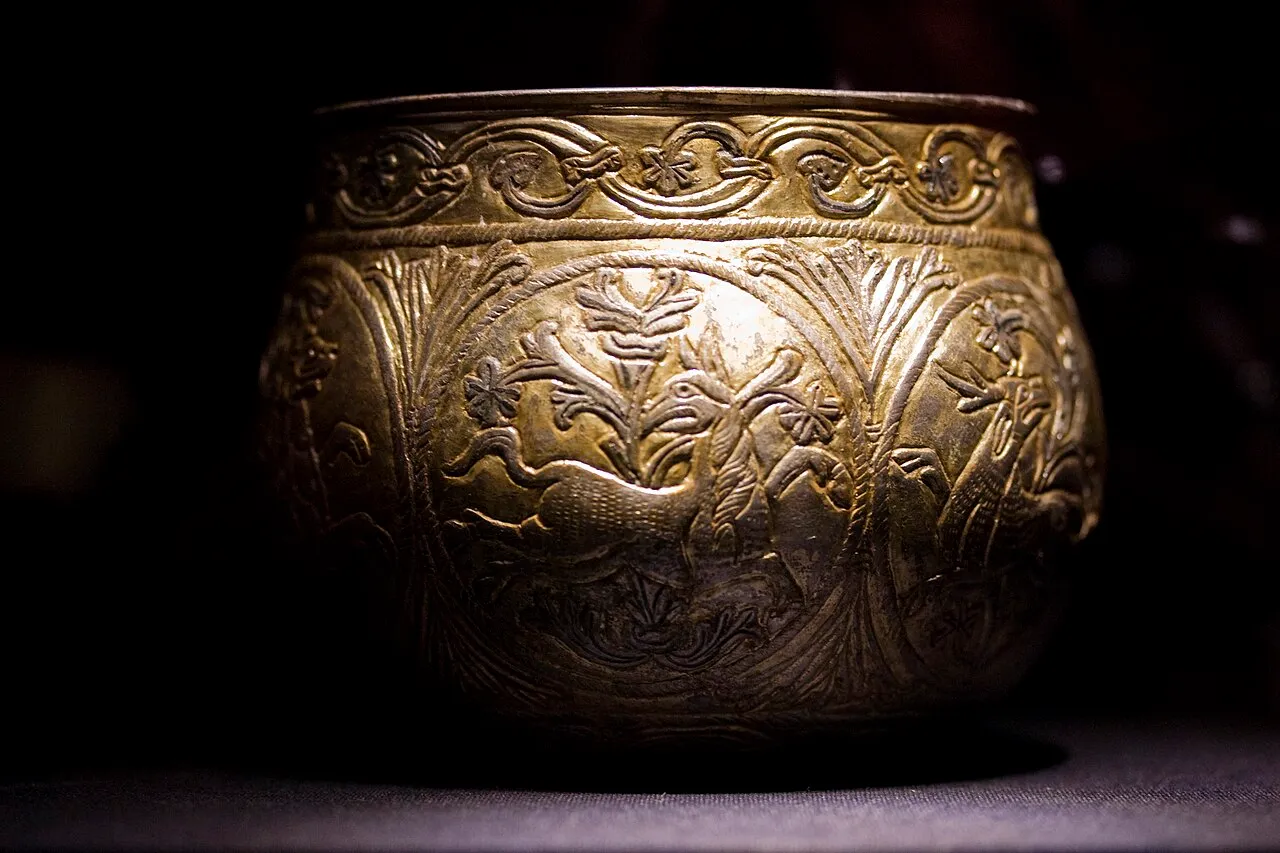 The gilt silver cup that held most of the Vale of York hoard, made in a Carolingian workshop in the mid-9th century, British Museum and Yorkshire MuseumWikimedia Commons, vintagedept, CC BY 2.0 (Vale of York Hoard Cup.jpg)
Sources
- Ohthere’s account, in the Old English Orosius written in Wessex about 890.
- Paul Lunde and Caroline Stone (translators), Ibn Fadlan and the Land of Darkness: Arab Travellers in the Far North (2012), appendix 1.
- James Graham-Campbell, Viking Treasure from the North West: The Cuerdale Hoard in Context.
Prev: Gods, temples and ship burialsNext: Runes and runestones