911
Rollo and Saint-Clair-sur-Epte, 911
Rollo leads the Danes who have settled on the lower Seine around Rouen. Dudo of Saint-Quentin, writing about a century later for Rollo’s grandson, calls him a Dane, while the Norse sagas make him Hrólfr, son of the jarl of Møre in western Norway. His earliest well attested appearance is among the leaders of the Danes at the siege of Paris in 885–886.
 Rollo, the first duke of Normandy, in a genealogical roll of the 13th centuryWikimedia Commons, unknown artist, Public domain (RolloA.jpg)
In the spring of 911 Rollo lays siege to Chartres. On 20 July a relief army under Robert, Count of Paris and brother of Odo, Richard, Duke of Burgundy, and Ebles, Count of Poitiers, attacks the besiegers while Bishop Gantelme leads a sortie from the city. Most of the Danish army is surrounded and surrenders, and Rollo escapes by Jeufosse to Rouen with a few companions.
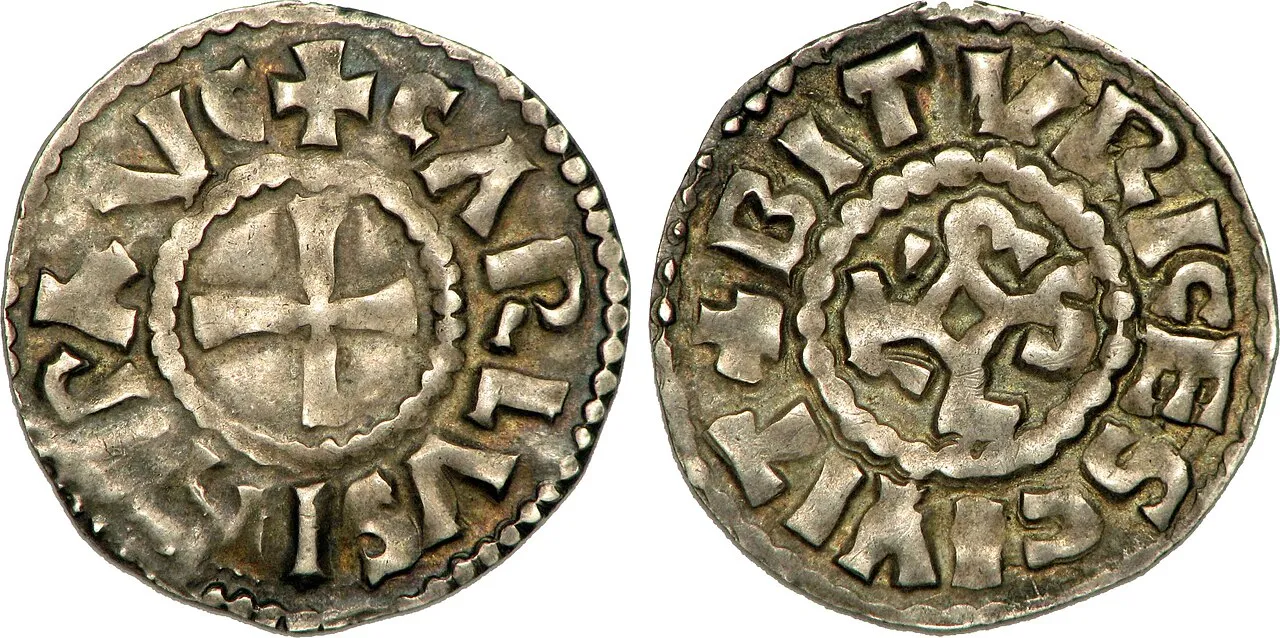 A silver denier of Charles the Simple struck at BourgesWikimedia Commons, cgb.fr, CC BY-SA 3.0 (Denier sous Charles III le Simple.jpg)
Later in 911 King Charles the Simple meets Rollo at Saint-Clair-sur-Epte. Rollo receives Rouen and the land between the Epte and the sea, and in return is baptised with Robert of Paris as his godfather, takes the name Robert and promises to defend the mouth of the Seine against other Vikings. The terms are known only from Dudo, and a charter of Charles of 918 confirms an earlier grant to “the Normans of the Seine”.
Rollo shares out the land between the Epte and the Risle among his chieftains and rules from Rouen. In 927 he hands his place to his son William Longsword, and he dies between 928 and 933.
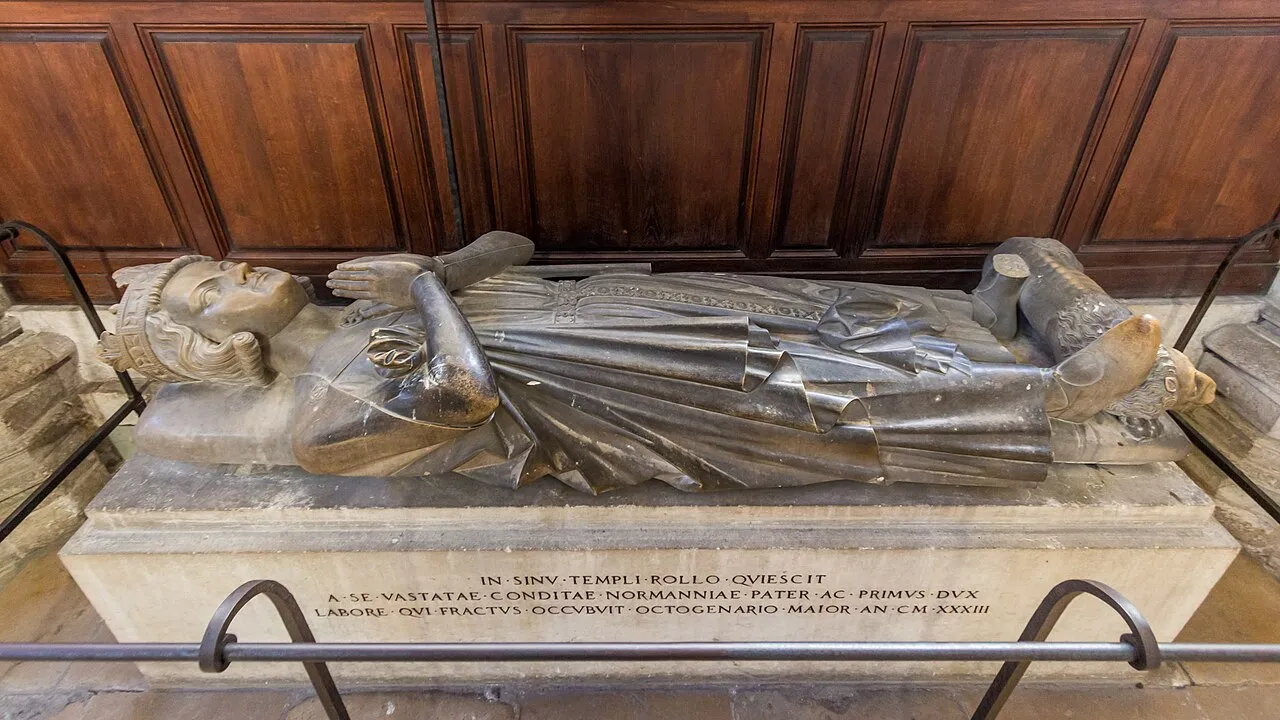 The tomb of Rollo in Rouen Cathedral, whose inscription has him die in 933 aged over eightyWikimedia Commons, Raimond Spekking, CC BY-SA 4.0 (Effigy of Rollo of Normandy, Notre-Dame de Rouen-8542.jpg)
Sources
- Dudo of Saint-Quentin, History of the Normans (translation, 1998).
- D. C. Douglas, "Rollo of Normandy", The English Historical Review 57 (1942), pp. 417 to 436.
- David Bates, Normandy before 1066 (1982).
Prev: The flood and the fall of the small tower, February 886Next: The duchy of Normandy, 911–1066