c. 870–1014
Orkney and the Isles, c. 870–1014
Norse settlers come to Orkney and Shetland in the late 8th and early 9th centuries, and the Picts of the islands lose their land to them. Whether this happens in peace or by force is debated. The Norse call Orkney and Shetland Norðreyjar, the Northern Isles, and the Hebrides and Man Suðreyjar, the Southern Isles.
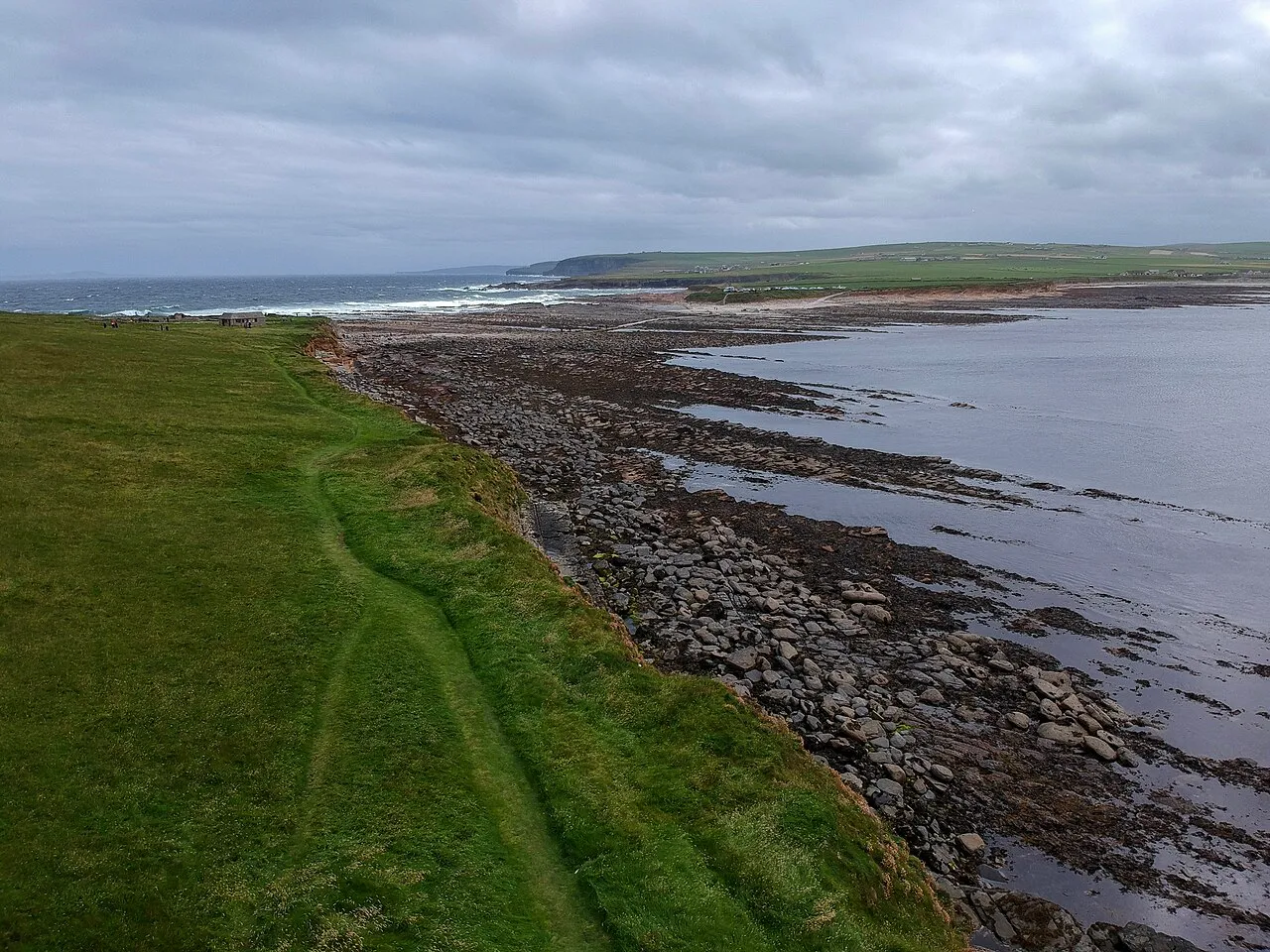 The Brough of Birsay in Orkney, a tidal island with Pictish and Norse remains, at low tideWikimedia Commons, Matthew Prior, CC BY-SA 4.0 (Brough of Birsay showing causeway.jpg)
The Orkneyinga saga, written down in Iceland in the early 13th century, tells that Harald Fairhair, king of Norway, takes the Northern Isles about 875 and gives them as an earldom to Rognvald of Møre. Rognvald passes them to his brother Sigurd the Mighty, earl until about 892, who wins Caithness and Sutherland on the Scottish mainland together with Thorstein the Red. Rognvald’s son Torf-Einarr, earl from about 895 to 910, founds the line of earls that rules Orkney for centuries. Some historians think the story of Harald’s voyage is modelled on the expeditions of Magnus Barefoot two centuries later.
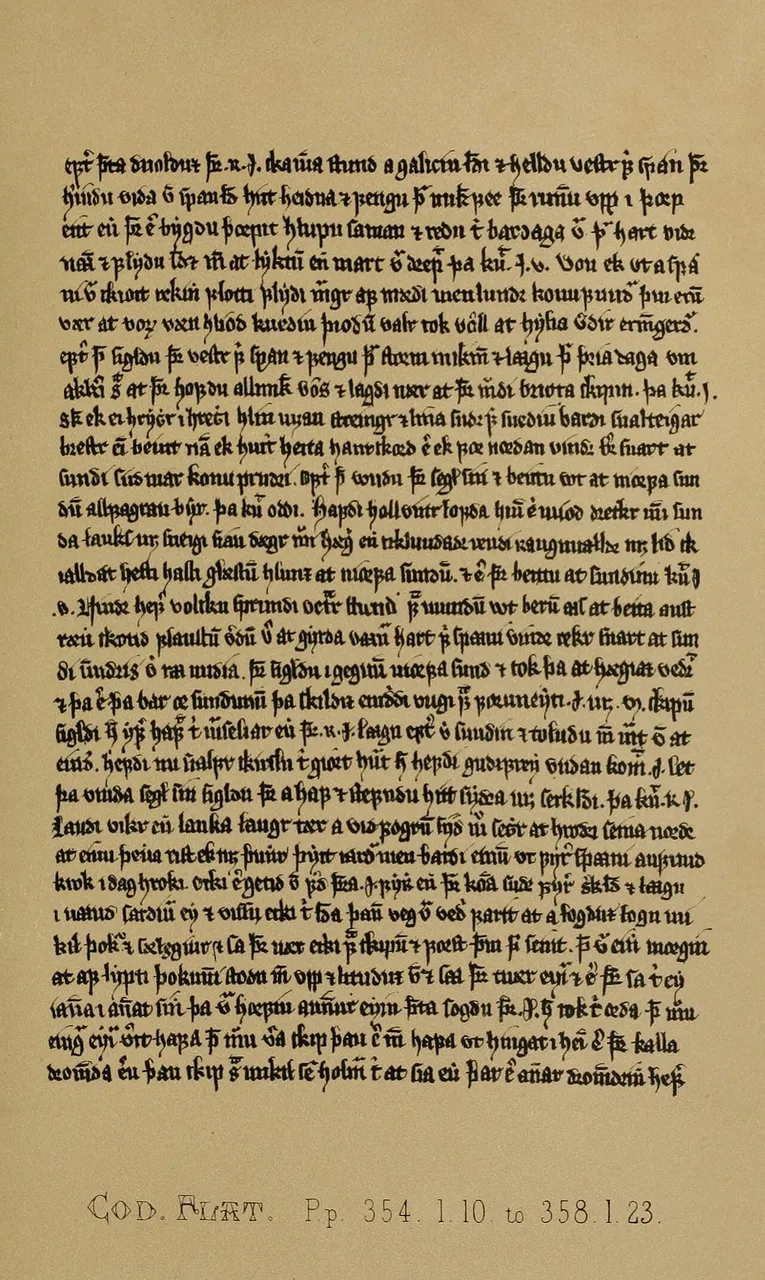 Part of the Orkneyinga saga in the Flateyjarbók, an Icelandic manuscript of the late 14th century, in a facsimile printed before 1887Wikimedia Commons, Magnus Þórhallsson, Public domain (Flatey Book, Orkneyinga saga.jpg)
For the Hebrides and Man the sources are mostly Irish annals and sagas. The Norse probably hold Man by 900, and Amlaíb Cuarán, king of Dublin, dies in religious retirement on Iona in 980 or 981. On Christmas night 986 Danes sack Iona and kill the abbot and fifteen elders of the monastery. In 987 Gofraid son of Harald, king of the Isles, wins the battle of Man.
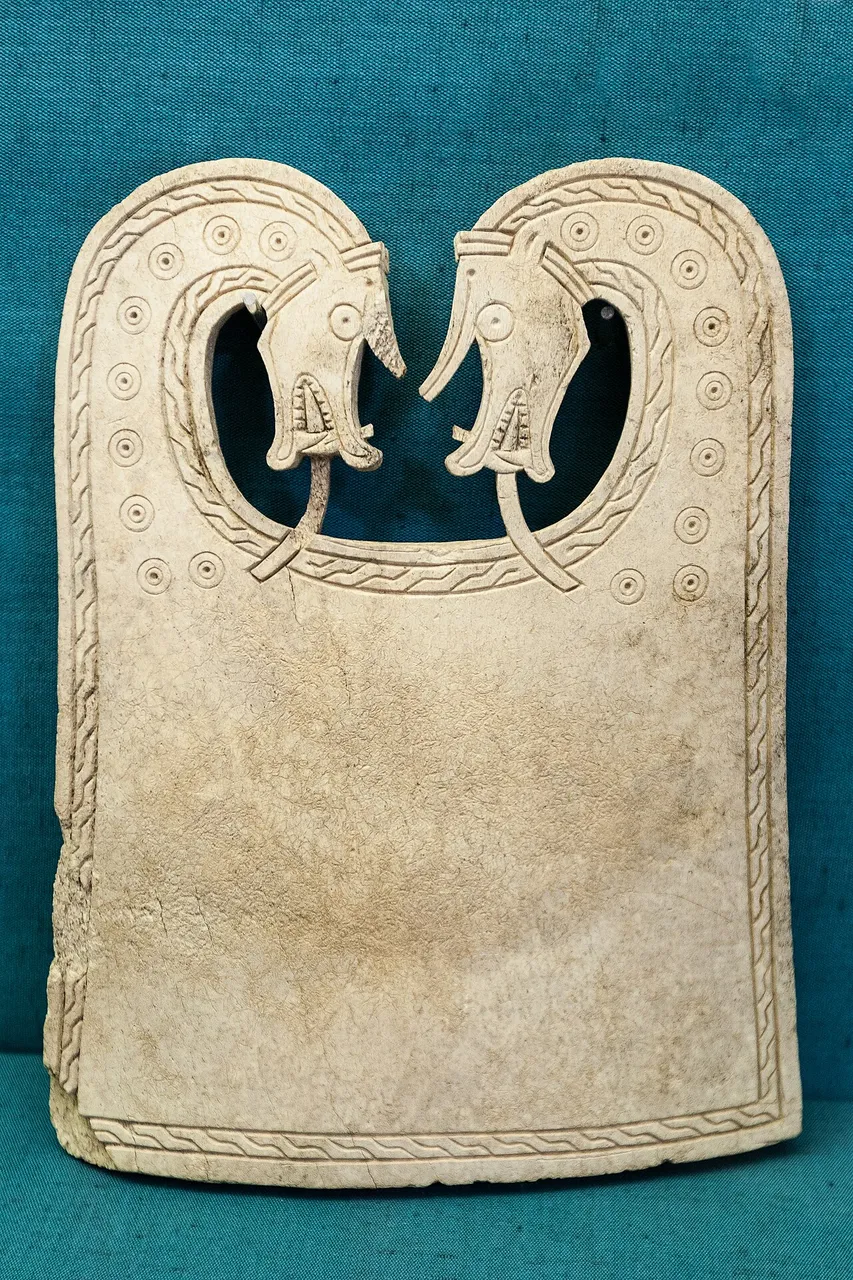 A whalebone plaque with two animal heads from the Scar boat burial on Sanday, Orkney, made between 875 and 950, Orkney MuseumWikimedia Commons, MichaelMaggs, CC BY-SA 4.0 (Scar Plaque, Scar Viking boat burial, Sanday, Orkney.jpg)
Sigurd the Stout, earl from about the 980s, holds Orkney, Shetland and Caithness, and from about 990 the Hebrides, where he places a jarl named Gilli. By the Orkneyinga saga his mother makes him a raven banner that brings victory to the army it goes before and death to the man who carries it, and with it he defeats Findláech of Moray. The saga tells that Olaf Tryggvason, sailing from Dublin to Norway in 995, makes Sigurd accept baptism at South Walls. The Annals of Ulster record Sigurd’s death at Clontarf in 1014, the earliest mention of the earldom of Orkney.
Sources
- Orkneyinga saga, The History of the Earls of Orkney, translated by Hermann Pálsson and Paul Edwards (1981).
- Barbara E. Crawford, The Northern Earldoms: Orkney and Caithness from AD 870 to 1470 (2013).
- William P. L. Thomson, The New History of Orkney (2008).
Prev: Ímar, Amlaíb and Dumbarton, 853–902Next: The return to Dublin, 914–919