1015–1028
Olaf Haraldsson
Olaf Haraldsson, son of Harald Grenske, a petty king in Vestfold, goes raiding as a youth in the Baltic, Denmark and England. Skaldic verse credits him with an attack that brings down London Bridge, perhaps in 1014, and he is baptised at Rouen while wintering with Duke Richard II of Normandy. Back in Norway in 1015, he declares himself king and wins over the five petty kings of the Uplands.
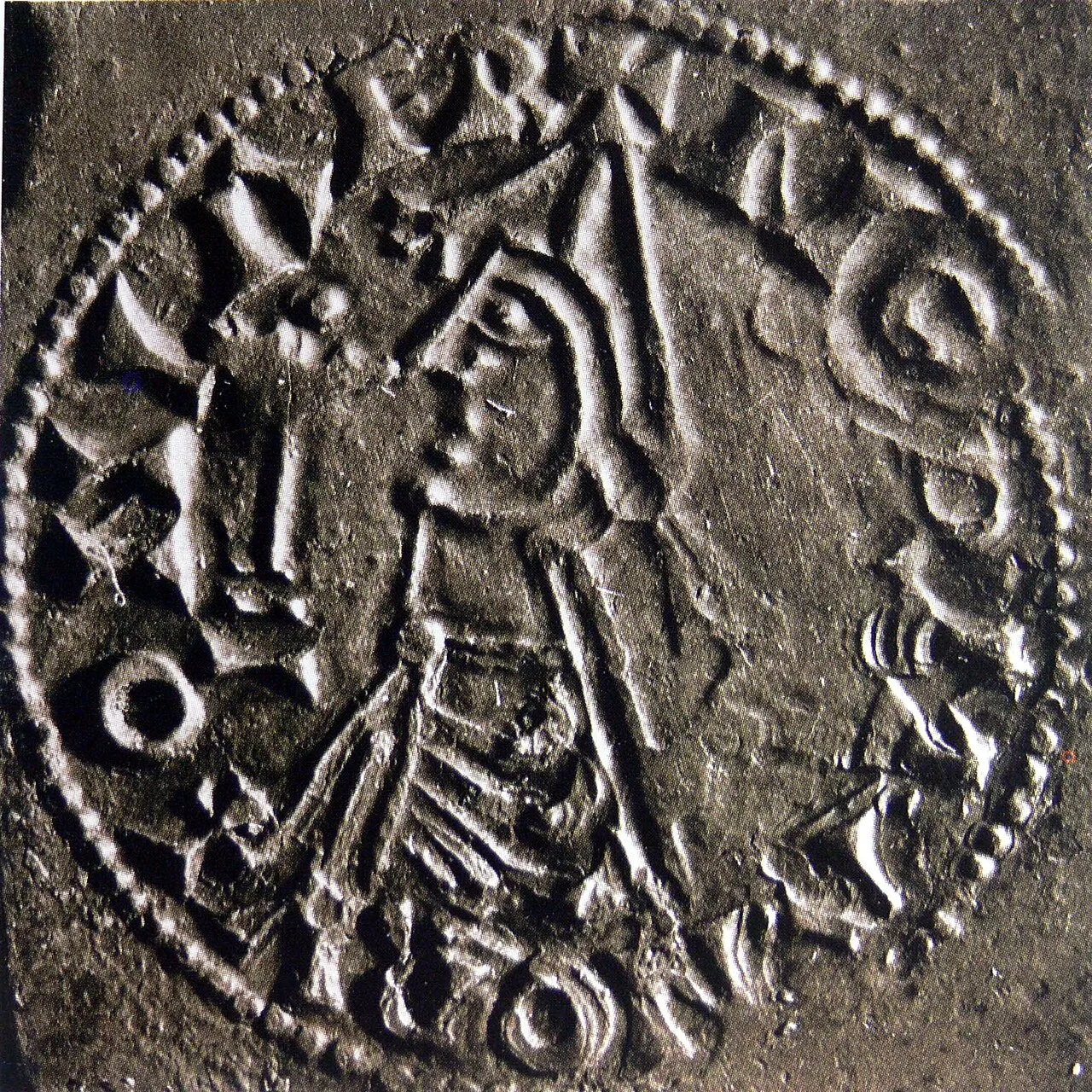 A silver penny of Olaf Haraldsson with the legend ONLAF R NORMANORV, struck between 1023 and 1028 and found at Stein in RingerikeWikimedia Commons, unknown author, Public domain (Olav der Heilige07.jpg)
On Palm Sunday, 25 March 1016, Olaf’s fleet meets that of Sveinn Hákonarson, jarl of Lade, and his ally Erling Skjalgsson off Nesjar at the western end of the Oslofjord. Sveinn is beaten and withdraws to Sweden, where he dies of illness. Olaf founds the town of Borg, now Sarpsborg, by the Sarpsfossen falls, and brings bishops from England and Normandy to organise the church.
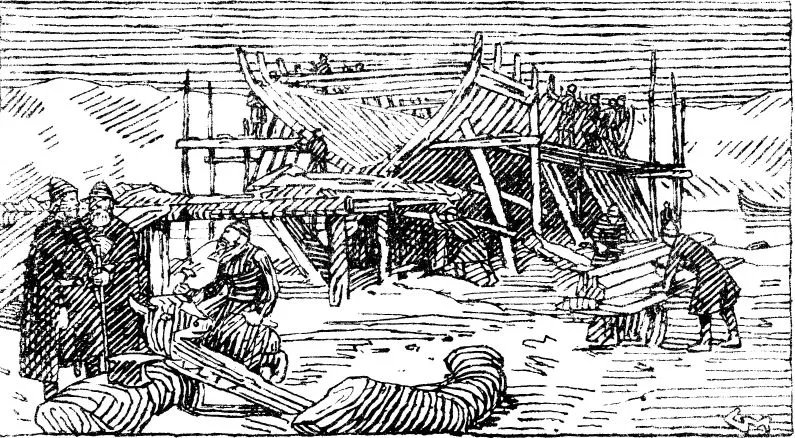 King Olaf has the ship Visund built, Gerhard Munthe’s illustration for the 1899 edition of Snorri’s sagas of the kingsWikimedia Commons, Gerhard Munthe, Public domain (Olav den helliges saga GM15.jpg)
While Cnut is busy in England, Olaf and King Anund Jacob of Sweden attack Denmark, and in 1026 they meet Cnut’s fleet at the Helgeå, the Holy River. By the sagas’ account they dam the river and release the water on the Danish ships, but Cnut’s larger fleet holds the sea and the two kings withdraw. The Anglo-Saxon Chronicle dates the battle to 1025 and gives the field to the Swedes, and its site, in Skåne or in Uppland, is disputed.
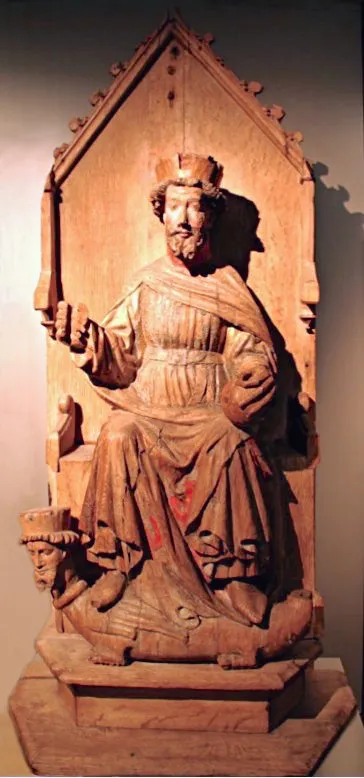 Saint Olaf enthroned, a 15th-century oak statue from Austevoll churchWikimedia Commons, Nina Aldin Thune, CC BY-SA 2.5 (Olav fra Austevold kirke.jpg)
In 1028 Cnut sails from England with 50 ships. The Norwegian nobles, many of them bribed, go over to him, and he is hailed king at Nidaros. Olaf flees through Eidskog into Sweden with his family, winters in Närke, takes a ship that Anund Jacob has left for him at Sigtuna and reaches Novgorod by way of Staraya Ladoga.
Sources
- Snorri Sturluson, Heimskringla, Saga of Olaf the Holy.
- Sigvatr Þórðarson, Nesjavísur.
- Claus Krag, Vikingtid og riksamling 800–1130 (1995).
Prev: Olaf Tryggvason and SvolderNext: Stiklestad