911–1066
The duchy of Normandy, 911–1066
In 924 King Rudolph of West Francia extends Rollo’s land west to the river Vire, taking in the Bessin around Bayeux, where Danes from England have settled, and the border lands of Maine. Rollo’s son William Longsword, count of Rouen from 927, supports Rudolph and in 933 receives the Avranchin and the Cotentin, which have to be taken from the Bretons. These grants bring Normandy roughly to the bounds of the church province of Rouen. In the Cotentin, settled by Norwegians, Old Norse is spoken for four or five generations.
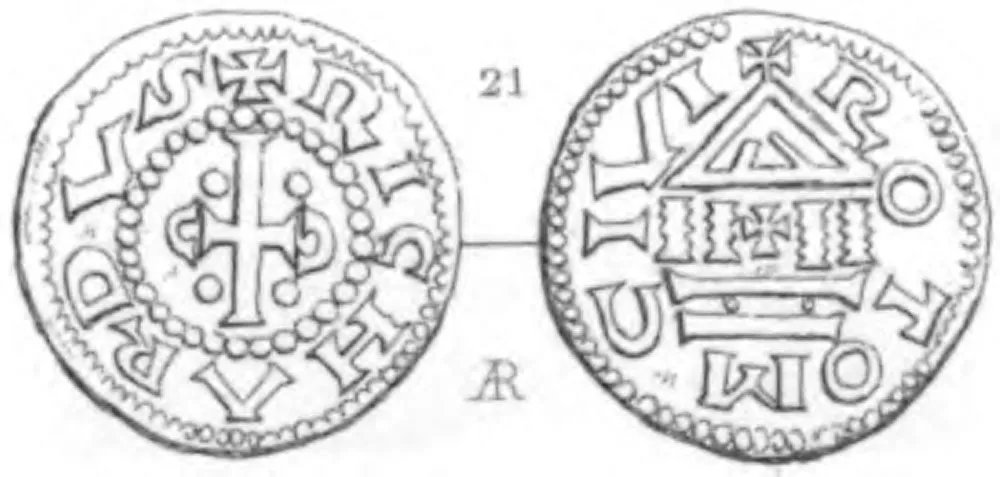 A silver denier of Richard I struck at Rouen, with his name and the name of the city, drawn by Faustin Poey d’Avant in the 19th centuryWikimedia Commons, Faustin Poey d’Avant, Public domain (Ric1Norm04.jpg)
On 17 December 942 men of Arnulf of Flanders kill William at a meeting on an island in the Somme at Picquigny. His son Richard I, born at Fécamp, succeeds him at the age of ten. A year later a Scandinavian named Setric lands in Normandy and leads some of the settlers back to the old gods. Richard rules until 996 and asks Dudo of Saint-Quentin to write a history of the Normans. Dudo’s work, the earliest account of Rollo and his heirs, is written to praise them.
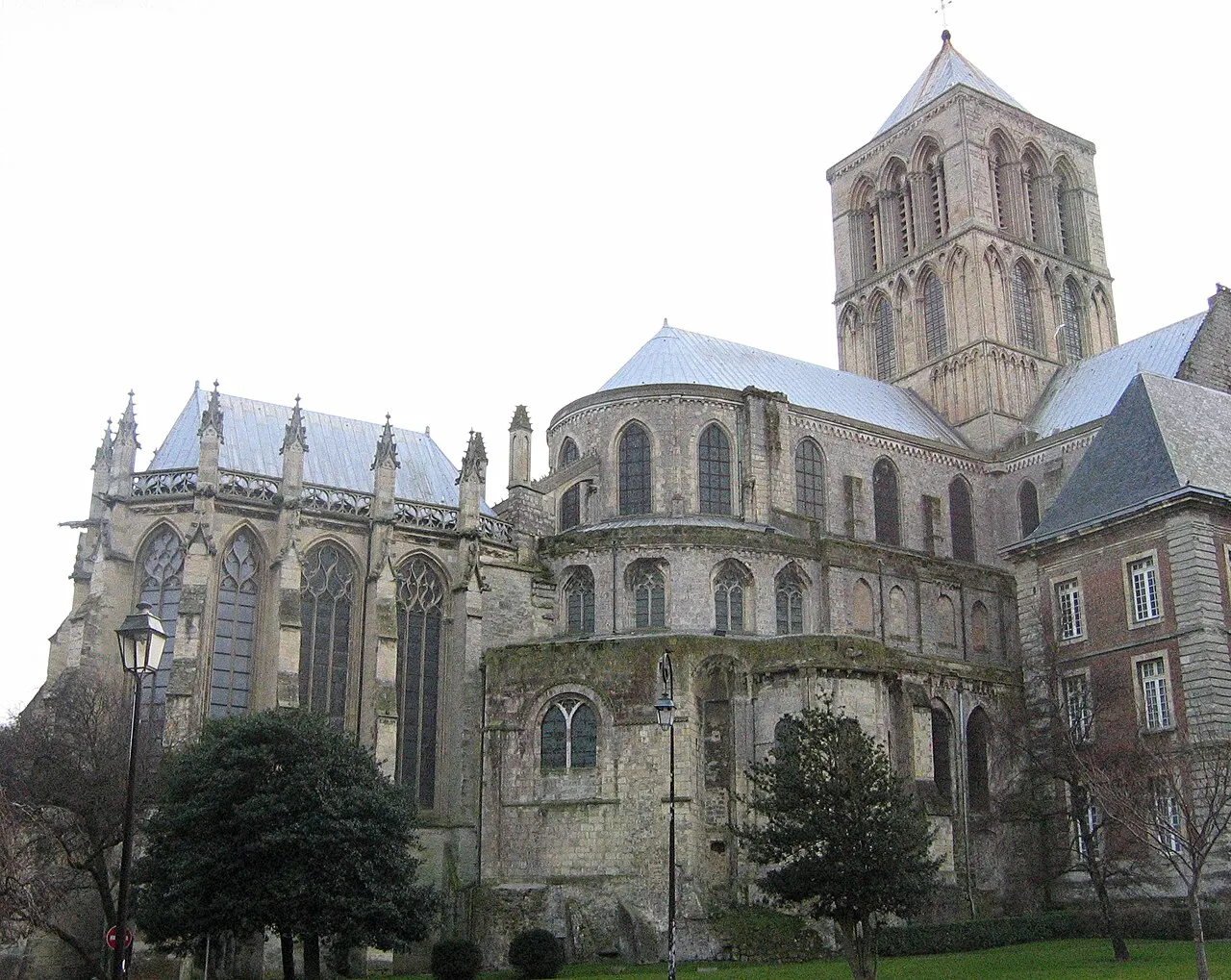 The abbey church of the Holy Trinity at Fécamp, rebuilt in the 12th and 13th centuriesWikimedia Commons, Urban, CC BY-SA 3.0 (Fecamp Abbey Chevet10.jpg)
Richard II, duke from 996 to 1026, is the first ruler of Normandy styled duke. He brings William of Volpiano to reform the abbey of Fécamp, where he and his father are buried, and he still hires Viking fleets against his enemies: Olaf Haraldsson fights for him and is baptised at Rouen in 1014. From about 1017 Norman knights serve as mercenaries in southern Italy, where they later found lordships of their own.
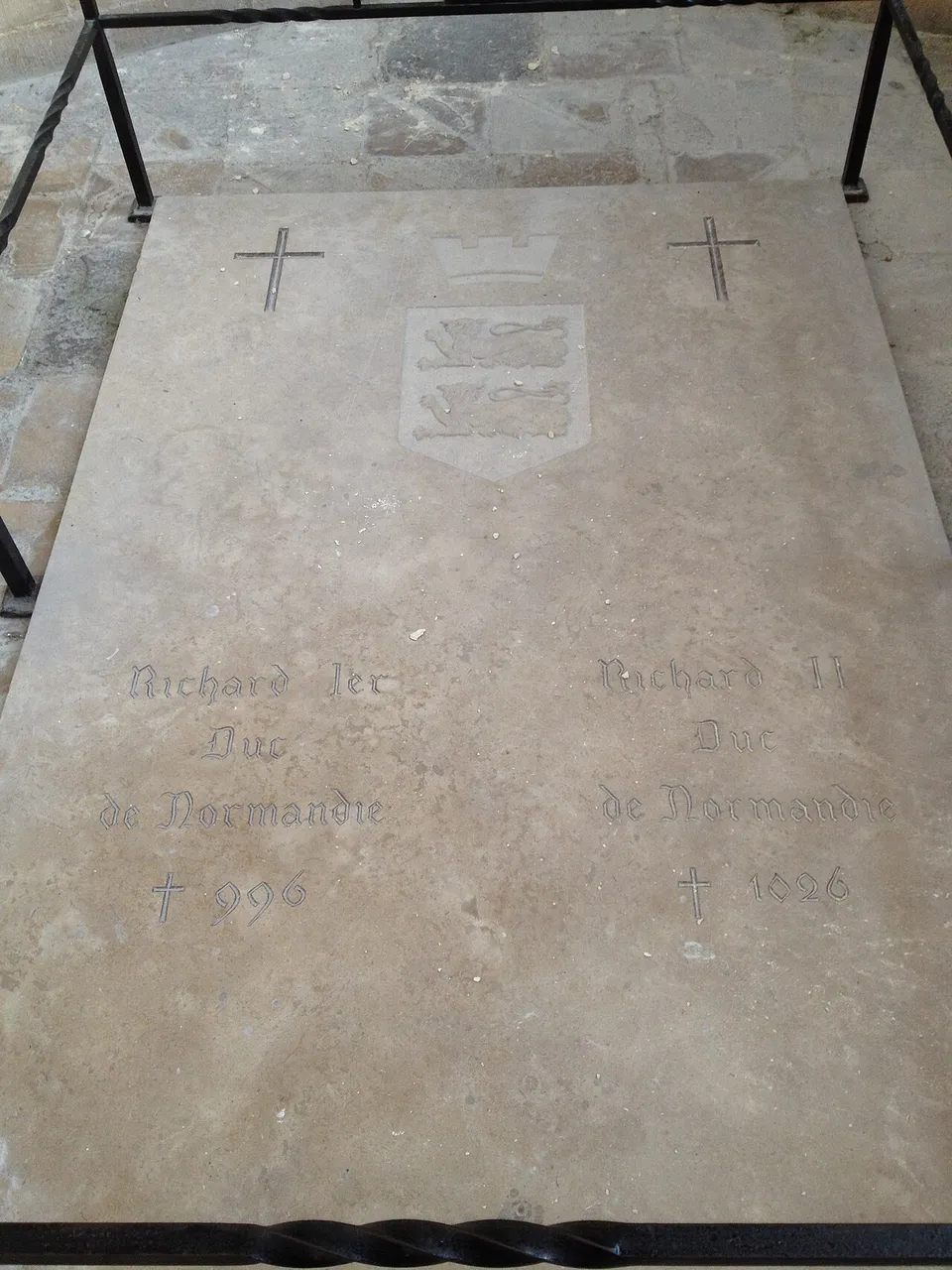 The tomb slab of Richard I and Richard II in the abbey church at FécampWikimedia Commons, Giogo, CC BY-SA 3.0 (Tombeau des ducs de Normandie.JPG)
In 1035 the duchy passes to William, the illegitimate son of Duke Robert I, born at Falaise about 1028. He holds Normandy securely by 1060, and in 1066 he defeats Harold Godwinson at Hastings and becomes king of England.
Sources
- Dudo of Saint-Quentin, History of the Normans (translation, 1998).
- David Bates, Normandy before 1066 (1982).
- Cassandra Potts, "Normandy 911–1144", in Christopher Harper-Bill and Elisabeth van Houts (eds.), A Companion to the Anglo-Norman World (2007).
Prev: Rollo and Saint-Clair-sur-Epte, 911Next: Longphorts and Dublin, 837–853