10 or 11 August 991
Byrhtnoth’s fall and the last stand
The Vikings come west over the water carrying their shields and form up on the mainland, and the two shield walls close. Byrhtnoth is wounded by a spear and kills his attacker, but he is struck down and dies urging his men on and commending his soul to God. Godric son of Odda mounts Byrhtnoth’s horse and flees to the wood with his brothers Godwine and Godwig.
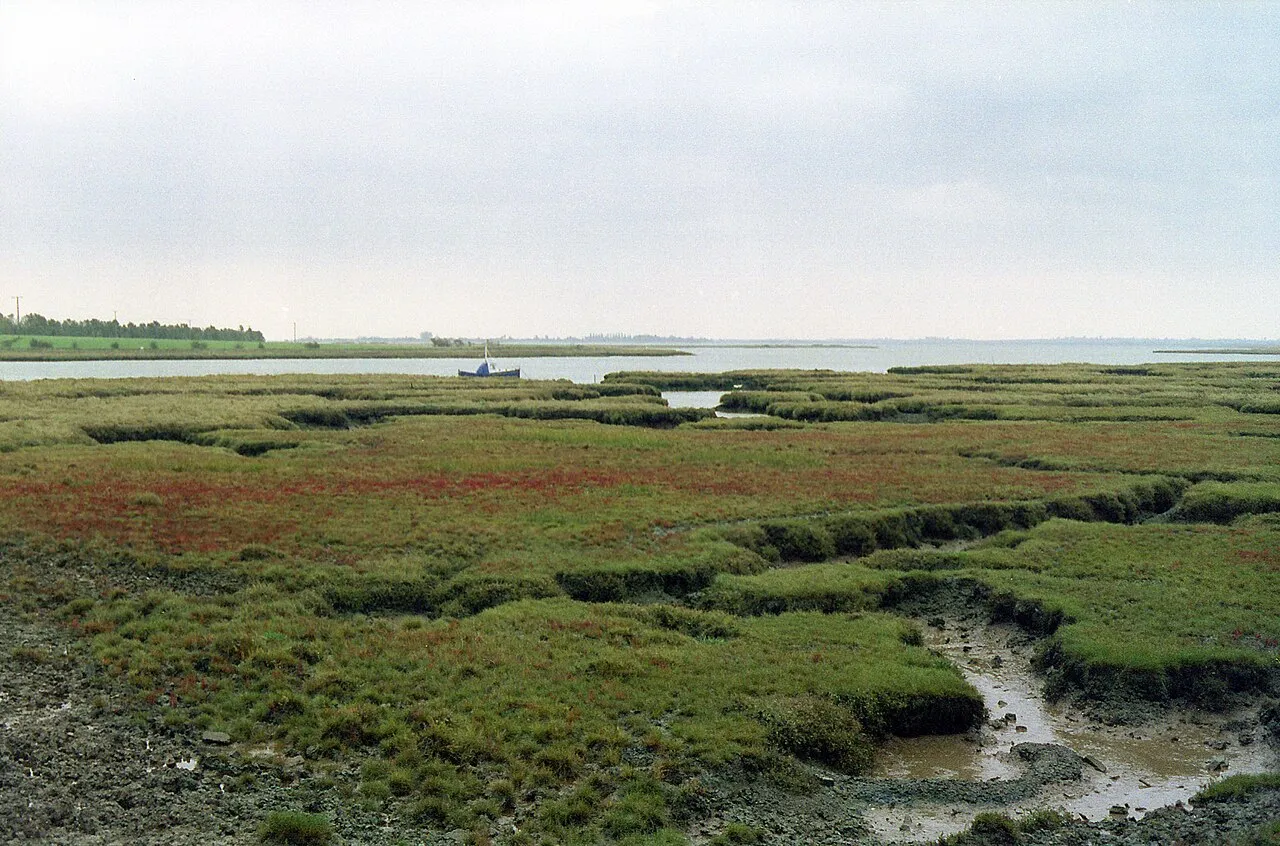 Salt marsh on the Blackwater by the site of the battle, 1998Wikimedia Commons, Ken Eckert, CC BY-SA 4.0 (Battle of Maldon Plains.jpg)
Many of the English recognise the horse by its trappings, take the rider for Byrhtnoth and run, and the levy breaks. The household troops stay and fight on around their lord’s body. Ælfwine, Offa, Leofsunu, Dunnere and the old retainer Byrhtwold speak in turn and fall one after another. The surviving text ends as a second Godric, son of Æthelgar, goes into the Viking ranks and is killed.
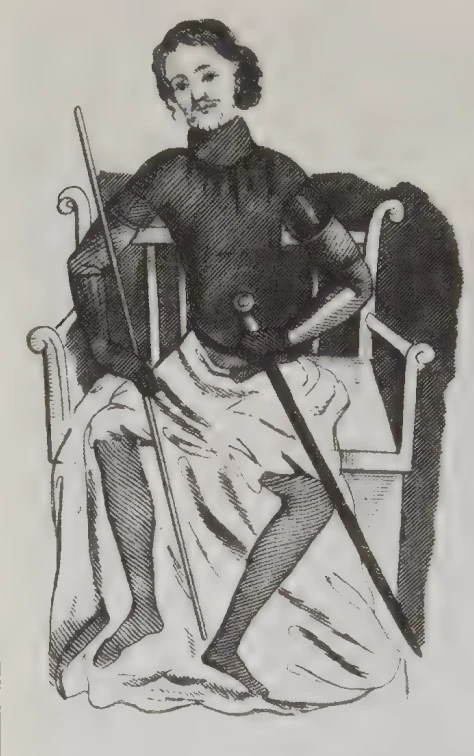 Byrhtnoth in an 18th-century drawing of the late medieval painting above his tomb in Ely CathedralWikimedia Commons, unknown artist, Public domain (Late medieval drawing of Byrhtnoth, ealdorman of Essex.png)
The monks of Ely take Byrhtnoth’s headless body to their abbey and bury it there. Byrhtferth of Ramsey writes that the Vikings lose so many men that they can hardly man their ships. On the advice of Archbishop Sigeric of Canterbury, King Æthelred pays them 10,000 pounds to leave, the first tribute to Viking raiders in generations.
Sources
- The Battle of Maldon, Old English poem.
- Byrhtferth of Ramsey, Life of St Oswald.
- Donald Scragg, The Return of the Vikings: The Battle of Maldon 991 (2006).
Prev: The causewayNext: St Brice’s Day and Thorkell’s army