870–930
The settlement of Iceland, 870–930
Ari Þorgilsson’s Íslendingabók, written between 1122 and 1133, and Landnámabók, the Book of Settlements, date the settlement of Iceland to the years after 870. By their account Ingólfr Arnarson from Sunnfjord in western Norway, who has left home after a blood feud, settles at Reykjavík in 874. Off the coast he throws his high-seat pillars overboard, and he builds his farm where his slaves find them three years later. Archaeology shows that settlement spreads quickly after a layer of volcanic ash dated to about 871, though a few houses in Reykjavík lie below it.
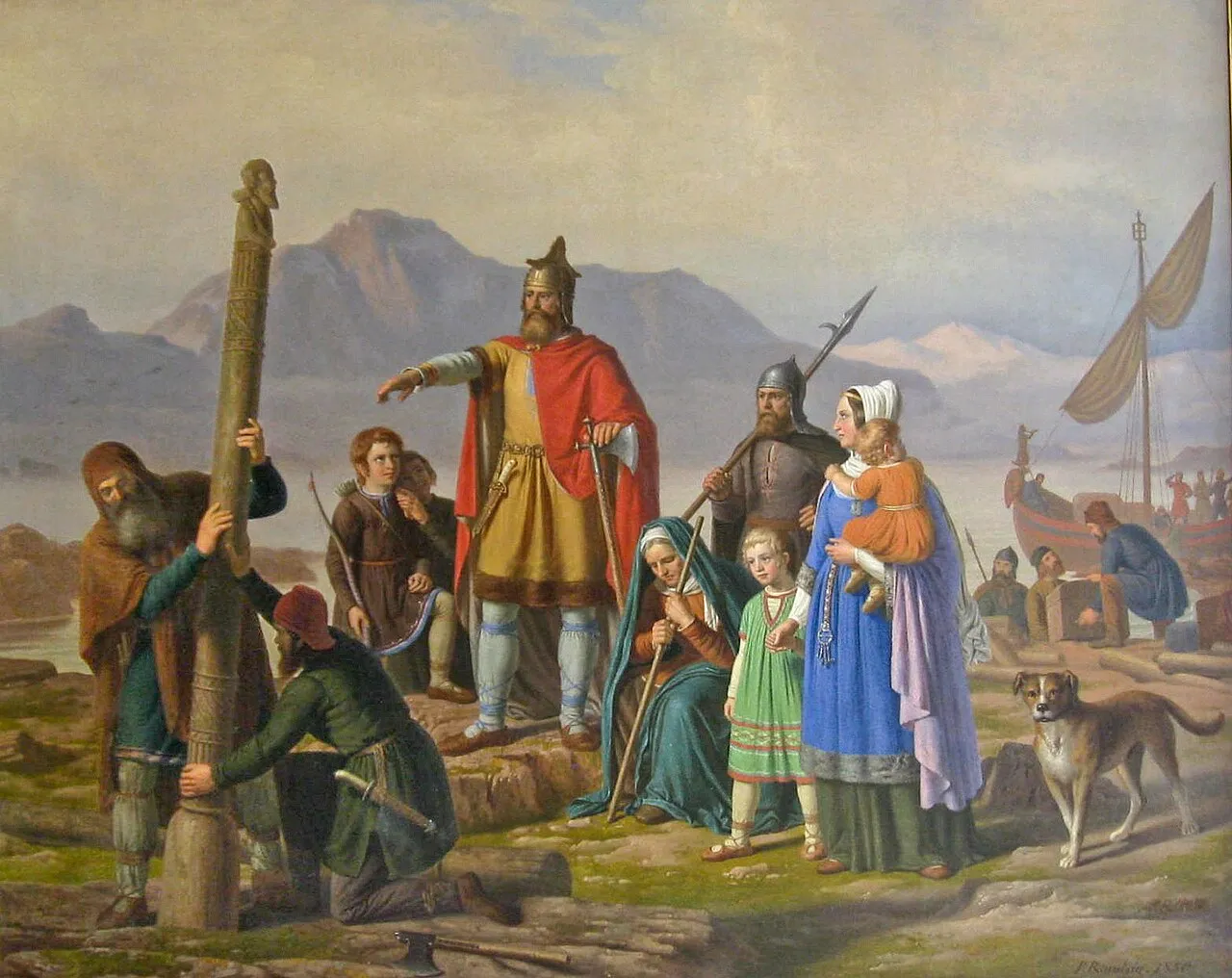 Ingólfr Arnarson has his high-seat pillars raised, a painting by Johan Peter Raadsig of 1850Wikimedia Commons, Johan Peter Raadsig, Public domain (Ingolf by Raadsig.jpg)
Ingólfr’s foster brother Hjörleifr is killed by his Irish slaves, and Ingólfr hunts them down on the islands that take their name from them, Vestmannaeyjar, the islands of the westmen. Many settlers bring slaves from Ireland and Scotland, and genetic studies trace 62 percent of Icelanders’ maternal ancestry to these lands. Landnámabók names 435 first settlers and more than 3,000 people on 1,400 farms, and by Ari’s account the island is fully settled by 930.
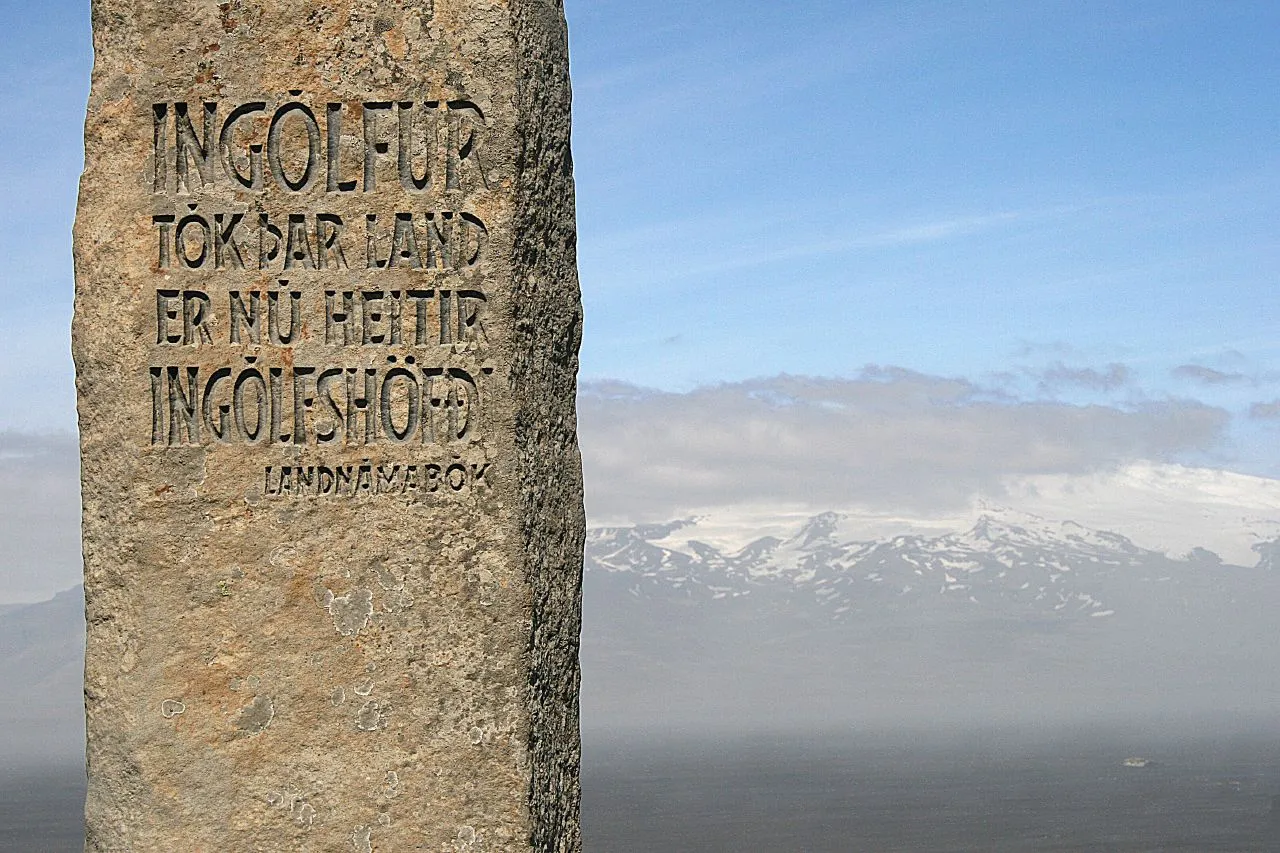 A stone at Ingólfshöfði quoting Landnámabók: Ingólfur took land there, which is now called IngólfshöfðiWikimedia Commons, Guillaume Baviere, CC BY 2.0 (Iceland 2008-05-27 (2677014699).jpg)
In 930 the settlers found the Althing, the assembly of the whole island, at Þingvellir, about 45 km east of Reykjavík, with a law that Úlfljótr has brought from Norway. It meets for two weeks every summer. The chieftains, the goðar, make the laws and judge disputes, and the lawspeaker recites the law from the Law Rock.
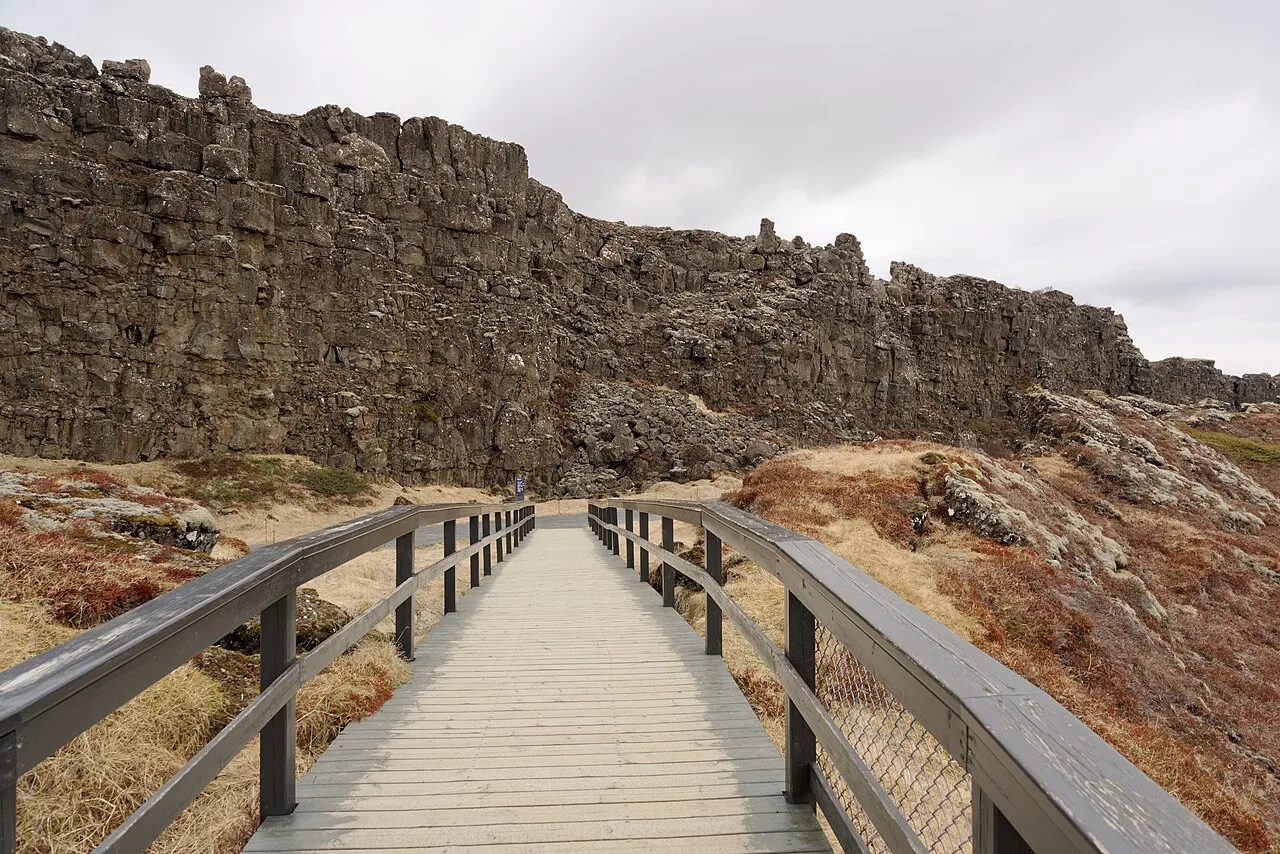 The cliffs of Almannagjá by the Law Rock at ÞingvellirWikimedia Commons, Jakub Hałun, CC BY-SA 4.0 (Lögberg, Þingvellir National Park, Iceland, 20230502 0857 4087.jpg)
Missionaries come from 980, and King Olaf Tryggvason of Norway presses the Icelanders by closing Norwegian ports to them and holding Icelandic hostages. At the Althing of 999 or 1000 the lawspeaker Þorgeirr Þorkelsson, himself a pagan, decides that all Icelanders shall be baptised. Exposing infants, eating horse meat and pagan worship in private stay allowed for a time.
Sources
- Ari Þorgilsson, Íslendingabók, trans. Siân Grønlie (2006).
- Landnámabók, Sturla Þórðarson’s version, about 1275 to 1280.
- Jesse Byock, Medieval Iceland: Society, Sagas and Power (1988).
Prev: The Faroes and Iceland, c. 800–870Next: Erik the Red and Greenland, 982–986