September – 13 October 1066
William lands in Sussex
William, Duke of Normandy, claims that Edward the Confessor promised him the throne and that Harold swore to support his claim. Over nine months he builds a fleet and gathers an army from Normandy, Brittany and Flanders, which waits at Saint-Valery-sur-Somme for a wind. Harold watches the south coast with an army and a fleet until 8 September, when he dismisses the militia to bring in the harvest.
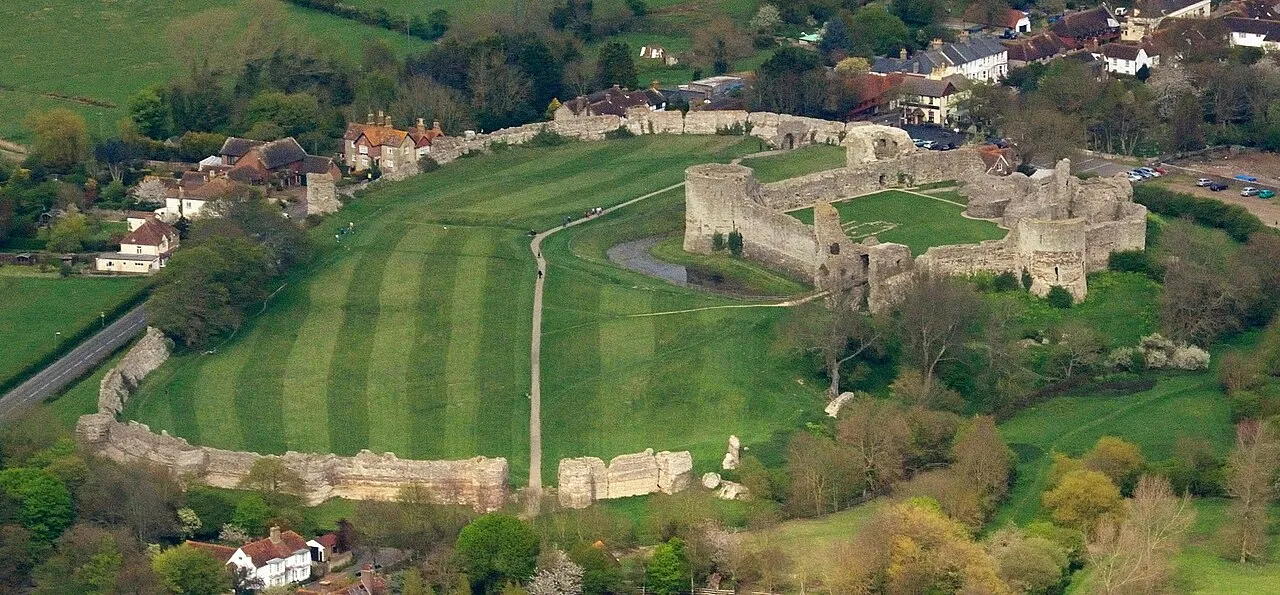 Pevensey from the air: the walls of the Roman fort where William landed, with the later castle insideWikimedia Commons, Lieven Smits and Hchc2009, CC BY-SA 3.0 (Pevensey Castle aerial alt.jpg)
The Normans cross on 27 September and land at Pevensey in Sussex the next day, three days after Stamford Bridge. William builds a wooden castle at Hastings and raids the country around it. Harold marches south, gathering men on the way, and stops for about a week in London. On the night of 13 October he camps on Caldbec Hill, about 13 km from William’s castle.
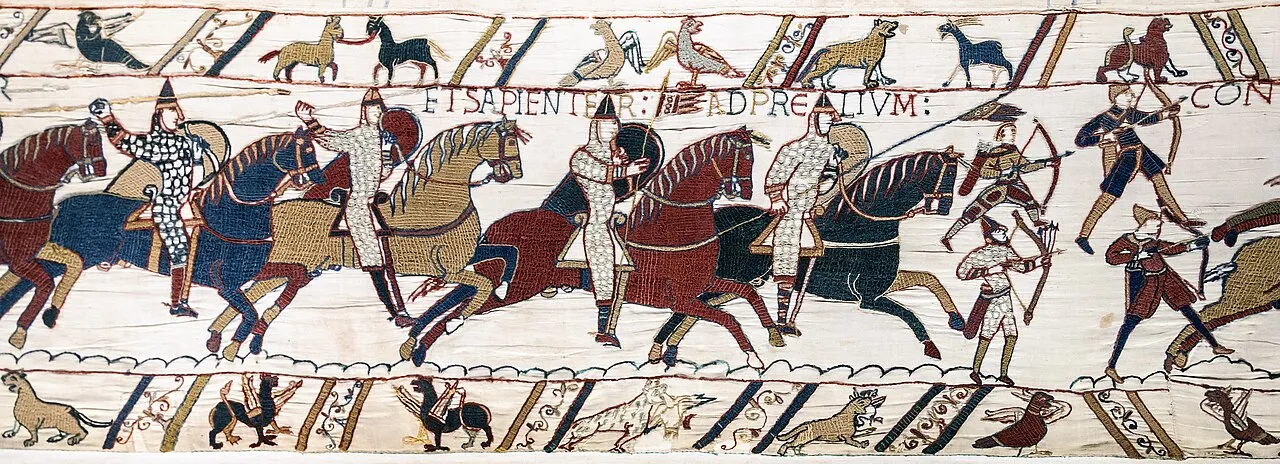 Norman horsemen and archers ride into battle, a scene of the Bayeux Tapestry, about 1070Wikimedia Commons, Myrabella, Public domain (Bayeux Tapestry scene51 Battle of Hastings Norman knights and archers.jpg)
The English army fights on foot: the king’s housecarls in mail, most of them with two-handed axes, and the fyrd, the levies of the shires. About half of William’s army is infantry, a quarter cavalry and a quarter archers and crossbowmen. Most modern estimates put each army at 7,000 to 8,000 men, with a range of 5,000 to 13,000 for the English and up to 12,000 for the Normans.
The field lies about 11 km north of Hastings, between Caldbec Hill to the north and Telham Hill to the south, in wooded country with a marsh nearby. The Anglo-Saxon Chronicle calls it the battle “at the hoary apple tree”, and Orderic Vitalis names it Senlac, perhaps from the stream that crosses the field. Most accounts place the English on the ridge where Battle Abbey now stands, and some recent writers place them on Caldbec Hill.
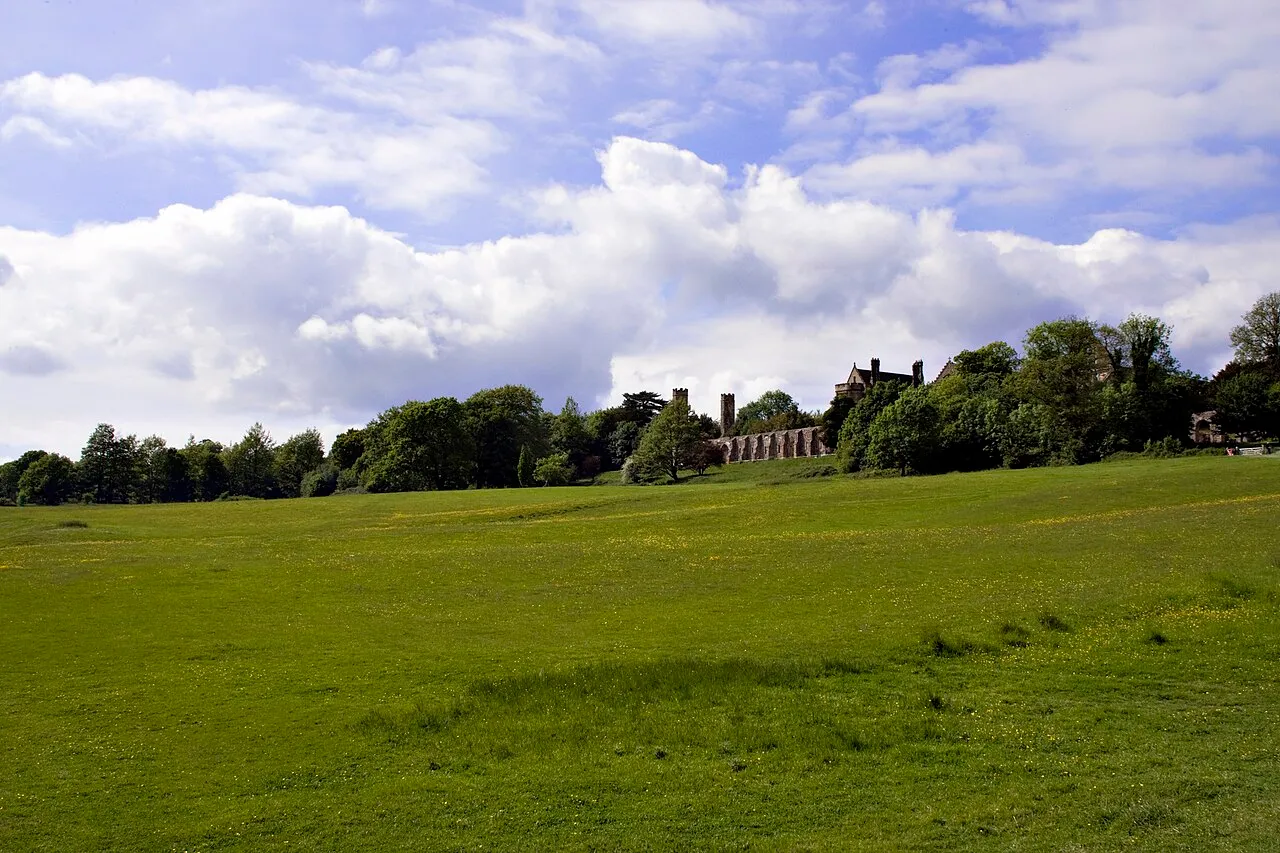 The battlefield seen from the south, with the ruins of Battle Abbey on the ridge, 2010Wikimedia Commons, Ealdgyth, CC BY-SA 3.0 (Hastingsbattlefieldandbattleabbeyruinsbeta.jpg)
Sources
- Matthew Bennett, Campaigns of the Norman Conquest (2001), pp. 37 to 40.
- Christopher Gravett, Hastings 1066: The Fall of Saxon England (1992), pp. 20 to 28.
- M. K. Lawson, The Battle of Hastings: 1066 (2002), pp. 128 to 133, 163 to 164.
Prev: Orri’s stormNext: The first attacks