14 October 1066, afternoon to dusk
The death of Harold
A lull probably follows early in the afternoon. William of Poitiers writes that the Normans then twice feign flight to draw the English down from the ridge and turn on those who follow. Some historians think the story was made up after the battle, though most accept it. The losses thin the ranks of the housecarls, the fyrd take their places, and the shrinking wall holds while archers, foot and horsemen attack again.
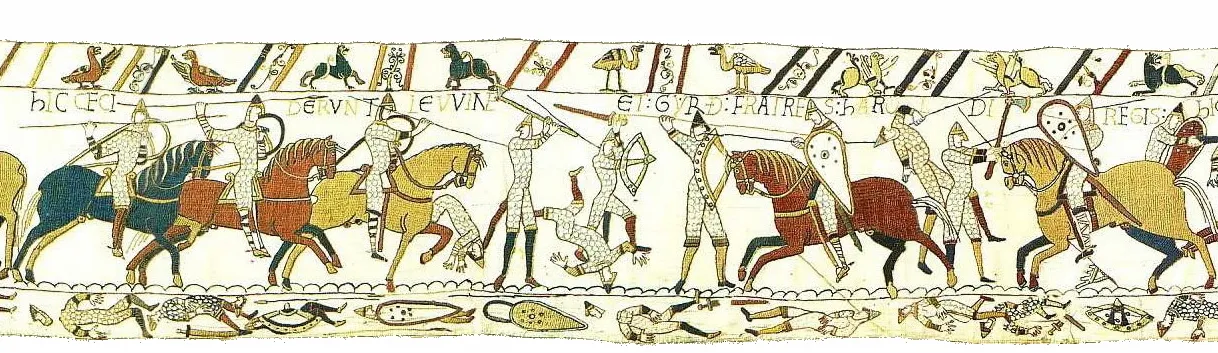 The deaths of Leofwine and Gyrth, brothers of King Harold, a scene of the Bayeux Tapestry, about 1070Wikimedia Commons, Ulrich Harsh, Public domain (BayeuxTapestryScene52b.jpg)
Harold is killed late in the day, by most accounts. The Bayeux Tapestry shows a man holding an arrow in his eye beside a falling man struck with a sword, under the words “Here King Harold is killed”, and the arrow in the eye first appears in writing in the 1080s and returns in William of Malmesbury and Wace. Gyrth and Leofwine fall as well, and at dusk the English break, while the men of Harold’s household fight on around his body.
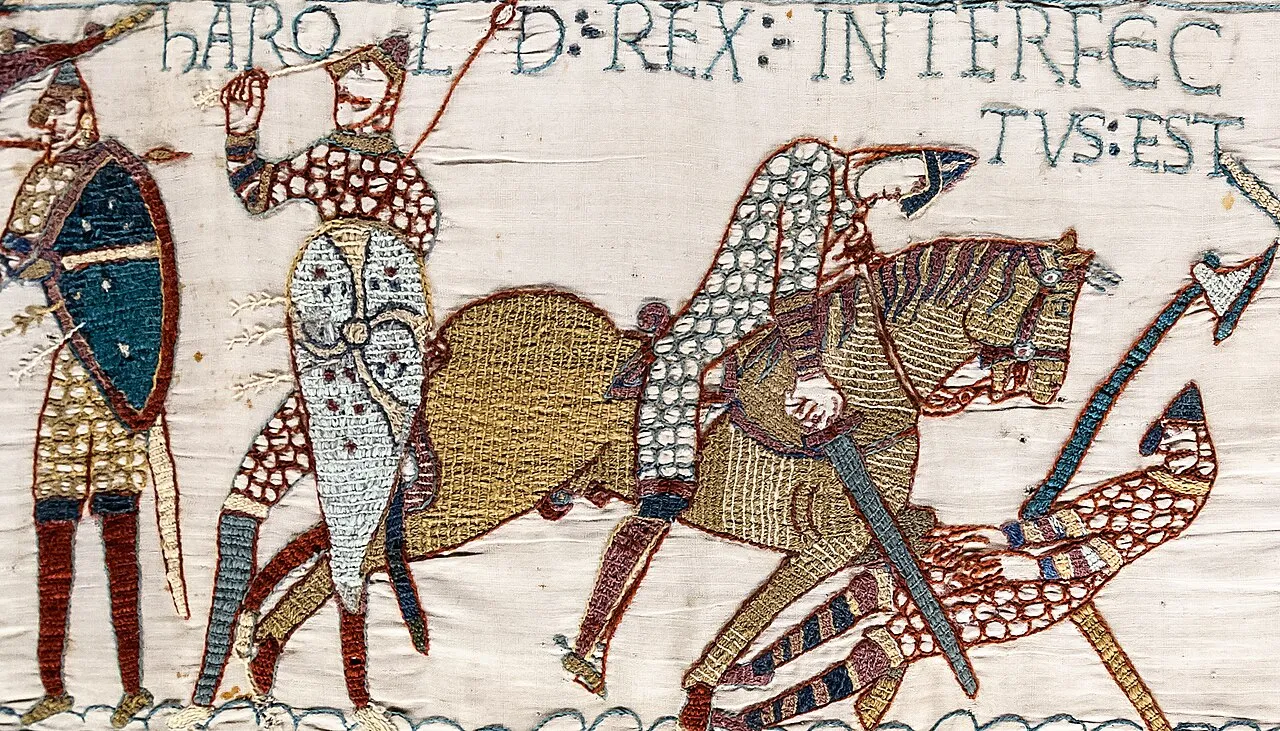 HAROLD REX INTERFECTUS EST, “King Harold is killed”, a scene of the Bayeux Tapestry, about 1070Wikimedia Commons, Myrabella, Public domain (Bayeux Tapestry scene57 Harold death (cropped).jpg)
A band of English rallies at the Malfosse, the “evil ditch”, and wounds Eustace of Boulogne before the Normans overcome it. William is crowned in Westminster Abbey on 25 December 1066 and founds Battle Abbey on the field, with its high altar said to stand where Harold fell.
Sources
- Christopher Gravett, Hastings 1066: The Fall of Saxon England (1992), pp. 72 to 80.
- M. K. Lawson, The Battle of Hastings: 1066 (2002), pp. 207 to 210.
- Ian Walker, Harold the Last Anglo-Saxon King (2000), pp. 179 to 180.
Prev: The Breton flightNext: Magnus Barefoot, Largs and Perth, 1098–1266