892–896
Hastein’s army, 892–896
In the autumn of 892 a Danish army that has fought in Francia since 879 crosses from Boulogne to Kent in 250 ships, with its women and children, and builds a fort at Appledore. Hastein follows with 80 ships into the Thames estuary and fortifies a camp at Milton. Alfred places his army between the two, and Hastein comes to terms: his two sons are baptised, with Alfred and Æthelred of Mercia as godfathers, and he moves his camp to Benfleet in Essex.
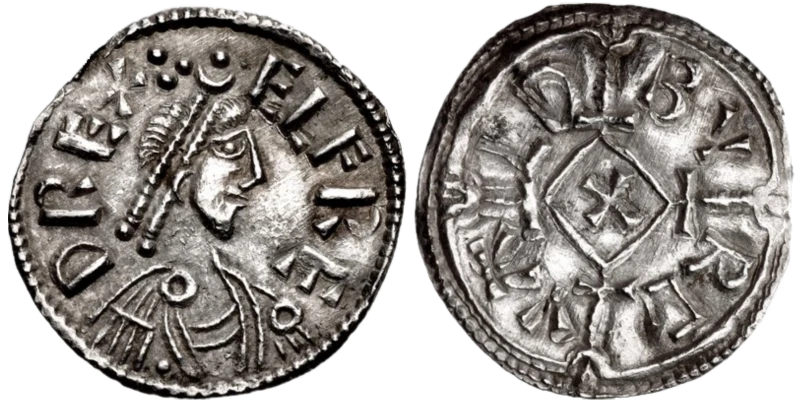 A silver penny of Alfred the Great of the cross-and-lozenge type, struck 875–880Wikimedia Commons, Classical Numismatic Group, CC BY-SA 2.5 (Alfred the Great, silver penny; struck 875–880.png)
In 893 the army at Appledore breaks out and plunders Hampshire and Berkshire. Alfred’s son Edward overtakes it at Farnham, wins back the plunder and blockades the survivors on an island of the Colne at Thorney. Edward and Æthelred storm Hastein’s camp at Benfleet while he is out raiding, and take its women and children, among them Hastein’s wife and sons, and most of its ships.
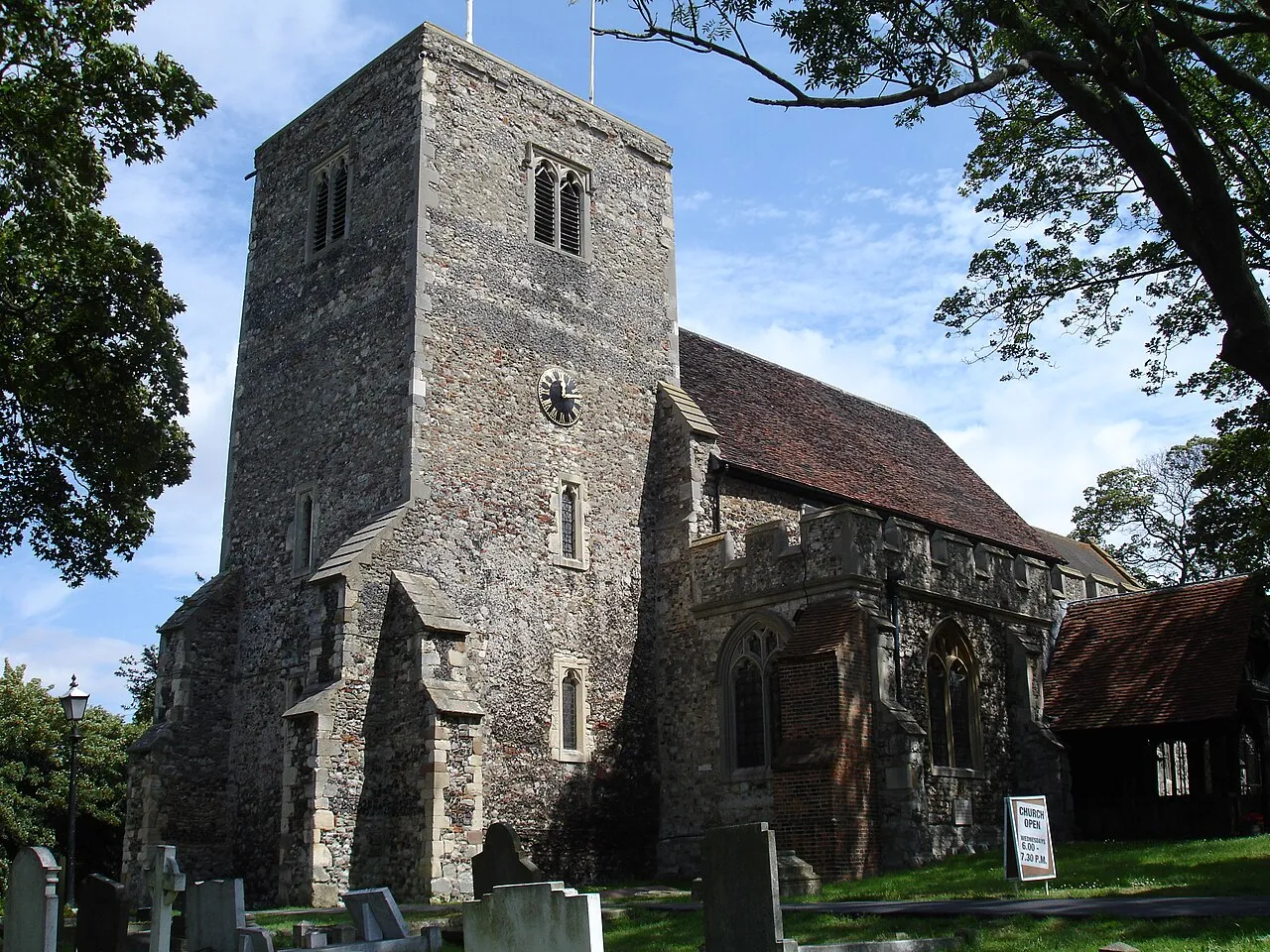 St Mary’s church at South Benfleet, Essex, near the site of Hastein’s campWikimedia Commons, JohnArmagh, Public domain (StMary'sChurchBenfleet SouthEast.JPG)
Hastein gathers his men at a new camp at Shoebury and leads them up the Thames and the Severn. Æthelred and the ealdormen of Wiltshire and Somerset, with Welsh allies, besiege the Danes at Buttington for many weeks, until hunger drives them out to fight, and by the Chronicle’s count many thousands are killed. Late in 893 the survivors cross England to the deserted Roman walls of Chester, where the English destroy the corn and cattle around them.
In 894 the army raids in Wales and returns through Northumbria and East Anglia to Mersea Island in Essex. Late that year it brings its ships up the Thames and the Lea and builds a fort about 20 miles above London. In 895 Alfred builds two forts on the river below it, and the Danes leave their ships and ride across England to Bridgnorth on the Severn. In 896 the army breaks up: some go to East Anglia and Northumbria, and those without money take ships to the Seine.
Sources
- Anglo-Saxon Chronicle, entries for 892 to 896.
- Æthelweard, Chronicon.
- Richard Abels, Alfred the Great: War, Kingship and Culture in Anglo-Saxon England (1998).
Prev: Wedmore and the Danelaw, 878–886Next: Tettenhall and the Five Boroughs, 909–918