865–869
The Great Army, 865–869
In 865 a large Danish army lands in East Anglia. The Anglo-Saxon Chronicle calls it the mycel hæþen here, the great heathen army, and later sources name Ivar the Boneless, Ubba and Halfdan among its leaders. The East Angles make peace and supply the army with horses, and it winters in their kingdom. Modern estimates of its size range from under a thousand men to a few thousand.
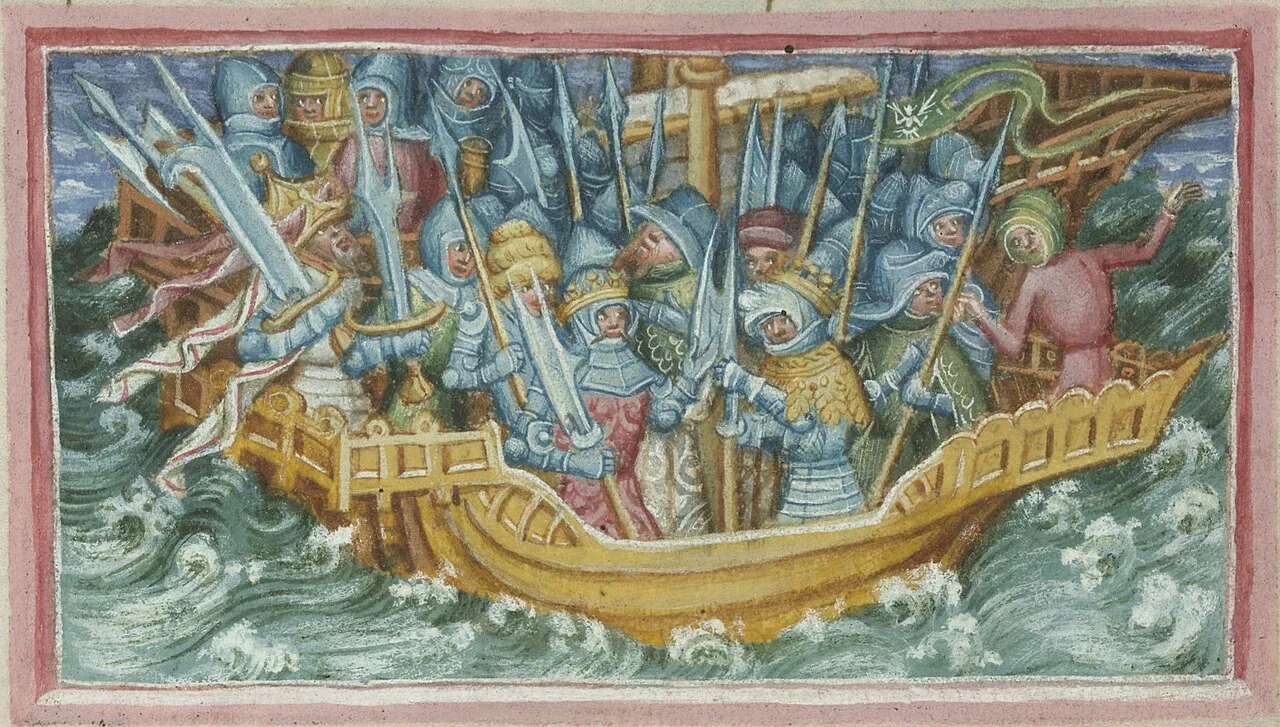 Hinguar and Ubba set out by sea to avenge their father Lothbrok, from John Lydgate’s Life of St Edmund, about 1434, British Library Harley MS 2278Wikimedia Commons, unknown artist, Public domain (Harley MS 2278, folio 47v excerpt.jpg)
In 866 the army crosses the Humber into Northumbria, where Osberht and Ælla are fighting over the kingship, and takes York on 1 November. On 21 March 867 the two rivals attack the city together. The Northumbrians break into York, but the battle turns against them and both kings are killed. The survivors make peace, and the Danes set up Ecgberht as king of Northumbria under their control.
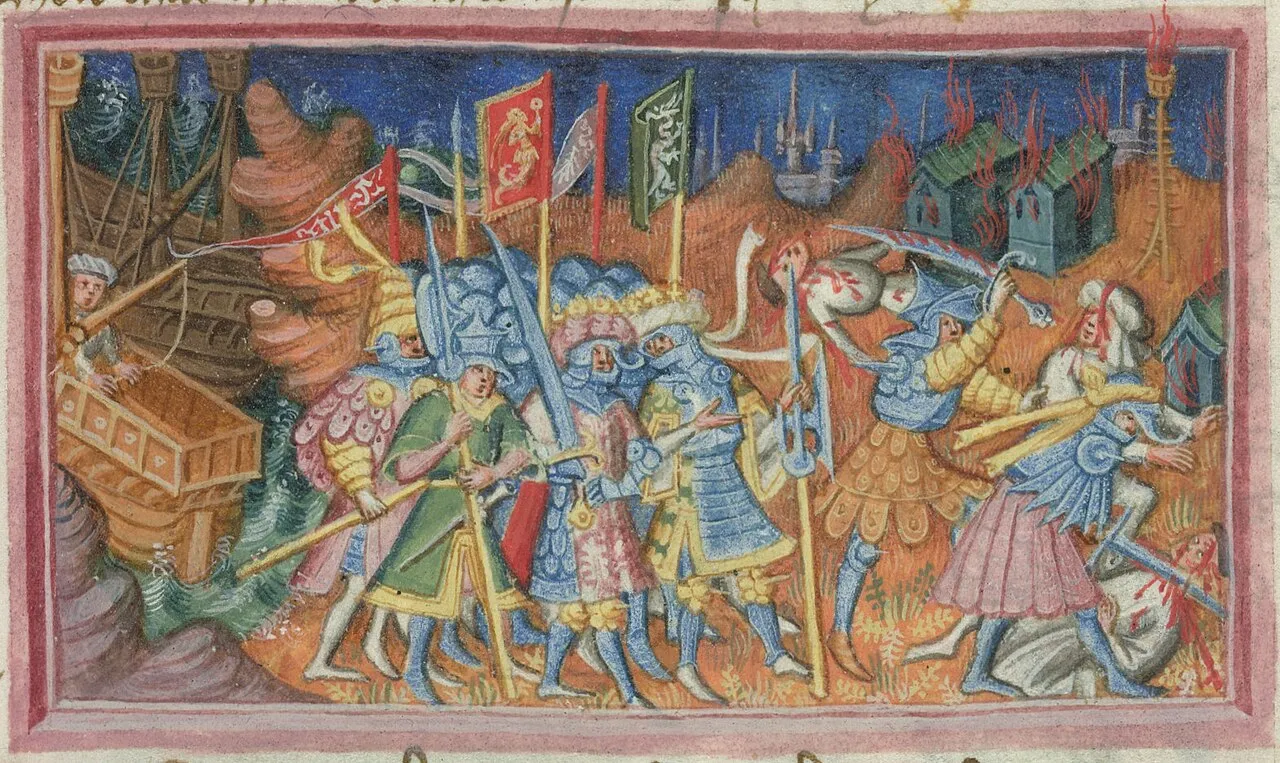 Hinguar and Ubba land and kill Christians in the north of England, from the same manuscript of Lydgate’s Life of St EdmundWikimedia Commons, unknown artist, Public domain (Harley MS 2278, folio 48r excerpt.jpg)
Later in 867 the army moves south into Mercia and winters at Nottingham. King Burgred of Mercia calls on his brothers-in-law, King Æthelred of Wessex and Alfred, and in 868 their armies besiege the Danes in the town. No great battle is fought, the Mercians make peace with the Danes, and the army returns to York for the winter of 868–869.
In 869 the army rides across Mercia into East Anglia and takes winter quarters at Thetford. King Edmund fights it that winter, and the Danes win, kill him on 20 November and take his kingdom. The Chronicle leaves open whether he dies in the battle or after it. Abbo of Fleury, writing about 986, tells of his martyrdom, and a later tradition places his death at Hoxne in Suffolk.
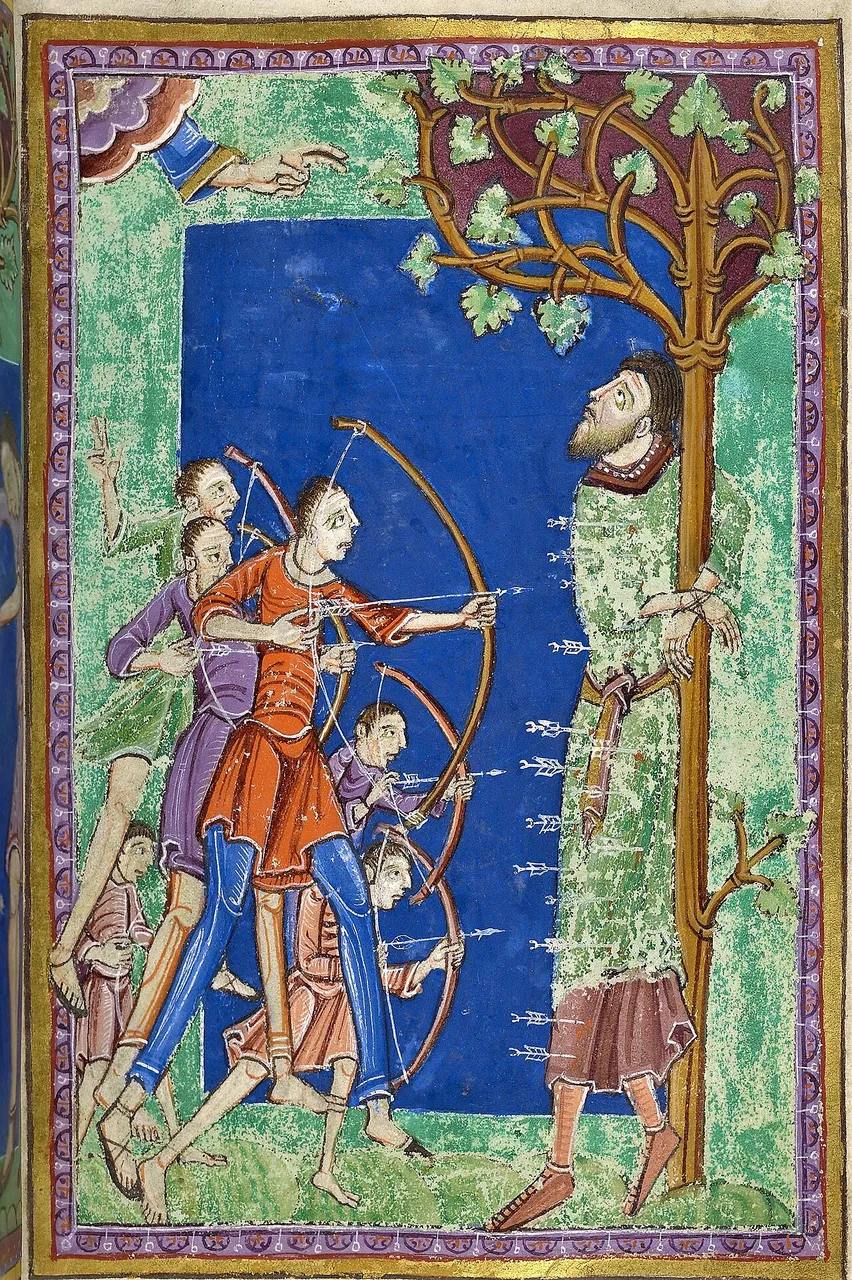 Danes shoot King Edmund with arrows, from a life of St Edmund made at Bury St Edmunds about 1130Wikimedia Commons, unknown artist, Public domain (Edmundbeingmartyred05.jpg)
Sources
- Anglo-Saxon Chronicle, entries for 865 to 870.
- Peter Sawyer (ed.), The Oxford Illustrated History of the Vikings (3rd ed. 2001).
- Susan J. Ridyard, The Royal Saints of Anglo-Saxon England: A Study of West Saxon and East Anglian Cults (1988).
Prev: Björn and Hastein in the Mediterranean, 859–861Next: Ashdown and the year of battles, 871