804–810
Godfred and Charlemagne, 804–810
Gudfred, or Godfred, king of the Danes from at least 804, is the first Danish ruler known in some detail, all of it from Frankish texts hostile to him. In 804 Charlemagne ends his wars against the Saxons with an army on the Elbe. Godfred comes with his fleet and all his cavalry to Sliesthorp, the place of Hedeby, on the border, but on his men’s advice he does not meet the emperor, who waits at Hollenstedt.
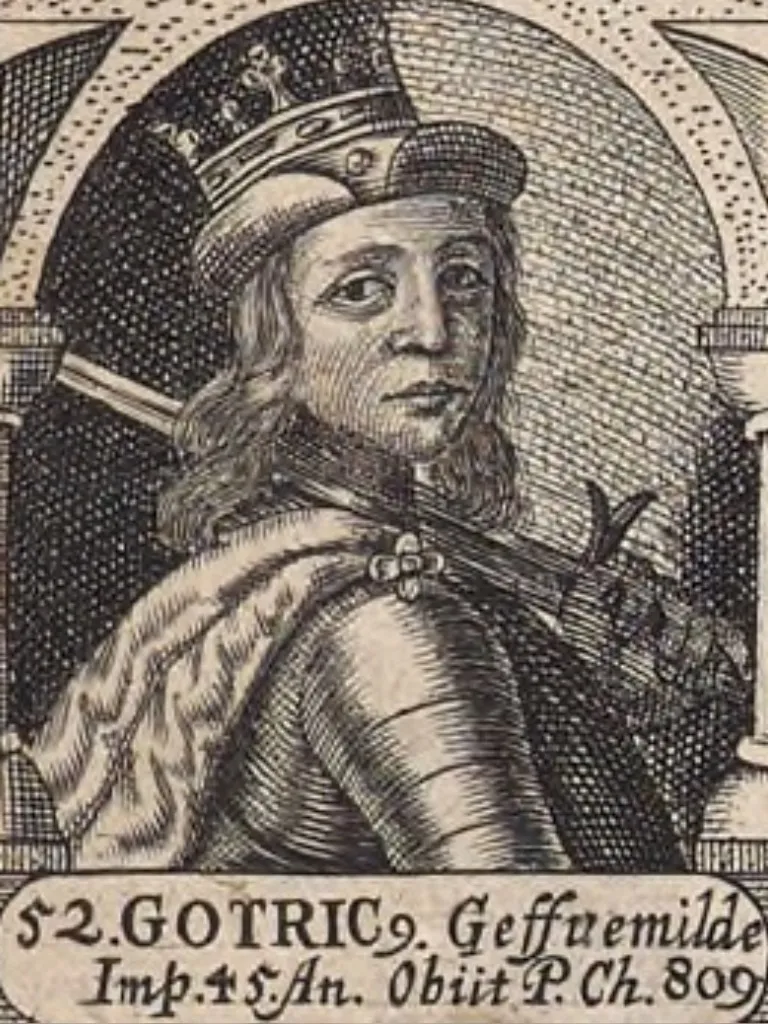 King Gøtrik, the Danish name for Godfred, in an imagined portrait from a series of Danish kings published by Erico Olai Tormio in 1670Wikimedia Commons, Erico Olai Tormio (publisher), Public domain (Kong Gøtrik den Gavmilde.jpg)
In 808 Godfred attacks the Obodrites, Slavic allies of Charlemagne, takes several of their strongholds and makes two districts pay him tribute. He destroys Reric, a Baltic port that had paid him fees, and carries its merchants off to Hedeby. He then orders a rampart from the Schlei to the west to close the border with Saxony. This is the Danevirke, whose first phases archaeology dates to about 737, so Godfred strengthens an older work.
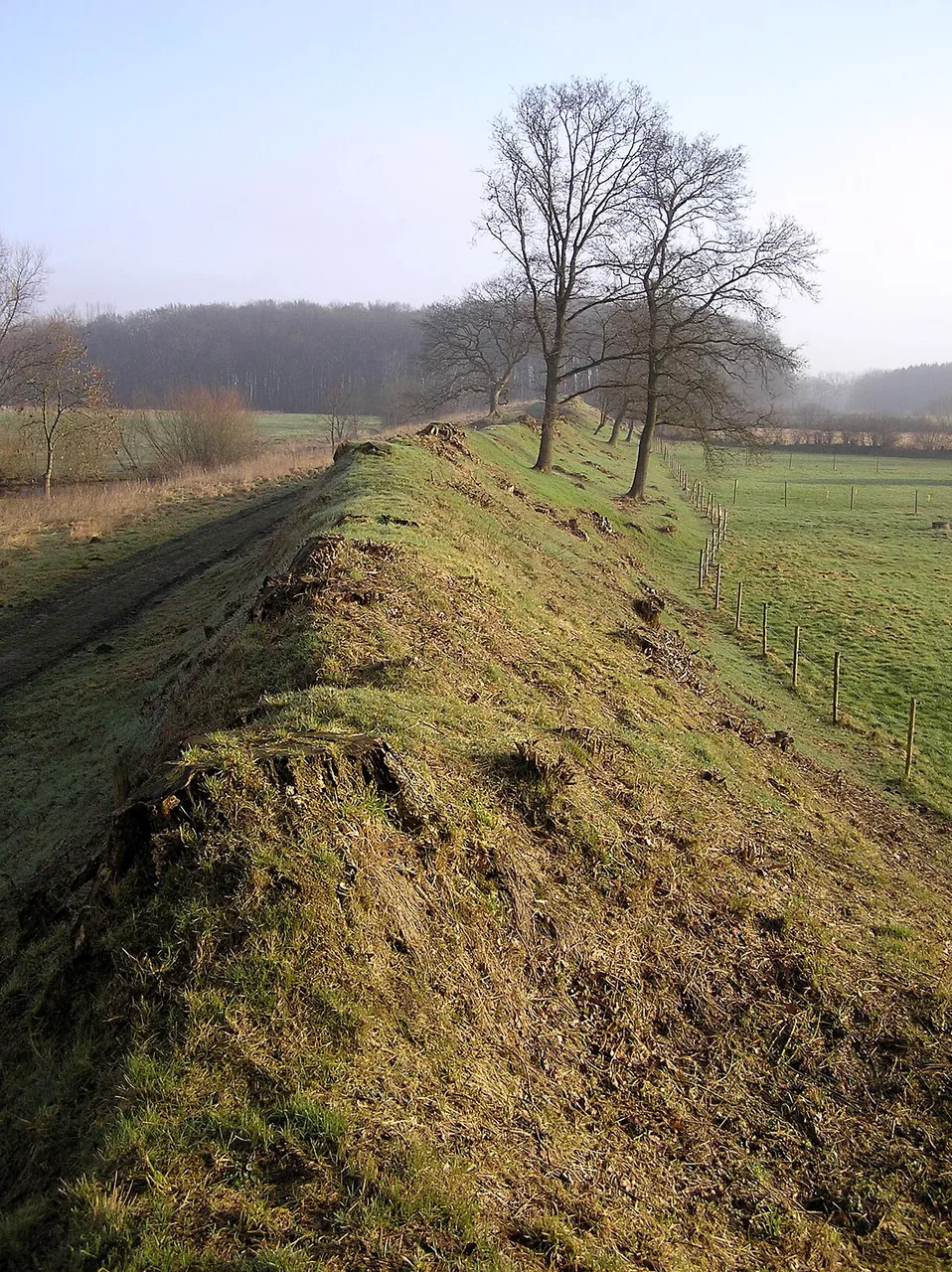 The main rampart of the Danevirke east of the village of DannewerkWikimedia Commons, Joachim Müllerchen, CC BY-SA 2.0 de (Danewerk.JPG)
In 810, while Charlemagne plans a campaign against him at Aachen, a Danish fleet of 200 ships raids the Frisian islands, defeats the Frisians in three battles and takes 100 pounds of silver from them. Charlemagne gathers an army where the Aller meets the Weser. The fleet withdraws, and news comes that one of Godfred’s own retainers has killed him. His nephew Hemming makes peace with the Franks in 811.
Godfred’s sons and their rival Harald Klak fight over the Danish kingship for the next two decades. Harald is baptised at Mainz in 826 and returns north with the monk Ansgar, who later preaches at Hedeby and at Birka.
Sources
- Royal Frankish Annals, years 804 to 811.
- Einhard, Life of Charlemagne, chapter 14.
- Klavs Randsborg, The Viking Age in Denmark (1980).
Prev: Iona and Ireland, 795–807Next: Dorestad, 834–837