c. 800–870
The Faroes and Iceland, c. 800–870
Irish monks reach the islands of the northern ocean before the Norse. In 825 the Irish monk Dicuil, teaching in the Frankish empire, writes of islands two days’ sail north of Britain where hermits from Ireland had lived for nearly a hundred years until "Norwegian pirates" drove them out, leaving countless sheep. These are taken to be the Faroes. Dicuil also reports clerics who spent a summer around 795 on Thule, possibly Iceland, where at midsummer the light is bright enough to pick lice from a shirt.
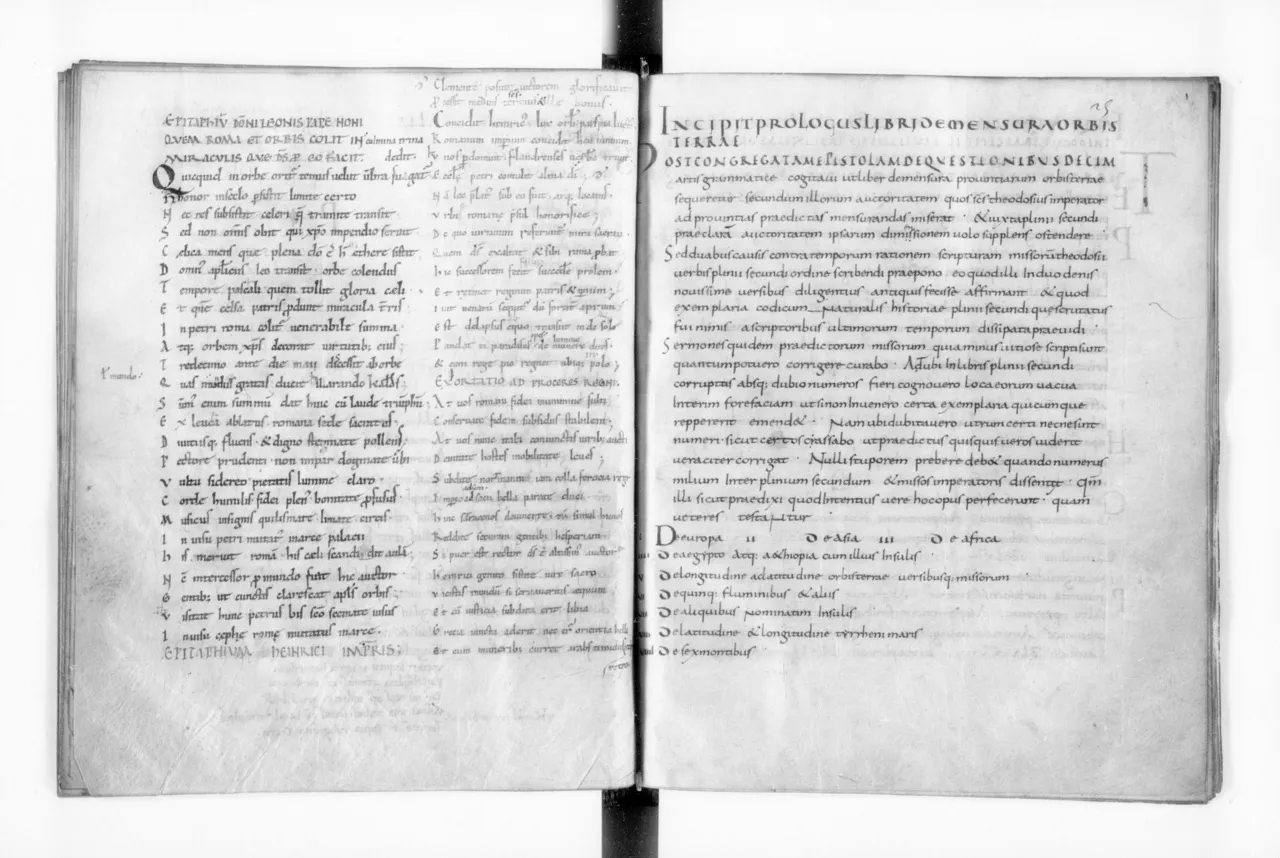 Opening of Dicuil’s Liber de mensura orbis terrae in a manuscript of the late 9th century, Bibliothèque nationale de France, Latin 4806Wikimedia Commons, Bibliothèque nationale de France, CC BY-SA 4.0 (BnF Latin 4806 f25 Dicuil De Mensura Orbis Terrae.png)
Burnt barley and sheep DNA show that people lived on the Faroes centuries before the Norse, who settle there in the 9th century. Færeyinga saga names Grímur Kamban as the first settler, at Funningur on Eysturoy by local tradition. His Gaelic byname suggests that he came by way of the Norse settlements in Ireland or the Hebrides.
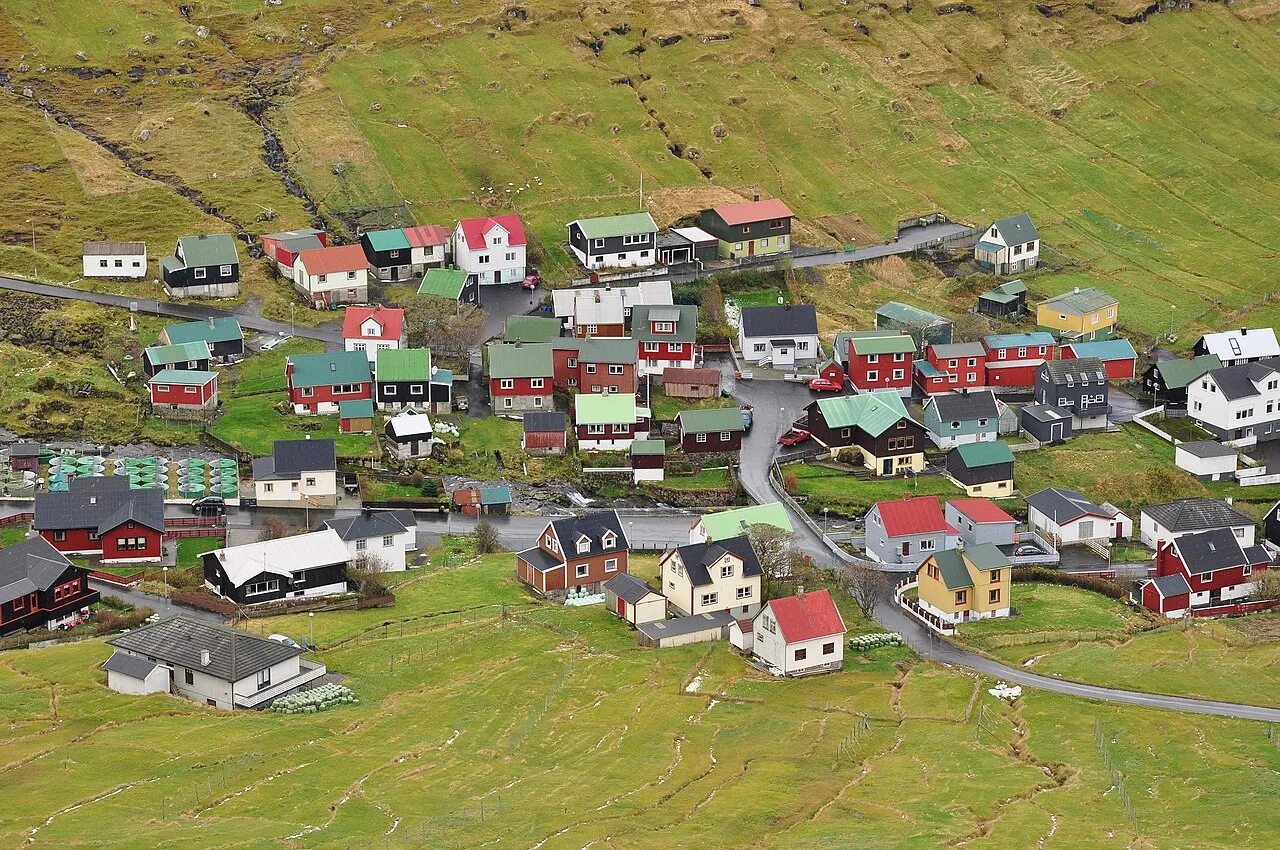 Funningur on Eysturoy, where Grímur Kamban settled by local traditionWikimedia Commons, Vincent van Zeijst, CC BY-SA 3.0 (Faroe Islands, Eysturoy, Funningur (3).jpg)
Landnámabók tells how Iceland was found. Naddodd, sailing from Norway to the Faroes, is driven off course to the east coast, climbs a mountain near Reyðarfjörður, sees no smoke from any hearth and names the land Snæland, Snowland. About 860 the Swede Garðar Svavarsson, blown north by a storm in the Pentland Firth, sails round the island, winters at Húsavík and names it Garðarshólmi.
About 868 Flóki Vilgerðarson sails from western Norway by Shetland and the Faroes with three ravens. The third raven flies north-west and leads him to land, and after a hard winter at Vatnsfjörður he sees a fjord full of drift ice and names the land Ísland. Ari Þorgilsson and Landnámabók write that the first settlers found Irish monks, the papar, who left when the Norse came and left behind books, bells and croziers. Place names such as Papey keep their memory, and caves at Seljaland in the south, with crosses of Irish style and traces of people from about 800, may be their work.
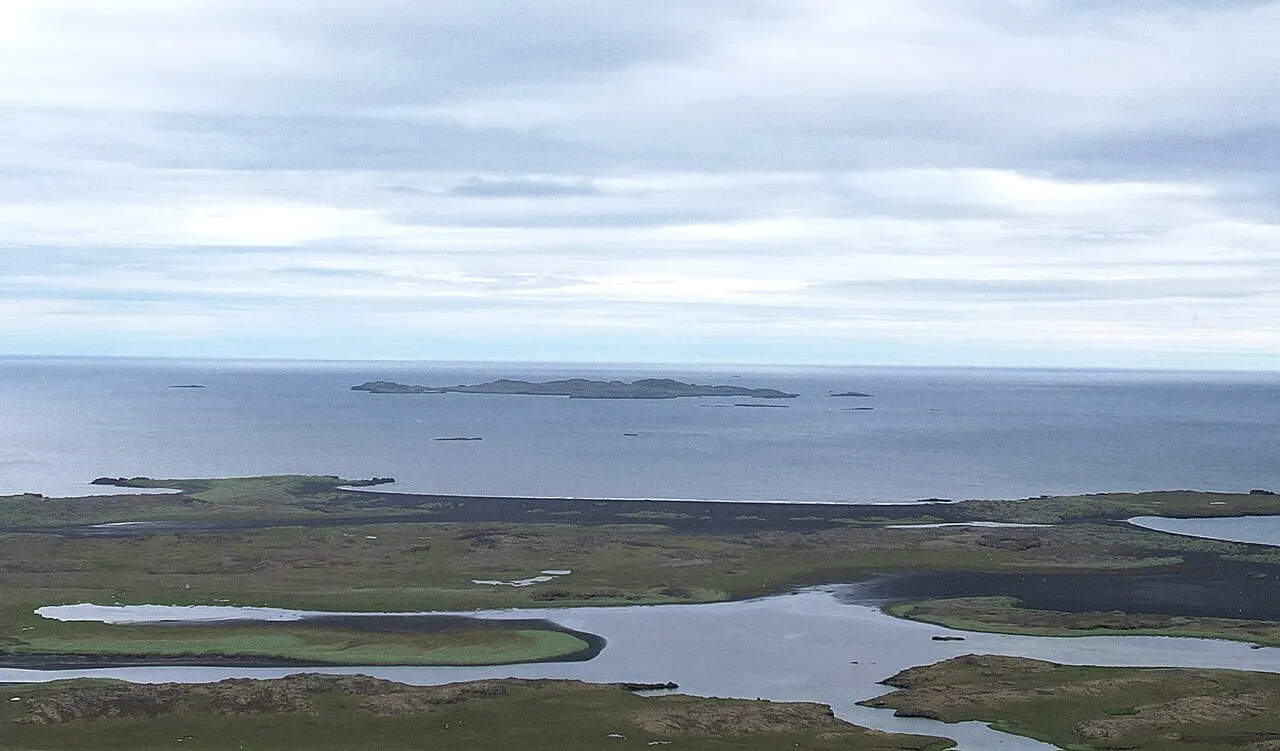 The island of Papey off the east coast of Iceland, seen from DjúpivogurWikimedia Commons, Eysteinn Guðni Guðnason, CC BY-SA 4.0 (Papey 2023.jpg)
Sources
- Dicuil, Liber de mensura orbis terrae (825), book 7.
- Barbara E. Crawford (ed.), The Papar in the North Atlantic: Environment and History (2002).
- Mike J. Church and others, "The Vikings were not the first colonizers of the Faroe Islands", Quaternary Science Reviews (2013).
Prev: Vladimir and Yaroslav, 980–1054Next: The settlement of Iceland, 870–930