939–954
Eric Bloodaxe and the end of York, 939–954
Æthelstan dies on 27 October 939, and the Northumbrians take Olaf Guthfrithson, king of Dublin, as their king at York. In 940 Olaf invades Mercia, is driven back at Northampton and storms Tamworth. Edmund, Æthelstan’s half-brother and successor, catches him at Leicester, where the archbishops of York and Canterbury make peace between them, and Olaf holds north-east Mercia for a time.
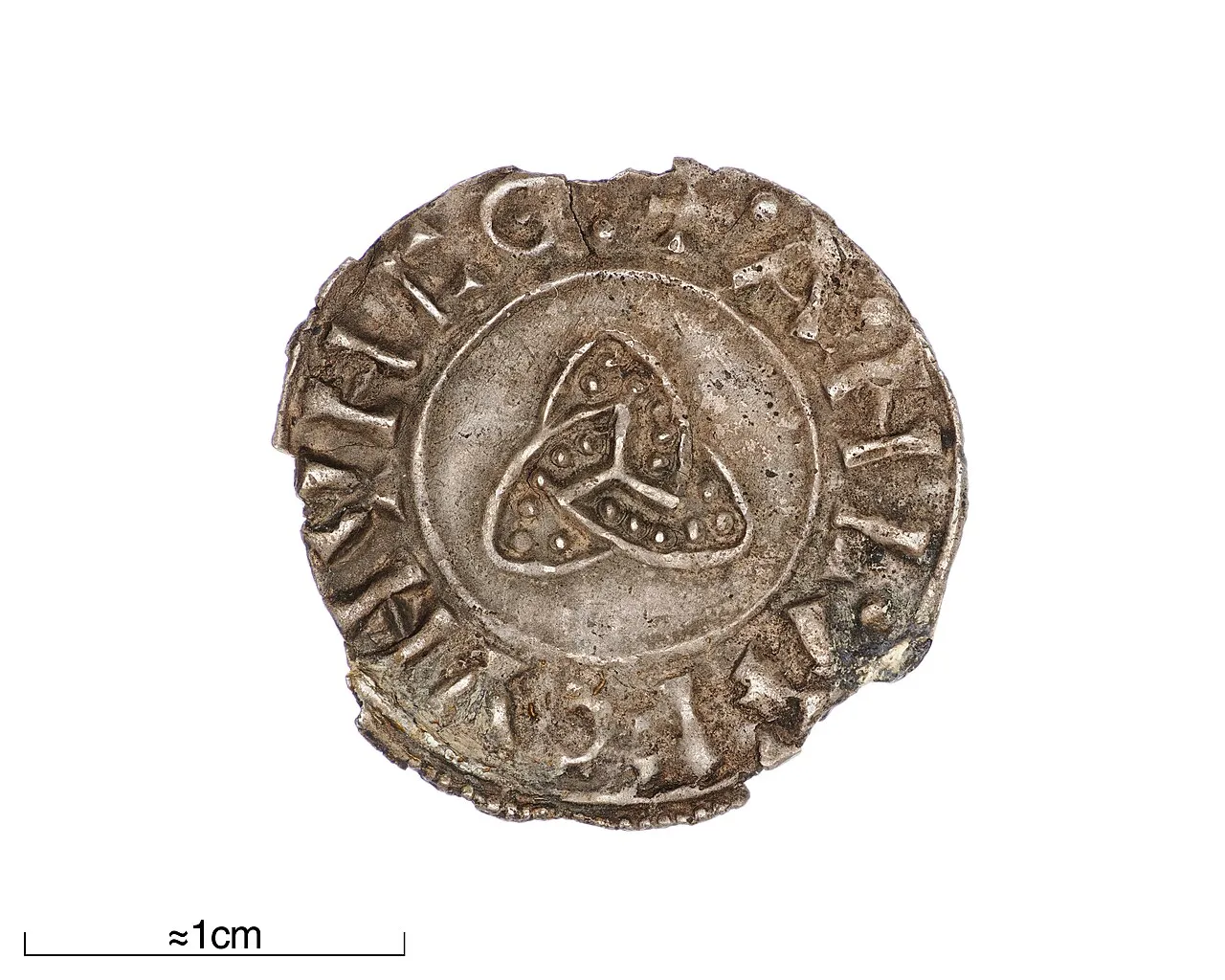 The front of a penny struck at York about 939–944, Swedish History MuseumWikimedia Commons, Ola Myrin, Statens historiska museum, CC BY 4.0 (York banner penny (frontside).jpg)
Olaf dies in 941, and his cousin Olaf Sihtricson, known in Ireland as Amlaíb Cuarán, succeeds him. In 942 Edmund wins back the Five Boroughs, a victory the Chronicle celebrates in a poem, and in 944 he drives the Norse kings out of York with the help of Archbishop Wulfstan. After Edmund is killed in 946, his brother Eadred receives the oaths of Wulfstan and the Northumbrian councillors in 947, but the Northumbrians soon break them.
In 947 or 948 they take as their king Eric, son of Harold, whom the sagas identify with Eric Bloodaxe, a son of Harald Fairhair and once king of Norway. Eadred ravages Northumbria in 948 and burns the minster at Ripon, and when the army of York destroys his rearguard at Castleford he threatens worse, until the Northumbrians abandon Eric and pay compensation. Olaf Sihtricson returns as king, and in 952 the Northumbrians drive him out and take Eric back.
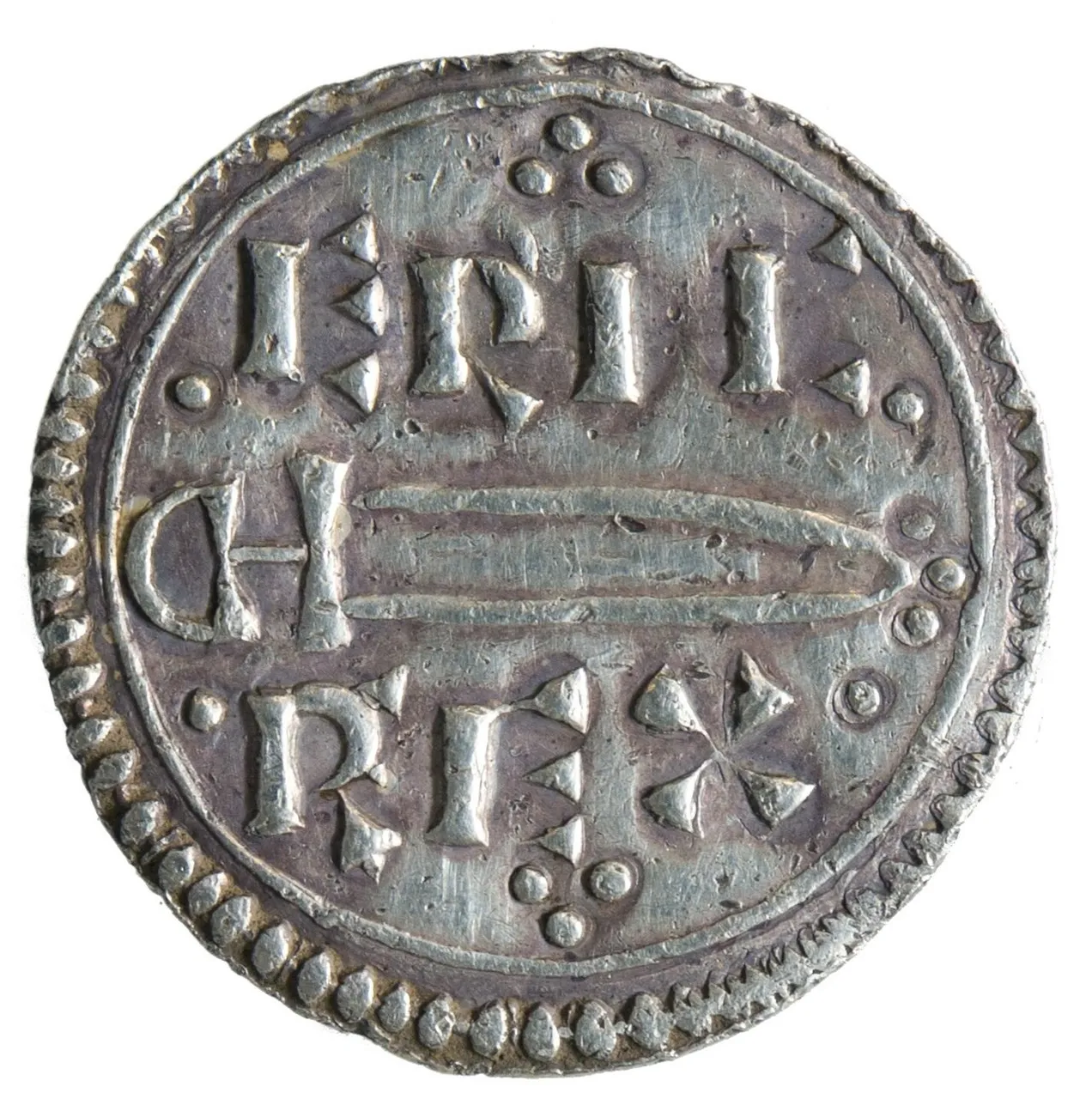 A silver penny of Eric struck at York in 952–954, with a sword between the words ERIC REX, York Museums TrustWikimedia Commons, York Museums Trust, Rebecca Griffiths, CC BY 2.0 (Eric Bloodaxe silver penny; struck 952-954 AD (obverse).jpg)
In 954 the Northumbrians expel Eric again. By Roger of Wendover’s 13th-century account, which draws on a lost northern source, Earl Oswulf betrays him and Maccus, son of Olaf, kills him with his son and his brother at Stainmore, in the pass over the Pennines. Eadred then rules Northumbria through Oswulf as earl, and earls under the English kings govern it from then on.
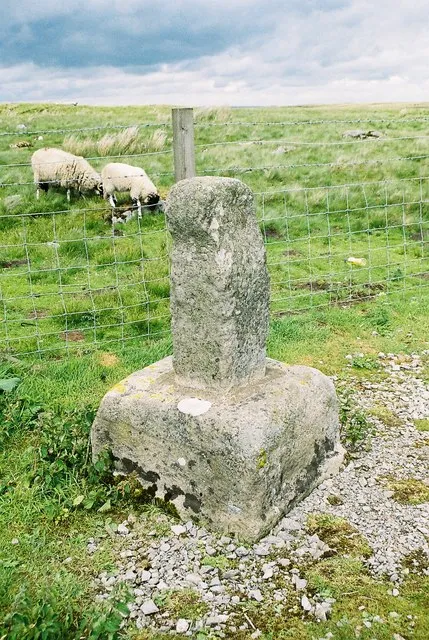 The stump of the Rey Cross on Stainmore, a boundary cross of perhaps the 10th centuryWikimedia Commons, Andrew Barclay, CC BY-SA 2.0 (The stump of the ancient Rey Cross - geograph.org.uk - 846388.jpg)
Sources
- Anglo-Saxon Chronicle, manuscripts D and E, entries for 940 to 954.
- Roger of Wendover, Flores historiarum, entry for 954.
- Clare Downham, Viking Kings of Britain and Ireland: The Dynasty of Ívarr to A.D. 1014 (2007).
Prev: York and Brunanburh, 919–937Next: The Great Army in Francia, 879–884