May 878
The march to Ethandun
In the seventh week after Easter 878, between 4 and 10 May, Alfred rides from Athelney to Egbert’s Stone, east of the forest of Selwood. There the men of Somerset, of Wiltshire and of the part of Hampshire west of Southampton Water come to him, and by the Chronicle’s account they rejoice to see him. The site of Egbert’s Stone is unknown, and King Alfred’s Tower at Stourhead stands on one of the places proposed.
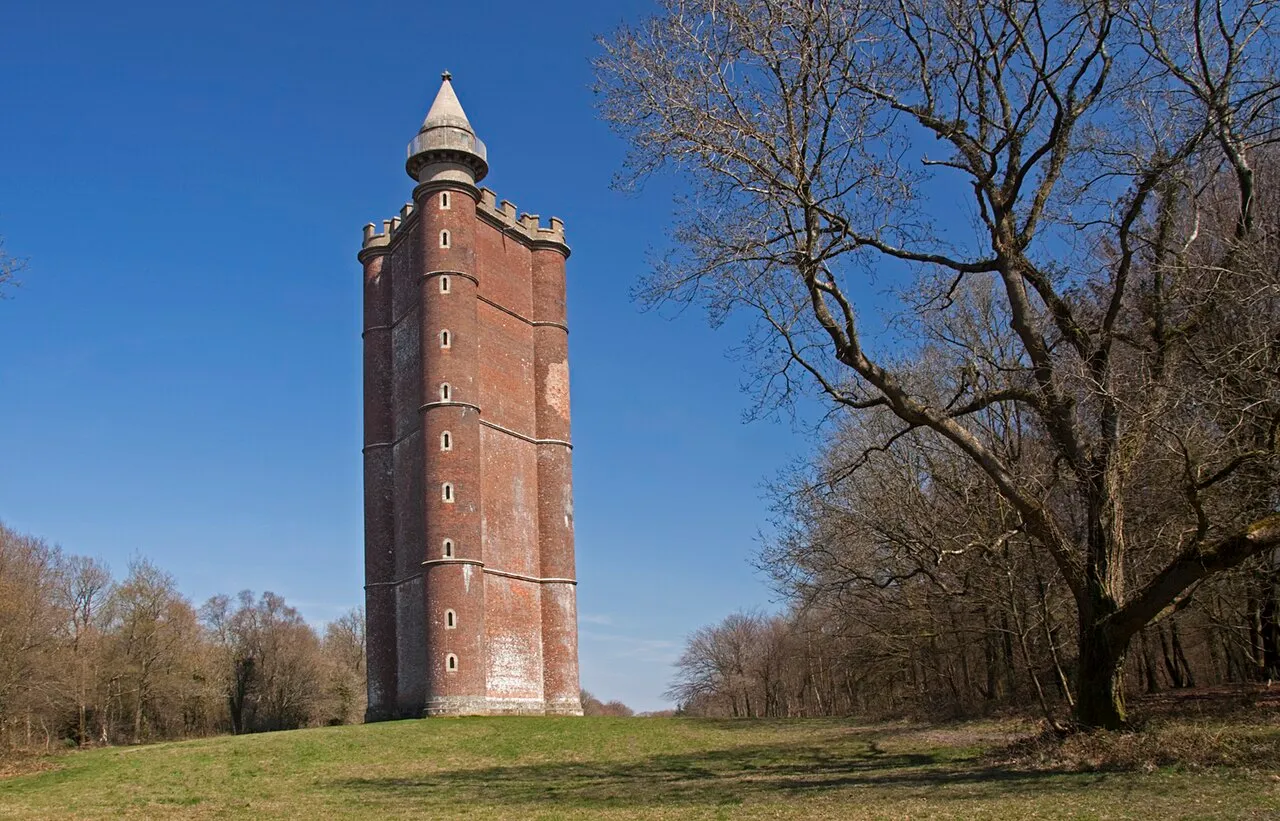 King Alfred’s Tower at Stourhead, built in 1772 on one supposed site of Egbert’s StoneWikimedia Commons, Marilyn Peddle, CC BY 2.0 (King Alfred's Tower (4546584778).jpg)
The next day the army moves to Iley Oak, usually placed near Warminster, and the day after it marches on to Ethandun, where the Danes are. Modern estimates put Guthrum’s army at about 4,000 men and Alfred’s at between 2,000 and 6,000. Guthrum has fewer allies than in the years before, since much of the Great Army has settled in Northumbria, East Anglia and Mercia and 120 of his ships have been wrecked off Swanage.
Asser and the Chronicle name the place Ethandun, and Alfred later leaves an estate called Eðandun to his wife in his will. Most historians identify it with Edington in Wiltshire, below the northern scarp of Salisbury Plain, while others have argued for Edington in the Polden Hills of Somerset. Local tradition makes Bratton Camp, the Iron Age hillfort on the scarp to the west of the village, the stronghold of the Danes, and a memorial stone to the battle has stood beside it since 2000.
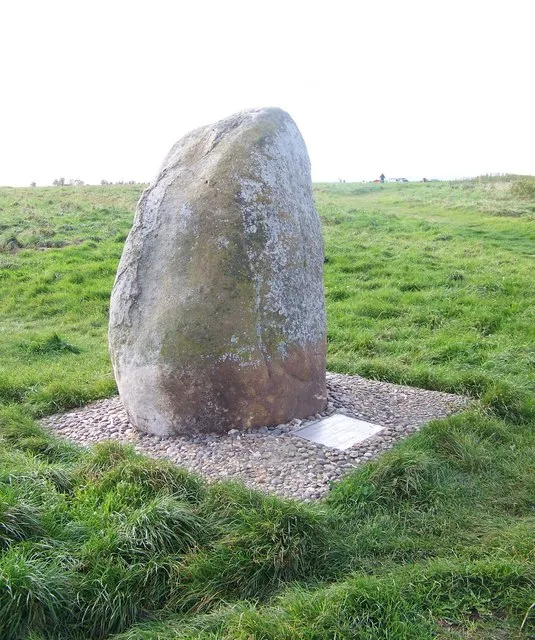 The sarsen stone set up in 2000 beside Bratton Camp as a memorial to the battle of EthandunWikimedia Commons, Trish Steel, CC BY-SA 2.0 (Ethandunmem.jpg)
Sources
- Asser, Life of King Alfred, chapters 55 and 56.
- Anglo-Saxon Chronicle, entry for 878.
- Richard Abels, Alfred the Great: War, Kingship and Culture in Anglo-Saxon England (1998).
Prev: Chippenham and Athelney, 878Next: The shield wall at Ethandun