853–902
Ímar, Amlaíb and Dumbarton, 853–902
Amlaíb rules from Dublin with Ímar, whom the Fragmentary Annals call his brother. From 856 the two kings fight Máel Sechnaill, king of Tara, at times in alliance with Irish kings such as Cerball, king of Ossory, and Áed Findliath, king of the northern Uí Néill. Ímar is missing from the Irish annals from 864 to 870, and Clare Downham and others identify him with Ivar the Boneless of the Great Army in England. In 866 Amlaíb and his brother Auisle lead an army into Pictland and carry off tribute and hostages, and while they are away Áed Findliath burns the longphorts on the north coast of Ireland.
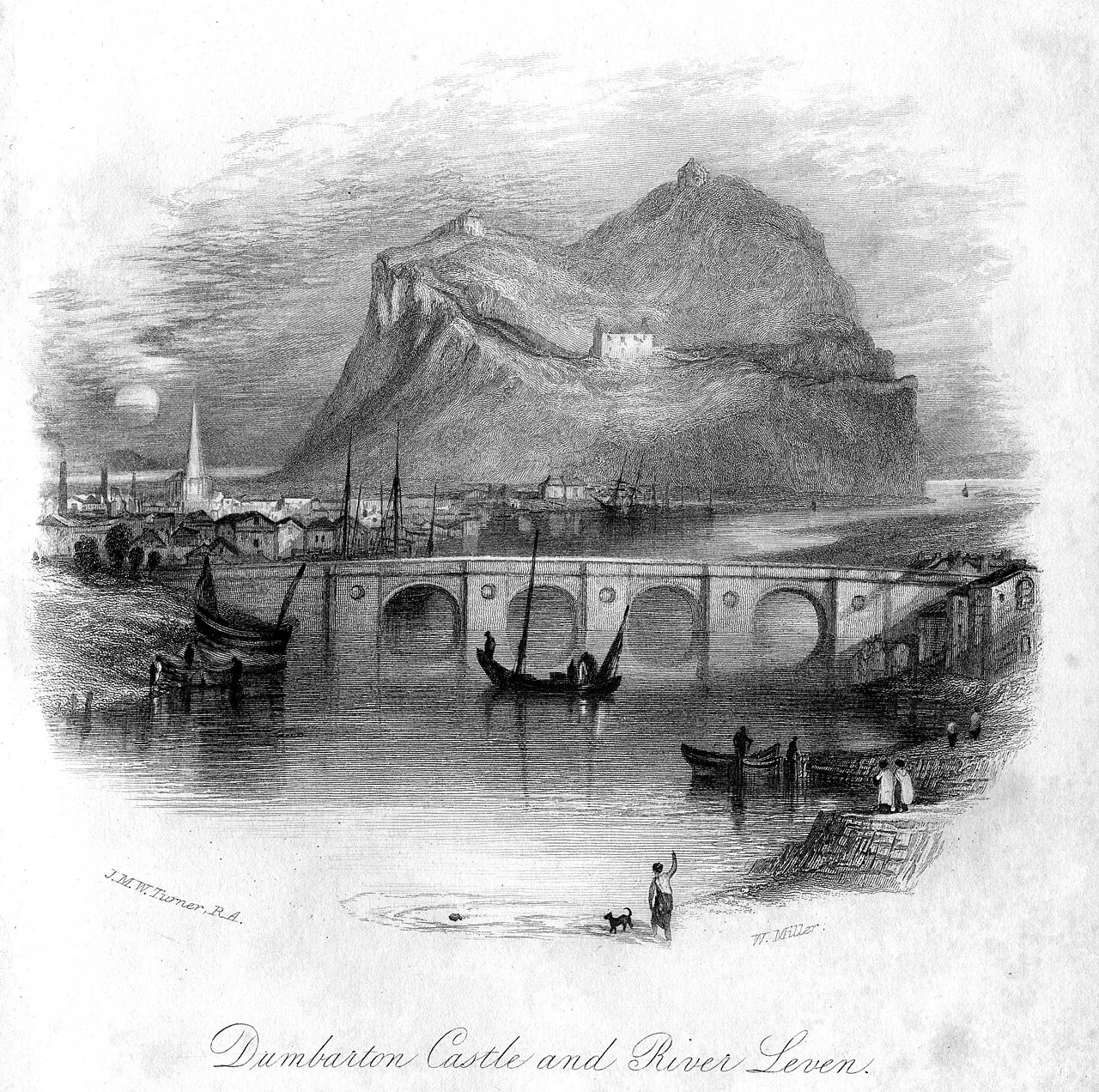 Dumbarton Rock above the River Leven, engraving by William Miller after J. M. W. Turner, 1836Wikimedia Commons, William Miller after J. M. W. Turner, Public domain (Dumbarton castle engraving by William Miller after Turner R518.jpg)
In 870 Amlaíb and Ímar lay siege to Dumbarton Rock, the fortress of the Britons of Strathclyde where the Leven meets the Clyde. It falls after four months, when its water supply fails. In 871 the two kings return to Dublin with 200 ships, bringing, in the words of the Annals of Ulster, “a great prey of Angles, Britons and Picts” as captives. Arthgal, king of the Britons of Strathclyde, is killed in 872 at the instigation of Causantín, king of the Picts, and the centre of his kingdom moves up the Clyde to Govan.
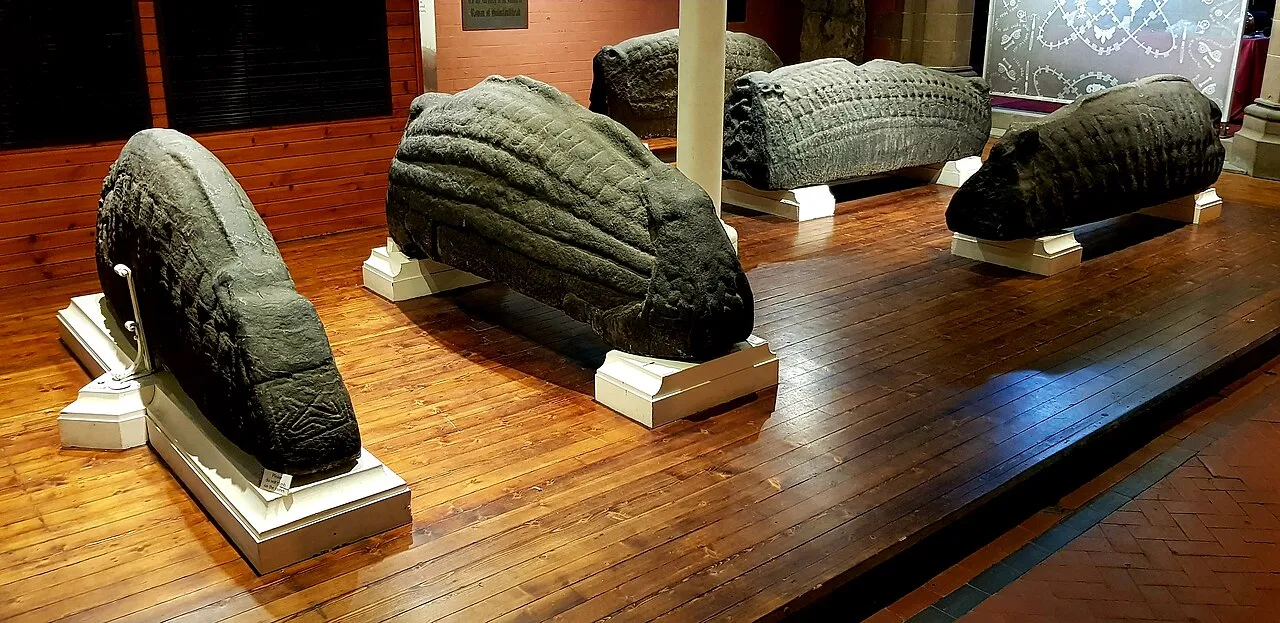 Hogback grave stones of the Viking Age in Govan Old Church, GlasgowWikimedia Commons, Viking870, CC BY-SA 4.0 (Govan Stones hogbacks.jpg)
Amlaíb disappears from the Irish annals after 871, and the Chronicle of the Kings of Alba says that Causantín kills him while he collects tribute in Pictland. Ímar dies in 873, and the Annals of Ulster call him “king of the Norsemen of all Ireland and Britain”. In 875 a Danish army under Halfdan comes from the Tyne and defeats the Picts near Dollar, and Causantín falls fighting another Viking army in 877.
Donald II, who dies at Dunnottar in 900, is the first king called rí Alban, king of Alba, the name of the kingdom that grows out of Pictland. In 902 Máel Finnia, king of Brega, and Cerball, king of Leinster, drive the Vikings out of Dublin. The descendants of Ímar, the Uí Ímair, stay active around the Irish Sea, in Scotland and on Man.
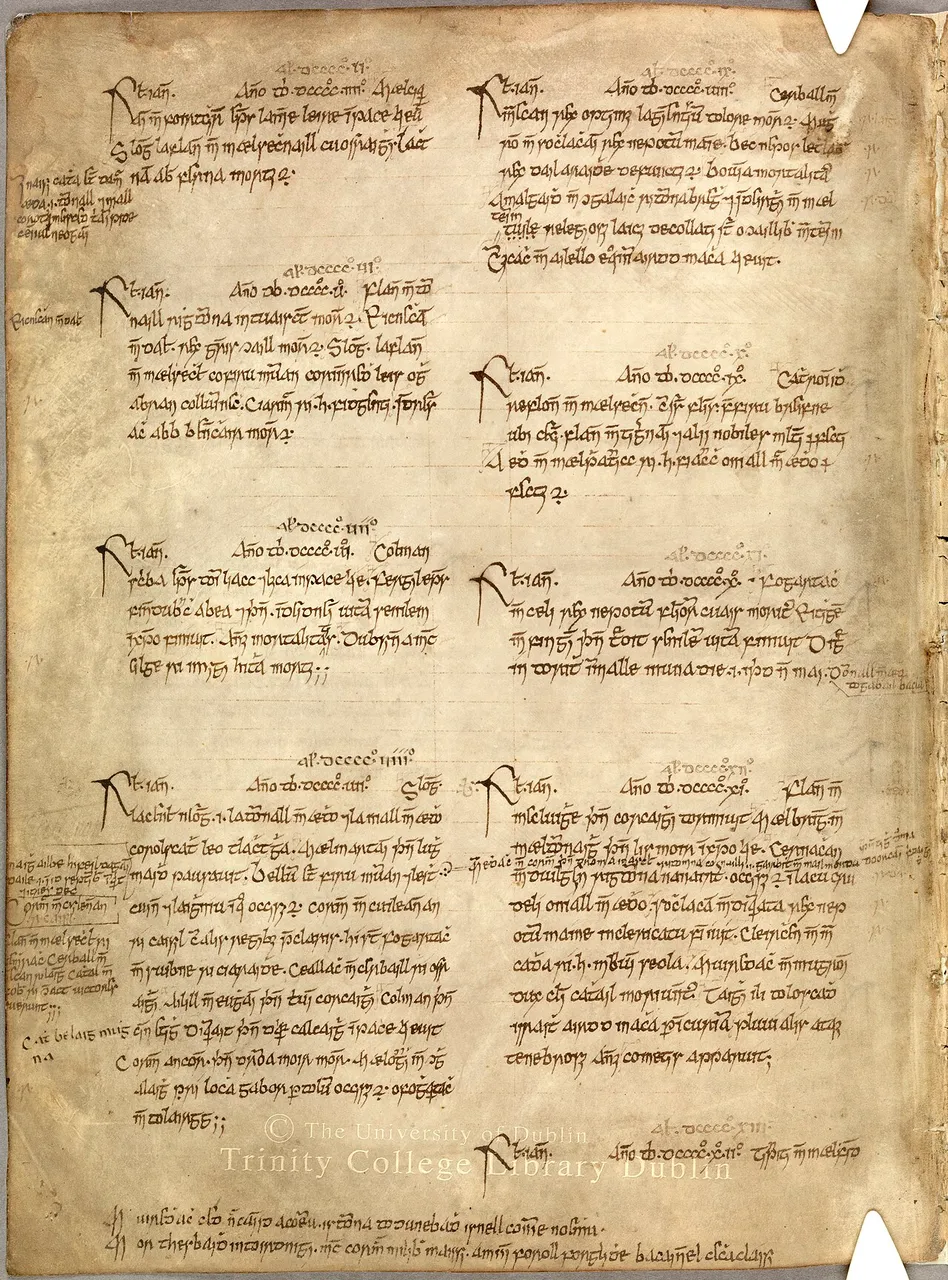 A page of the Annals of Ulster with the years 902 to 913, copied in the late 15th century, Trinity College Dublin MS 1282Wikimedia Commons, Ruaidhrí Ó Luinín, Public domain (Annals of Ulster (Trinity College Dublin's MS 1282), fol.45*v.jpg)
Sources
- Annals of Ulster, entries for 856 to 902.
- Alex Woolf, From Pictland to Alba: 789–1070 (2007).
- Tim Clarkson, Strathclyde and the Anglo-Saxons in the Viking Age (2014).
Prev: Longphorts and Dublin, 837–853Next: Orkney and the Isles, c. 870–1014