837–853
Longphorts and Dublin, 837–853
The Annals of Ulster record the first large Viking fleets in Ireland in 837: sixty ships on the Boyne and sixty on the Liffey. They plunder the plains of Brega and of the Liffey, their churches, settlements and herds. From then on the raiders strike the large monastic towns, among them Armagh, Glendalough, Kildare, Slane, Clonard and Clonmacnoise. In 840–841 the Vikings winter in Ireland for the first time, and in 841 the annals note them still on Lough Neagh.
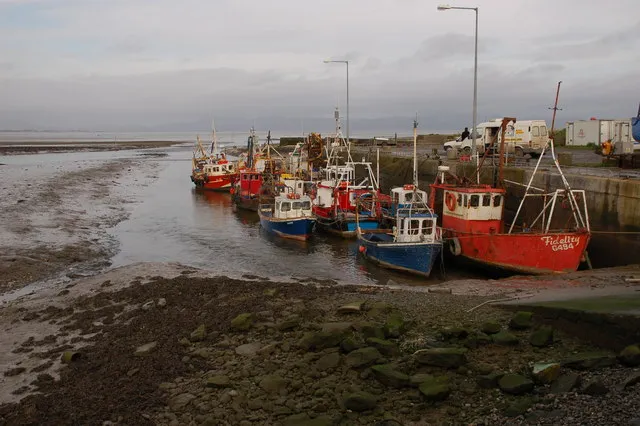 The harbour of Annagassan, where the River Glyde meets Dundalk Bay, beside the site of the longphort of Linn DuachaillWikimedia Commons, Albert Bridge, CC BY-SA 2.0 (Annagassan harbour - geograph.org.uk - 286767.jpg)
In 841 they build fortified ship camps, longphorts in Irish, at Linn Duachaill near today’s Annagassan and at Duiblinn on the Liffey. From Duiblinn they plunder Leinster and the lands of the Uí Néill as far as Slieve Bloom. Duiblinn, “the black pool”, is the pool where the Poddle meets the Liffey, and the camp grows into the town of Dublin. In 845 Máel Sechnaill, king of Meath, captures the Viking leader Turgesius, who has raided Connacht, Meath and Clonmacnoise, and drowns him in Lough Owel.
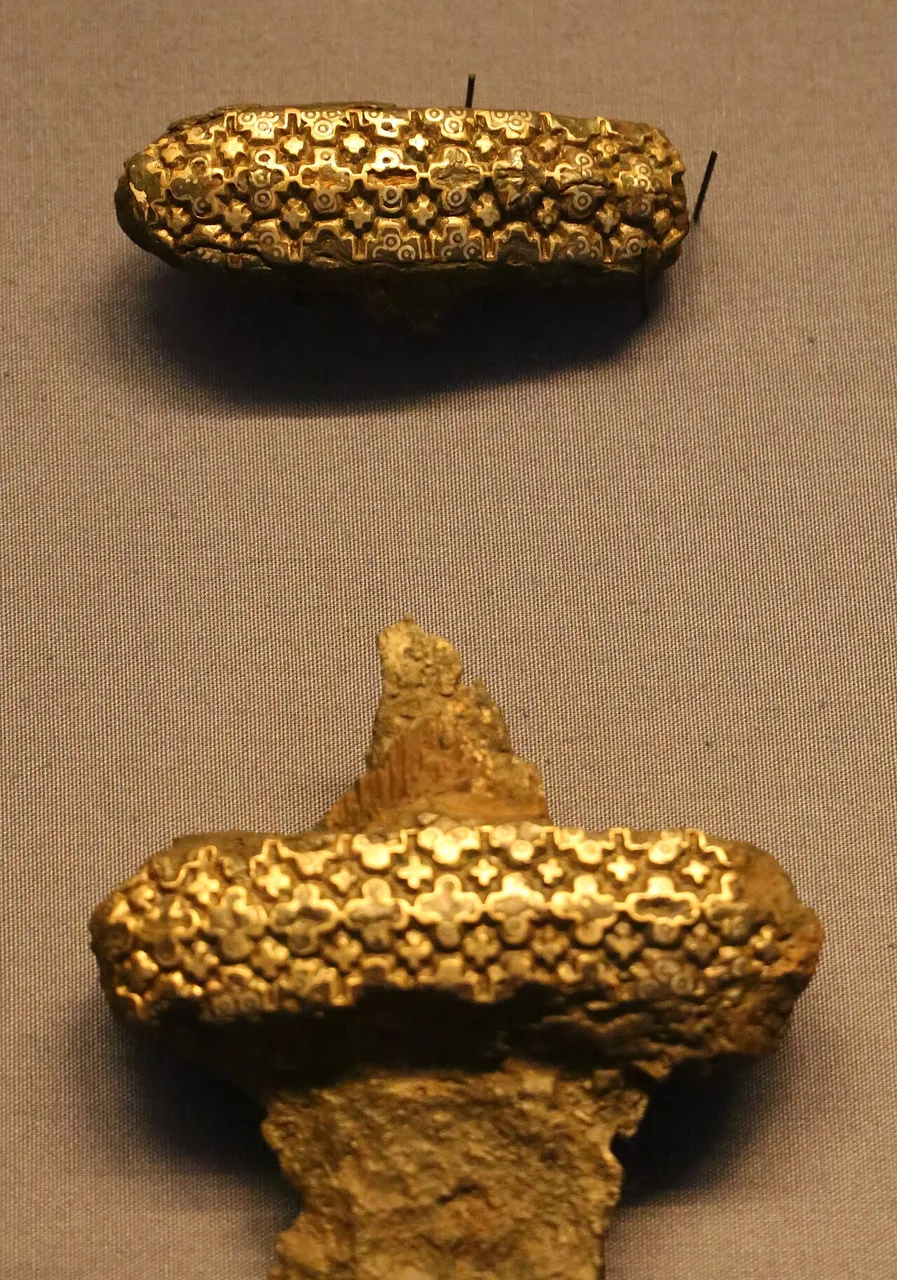 Gilded hilt fittings of a sword from a Viking burial at Donnybrook in Dublin, National Museum of IrelandWikimedia Commons, Sailko, CC BY 3.0 (Spada di ferro e frammento di pettine e di fusaiola in osso, da una sepoltura vichinga a donnybrook, co. di dublino, 02.jpg)
In 851 a new group arrives, whom the annals call the Dubgaill, the “dark foreigners”, as against the Finngaill, the “fair foreigners” already in Ireland. The Dubgaill kill many Finngaill at Dublin, plunder their camp and raid Linn Duachaill. In 852, by the Annals of Ulster, the Finngaill bring 160 ships against them at Snám Aignech, now Carlingford Lough, and after three days of fighting abandon their ships to the Dubgaill. Historians long read the two names as Norwegians and Danes, and many now read them as the settlers already in Ireland and the newcomers.
In 853 Amlaíb, “son of the king of Lochlann”, comes to Ireland. The Annals of Ulster say that the foreigners of Ireland submit to him and that he takes tribute from the Irish. Historians call him the first king of Dublin. Lochlann is often read as Norway, and several historians read it as the Norse lands in the Scottish islands.
Sources
- Annals of Ulster, entries for 837 to 853.
- Donnchadh Ó Corráin, "The Vikings in Scotland and Ireland in the Ninth Century", Peritia 12 (1998), pp. 296 to 339.
- Clare Downham, Viking Kings of Britain and Ireland: The Dynasty of Ívarr to A.D. 1014 (2007).
Prev: The duchy of Normandy, 911–1066Next: Ímar, Amlaíb and Dumbarton, 853–902