834–837
Dorestad, 834–837
Dorestad, on the Rhine where the Lek and the Kromme Rijn branch off, is the great trading port of the Frankish north and has its own mint. It is at its height in the 820s and 830s. In these years Louis the Pious fights his sons for the empire, and his eldest son Lothar has Danish allies under Harald the Younger raid Frisia to weaken his father by making its trade routes unsafe.
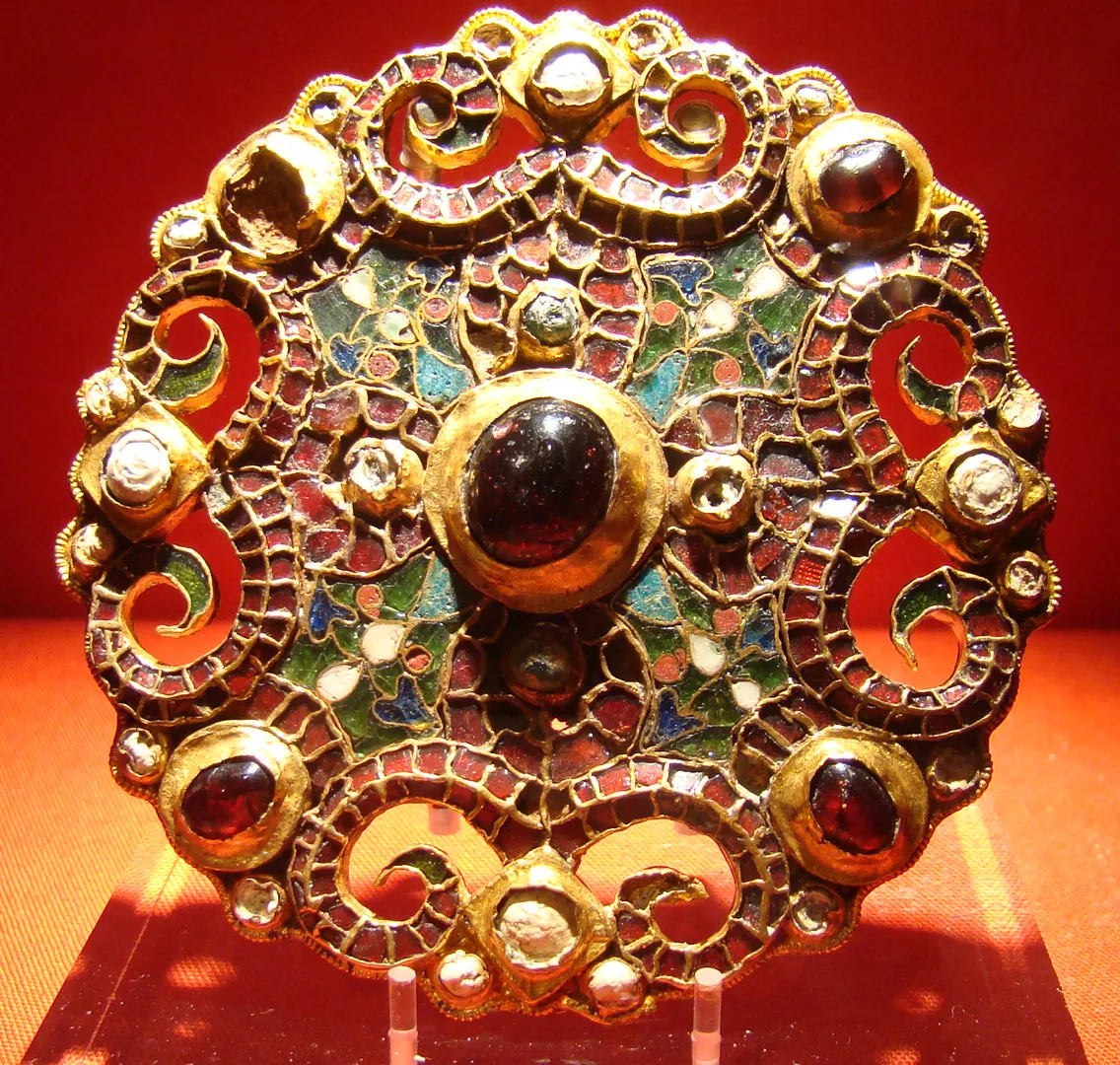 Gold brooch with garnets and enamel of about 800, found in a well at Dorestad, Rijksmuseum van Oudheden, LeidenWikimedia Commons, Arch, Public domain (Leiden-dorestad.jpg)
In 834 a Danish fleet sacks Dorestad. The Danes sack it again in 835 and 836, and in 836 they also burn Antwerp. King Horik of the Danes sends envoys to Louis in 836 to say that he has nothing to do with the raids on Frisia, and in 838 he reports that he has executed those responsible.
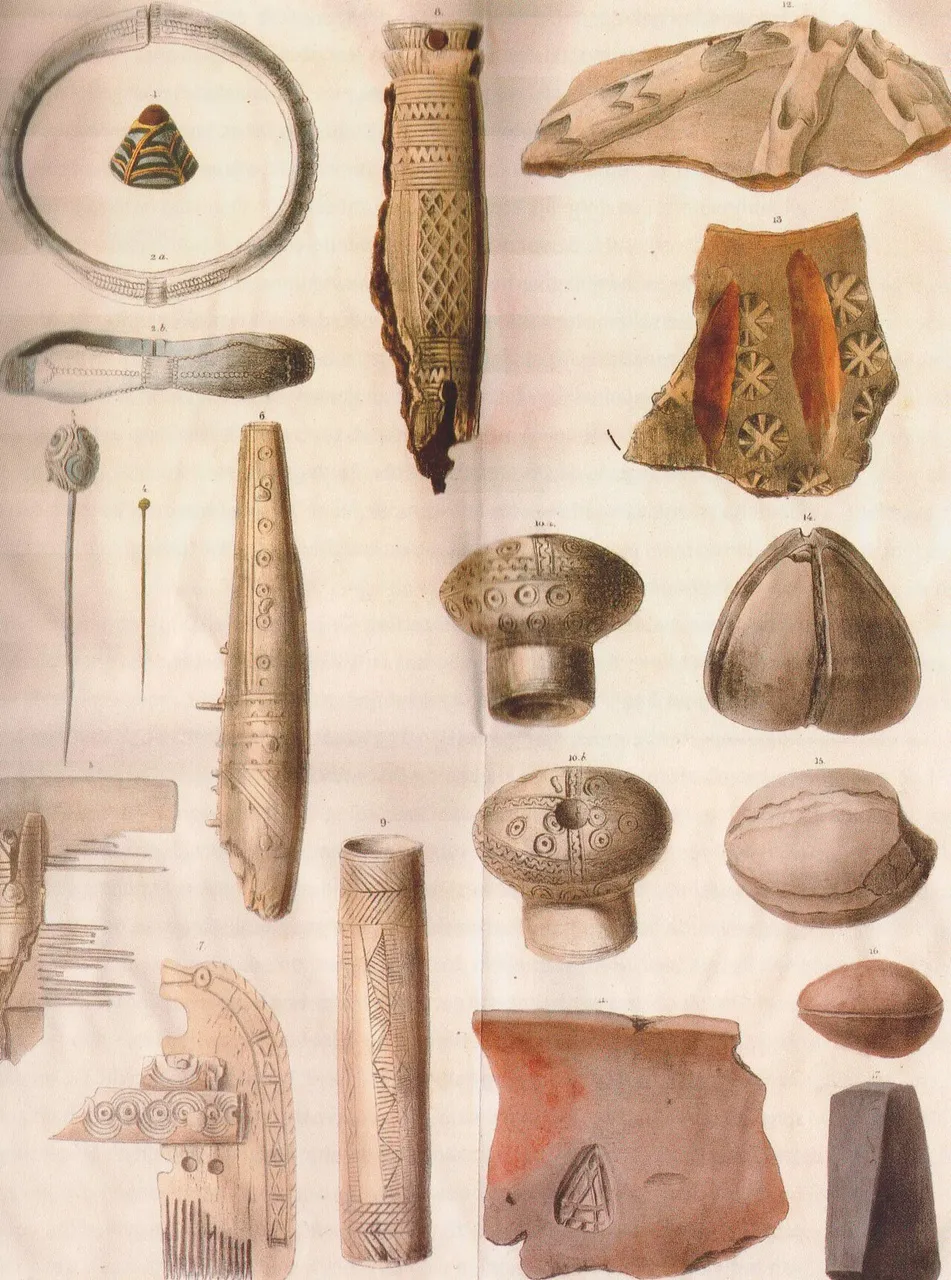 Finds from the first excavation at Dorestad, a plate published in 1842Wikimedia Commons, L. J. F. Janssen (possibly), Public domain (Dorestad vondsten 1841.jpg)
In 837 the Northmen land on Walcheren to collect tribute and on 17 June kill the count, Eccihard, and the Danish noble Hemming, son of Halfdan, with many others. They fall on Dorestad in the same way and take tribute from the Frisians. Louis postpones a journey to Rome and hurries to the fort of Nijmegen, and the raiders withdraw as soon as they hear of it.
After Louis’s death in 840, Lothar grants Walcheren and Dorestad to Harald and his brother Rorik in 841. Rorik, based on the island of Wieringen, takes Dorestad again in 850 and rules most of Frisia for Lothar, while the town’s mint still strikes coins in the emperor’s name. Dorestad is sacked for the last time in 863 and then fades away, perhaps because the river channel that carried its trade shifts.
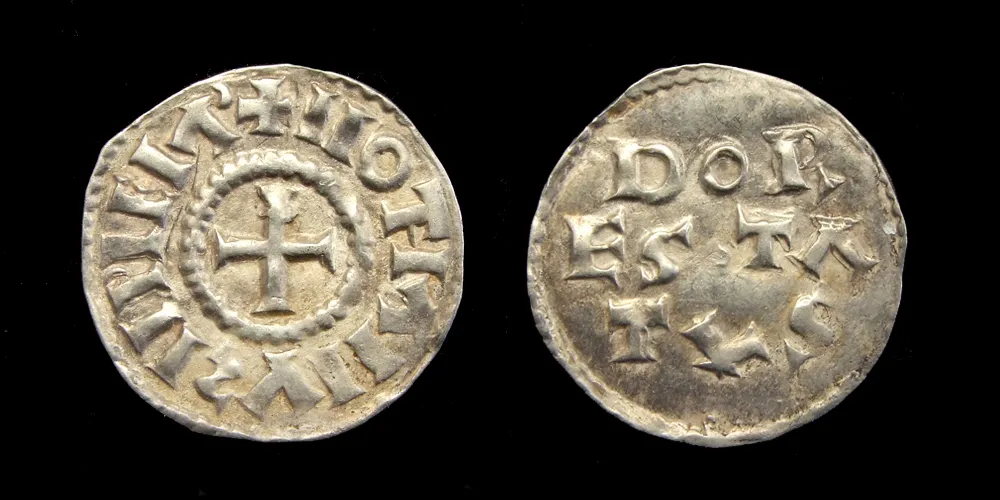 Silver denier of Lothar I struck at Dorestad after 850, with the town’s name on the reverseWikimedia Commons, Numisantica, CC BY-SA 3.0 nl (Karolingische denier Lotharius Dorestad.jpg)
Sources
- Annals of St Bertin, years 834 to 837.
- Annals of Fulda, year 837.
- Simon Coupland, "From poachers to gamekeepers: Scandinavian warlords and Carolingian kings", Early Medieval Europe (1998).
Prev: Godfred and Charlemagne, 804–810Next: Nantes and Seville, 843–844