18 June – 4 August 860
The Rus' at Constantinople, 860
On 18 June 860, at sunset, a fleet of about 200 Rus' ships sails into the Bosporus. Emperor Michael III has left the city at the beginning of June to campaign against the Abbasids in Asia Minor, and the army and the fleet are away. The Rus' plunder the suburbs of Constantinople, burn houses and drown or stab the people they find.
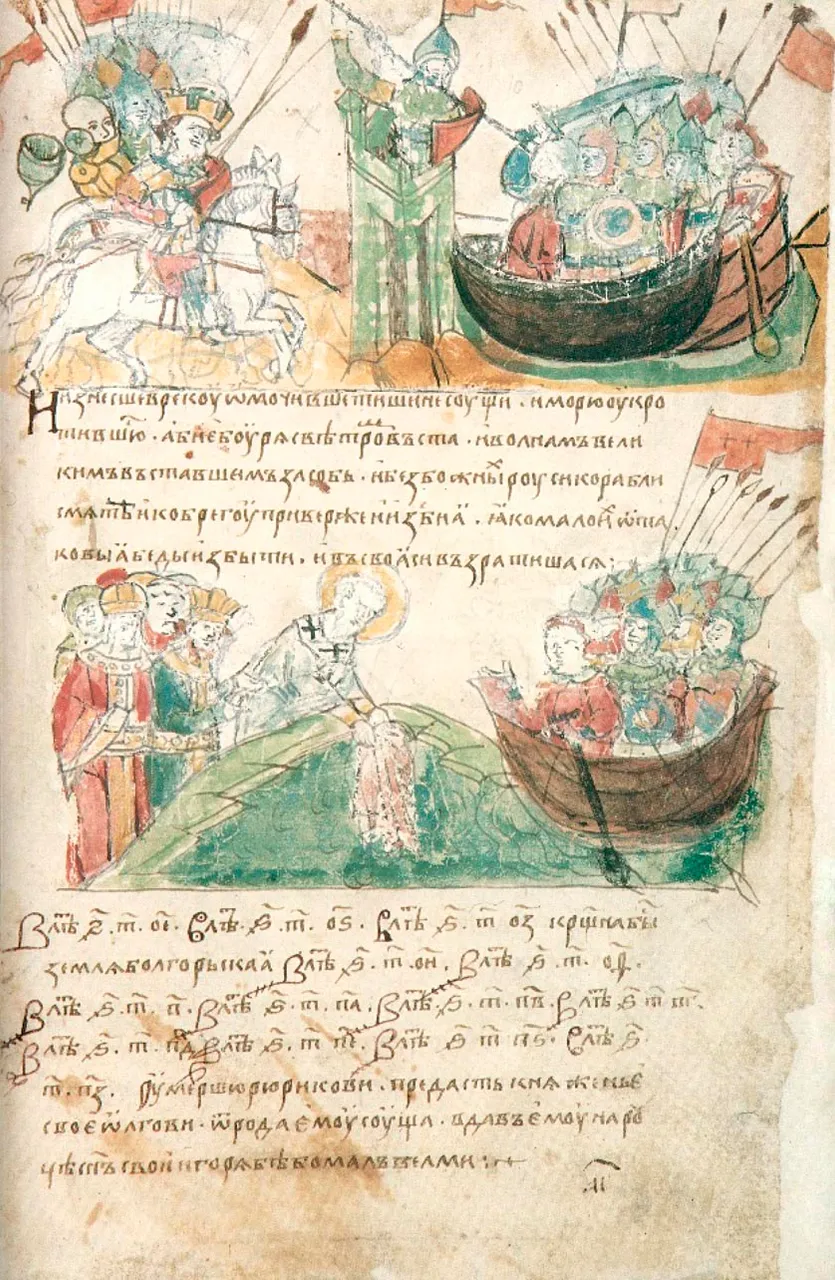 The Rus' fleet before Constantinople, and the robe of the Virgin dipped in the sea, a page of the Radziwiłł Chronicle, late 15th centuryWikimedia Commons, unknown artist, Public domain (10 1 List of Radzivill Chron.jpg)
From the Bosporus they pass into the Sea of Marmara and land on the Princes’ Islands, where the deposed patriarch Ignatius lives in exile. They plunder the houses and monasteries and cut 22 of his servants to pieces with axes on board a ship. The attack lasts until 4 August, when Patriarch Photios gives thanks in a sermon for the deliverance of the city.
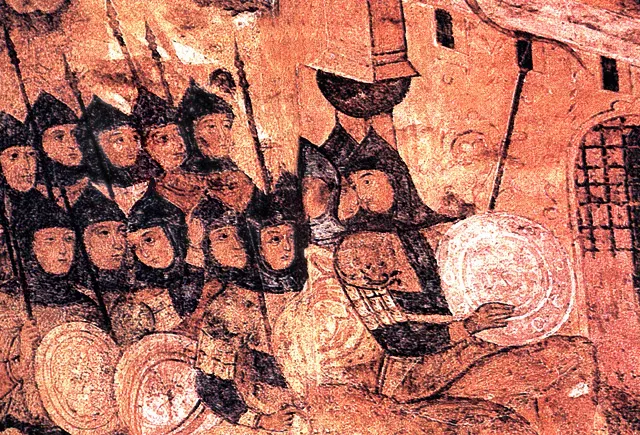 Rus' warriors under the walls of Constantinople, detail of a medieval Russian iconWikimedia Commons, unknown artist, Public domain (Царьград.jpg)
Photios’s sermons are the earliest Greek text to name the Rhos. He calls them an obscure people from distant northern lands with no supreme ruler, and writes that their attack came “like a thunderbolt from heaven”. A letter of Pope Nicholas I of 865 and the Venetian chronicle of John the Deacon say that the raiders went home unpunished and in triumph.
Later Byzantine writers credit their withdrawal to the emperor’s return and to a storm that rose when the robe of the Virgin was dipped in the sea. The Primary Chronicle takes this story from George Hamartolos, dates it to 866 and names as leaders Askold and Dir, two followers of Rurik who rule Kiev.
Sources
- Photios, sermons on the attack of the Rus', 860.
- Alexander Vasiliev, The Russian Attack on Constantinople in 860 (1925).
- Jonathan Harris, Constantinople: Capital of Byzantium (2007).
Prev: Staraya Ladoga and the Rhos, c. 750–839Next: Rurik and Oleg, 862–911