January – April 878
Chippenham and Athelney, 878
Guthrum’s army spends the end of 877 at Gloucester, while Alfred keeps Christmas at the royal estate of Chippenham, about 30 miles to the south. In midwinter after Twelfth Night, probably in the night of 6 to 7 January 878, the Danes fall on Chippenham. By the Chronicle’s account they occupy the land of the West Saxons, drive many people overseas and force most of the rest to submit.
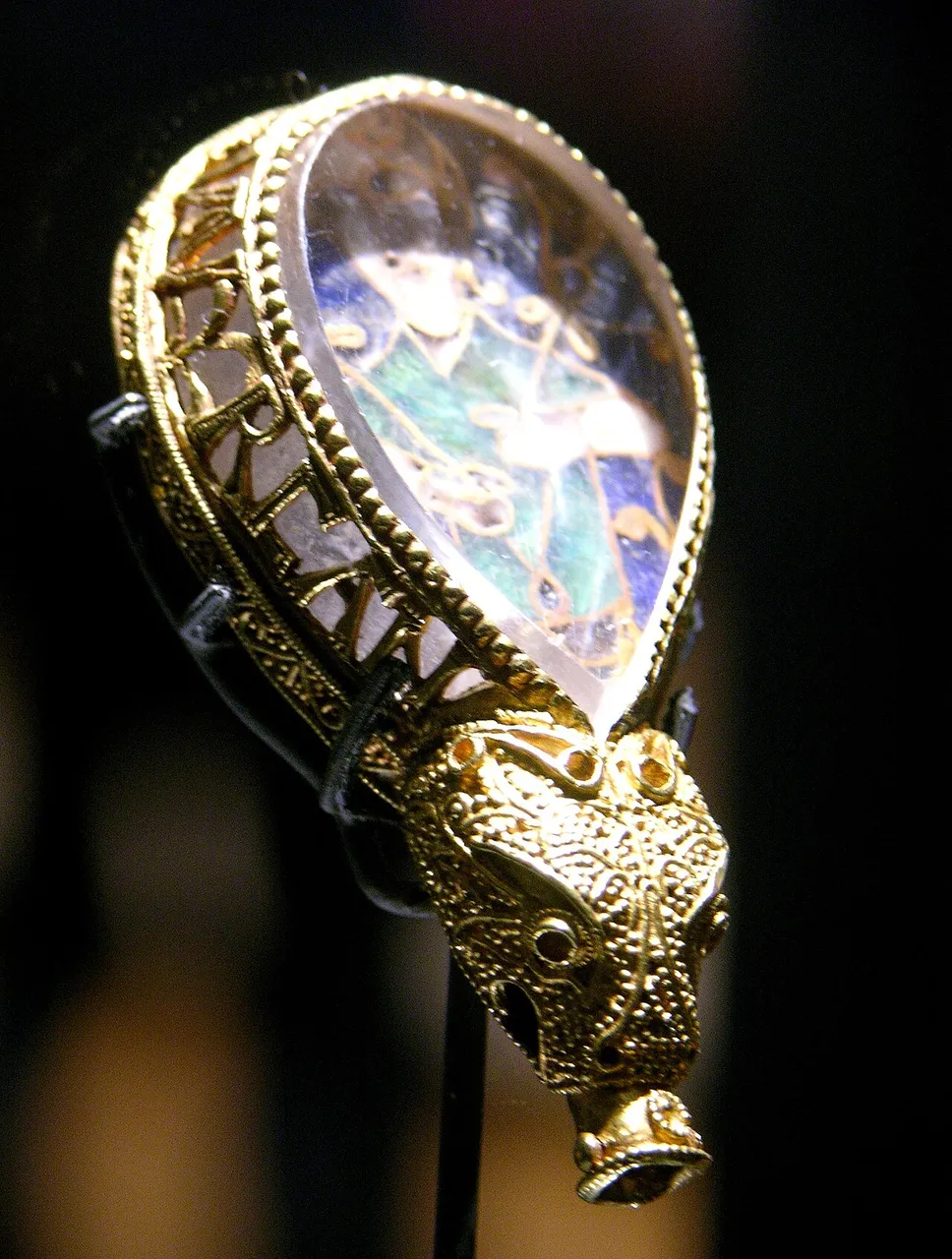 The Alfred Jewel, inscribed AELFRED MEC HEHT GEWYRCAN, ‘Alfred ordered me made’, late 9th century, found near Athelney in 1693, Ashmolean Museum, OxfordWikimedia Commons, Giles Watson, CC BY-SA 2.0 (The Alfred Jewel.jpg)
Alfred escapes with a small band into the woods and the moors of Somerset. At Easter he builds a fort at Athelney, an island in the marshes, and from there fights the Danes with the men of Somerset nearest to it. The story of Alfred burning a peasant woman’s cakes is first written down about a century after his death.
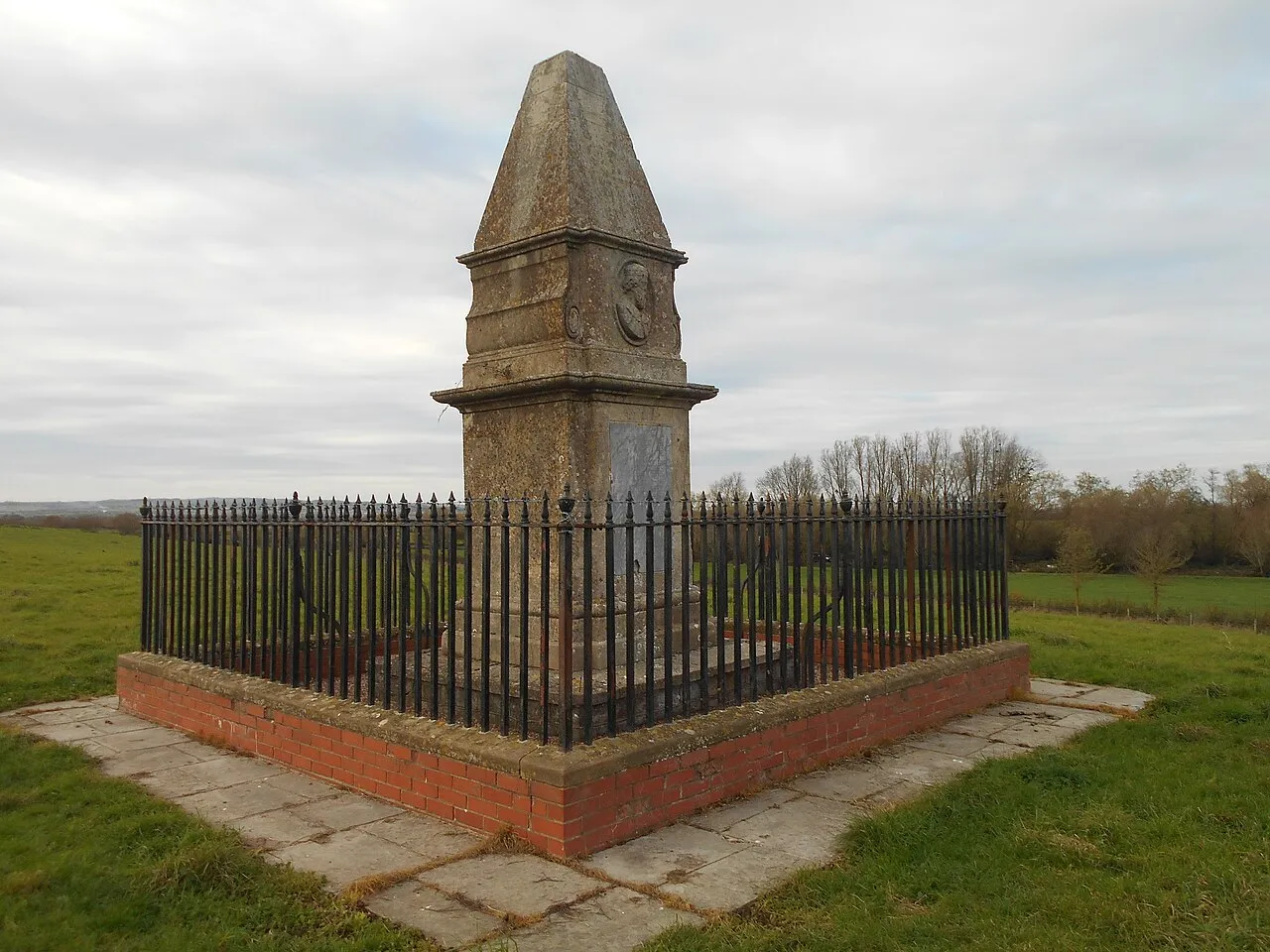 The monument of 1801 on the former isle of Athelney in the Somerset Levels, where Alfred built his fortWikimedia Commons, Simon Burchell, CC BY-SA 4.0 (King Alfred's Monument, Athelney 05.jpg)
That winter a brother of Ivar and Halfdan, named Ubba in later sources, sails with 23 ships from Dyfed, where his army has wintered, to Devon. He besieges a fort called Cynwit, where Odda, ealdorman of Devon, and his men have taken refuge with little food or water. By Asser’s account the West Saxons break out at dawn and overwhelm the Danes, who lose their leader, 840 men by the Chronicle’s count, and the war banner called the Raven. The site of the fort is probably Countisbury Hill on the north coast of Devon.
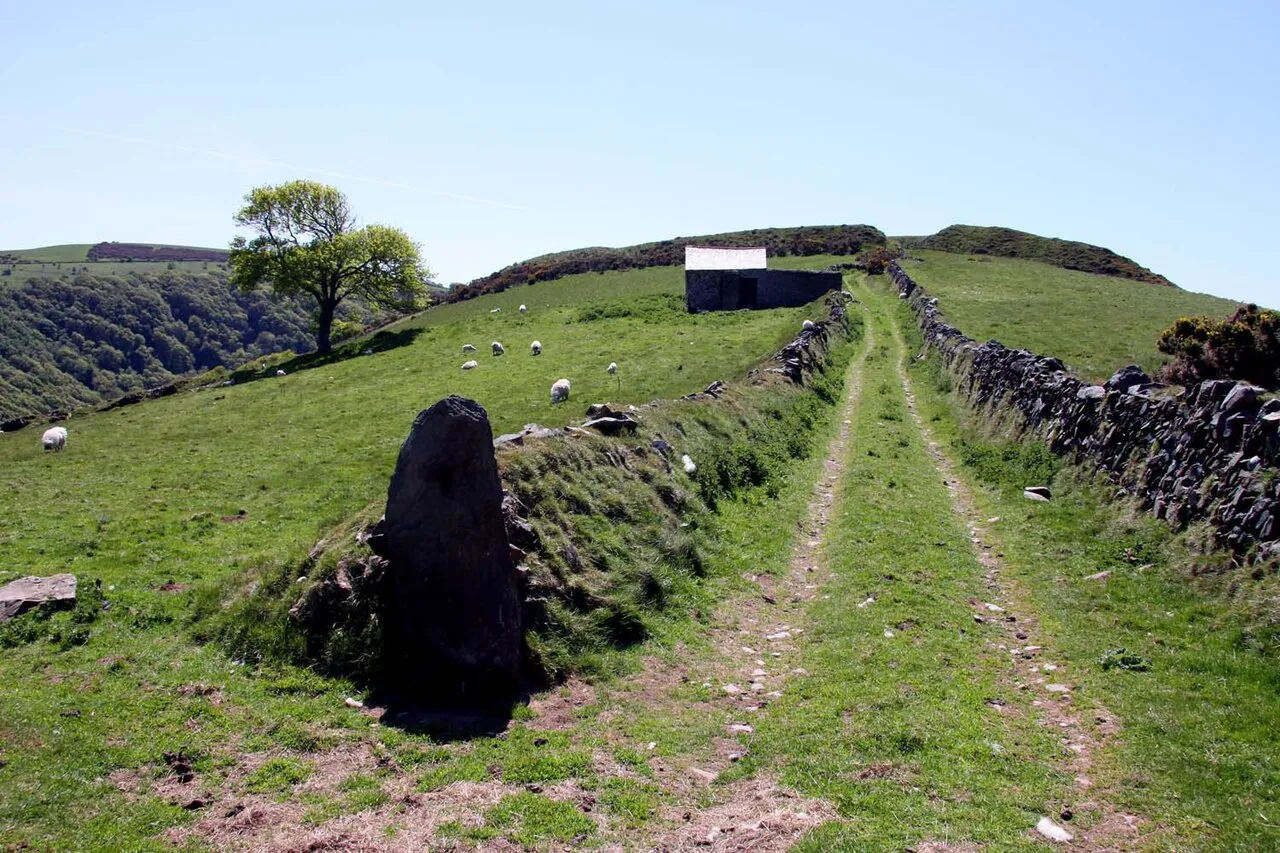 The track up Wind Hill at Countisbury in north Devon, the likeliest site of the fort of CynwitWikimedia Commons, Steve Daniels, CC BY-SA 2.0 (Track up Wind Hill.jpg)
Sources
- Anglo-Saxon Chronicle, entry for 878.
- Asser, Life of King Alfred, chapters 52 to 55.
- Simon Keynes and Michael Lapidge (eds), Alfred the Great: Asser’s Life of King Alfred and Other Contemporary Sources (1983).
Prev: Repton and the division of the army, 873–877Next: The march to Ethandun