918–937
York and Brunanburh, 919–937
Ragnall, a grandson of Ímar, fights Constantine II of Scotland at Corbridge in 918 and in 919 makes himself king at York. In 920 he and the other northern rulers come to terms with Edward the Elder, and he dies in 921. His kinsman Sihtric, who had retaken Dublin in 917, succeeds him, and coins struck at Lincoln in Sihtric’s name suggest that his rule reaches south of the Humber.
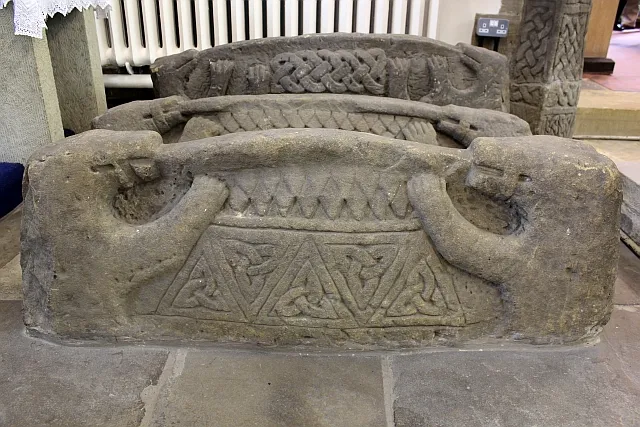 Hogback grave stones of the Viking Age in the church at Brompton, North YorkshireWikimedia Commons, Bob Embleton, CC BY-SA 2.0 (Hogback Stones, Brompton Church - geograph.org.uk - 3029506.jpg)
Edward’s son Æthelstan meets Sihtric at Tamworth in January 926 and gives him his sister in marriage. When Sihtric dies in 927, Æthelstan takes York and drives out Sihtric’s kinsman Guthfrith, king of Dublin, who claims the throne. On 12 July 927 at Eamont, near Penrith, Constantine of Alba, Hywel Dda of Deheubarth, Owain of Gwent and Ealdred of Bamburgh accept his lordship, and his coins begin to call him king of all Britain.
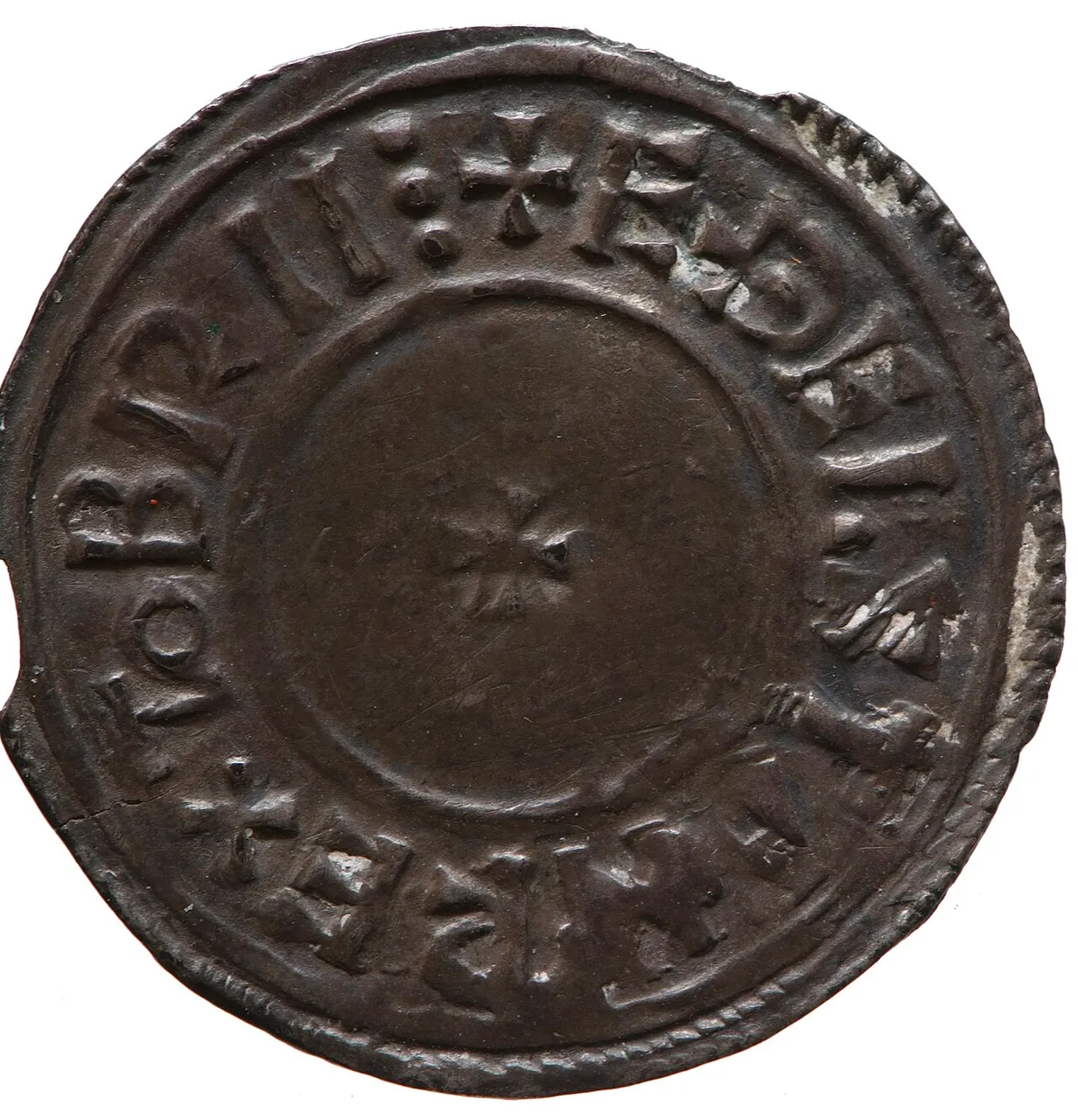 A silver penny of Æthelstan of the circumscription cross type, naming him king of all Britain, York Museums TrustWikimedia Commons, York Museums Trust, CC BY-SA 4.0 (Silver penny of King Aethestan (YORYM 2000 623) obverse.jpg)
In August 937 Olaf Guthfrithson, king of Dublin, sails to join Constantine and Owain of Strathclyde, and the allies invade England. Æthelstan and his half-brother Edmund meet them with an army of West Saxons and Mercians at Brunanburh, and after fighting all day they put the invaders to flight. By the poem on the battle in the Anglo-Saxon Chronicle five young kings and seven of Olaf’s earls fall, Constantine loses a son, and Olaf escapes by sea to Dublin.
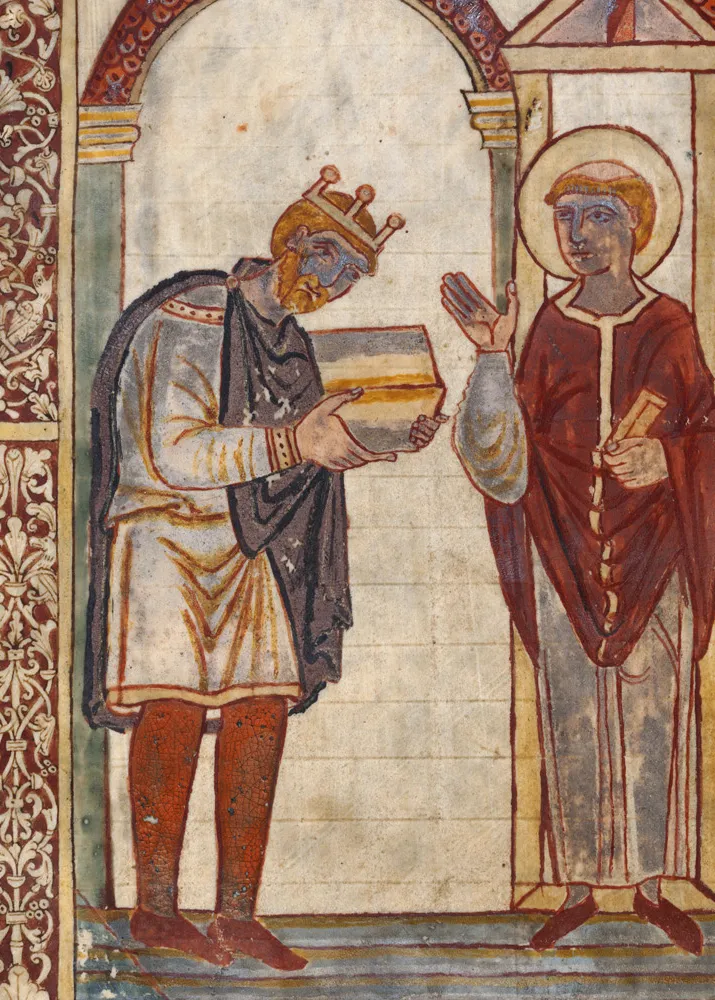 King Æthelstan presents a copy of Bede’s Life of St Cuthbert to the saint, the frontispiece of that manuscript, about 930Wikimedia Commons, unknown artist, Public domain (Athelstan (cropped).jpg)
The site of Brunanburh is disputed, and more than forty places have been proposed. Most historians favour Bromborough on the Wirral, whose name may come from Brunanburh, while John of Worcester and other writers of the 12th century bring Olaf’s fleet into the Humber.
Sources
- Anglo-Saxon Chronicle, entries for 918 to 937, with the poem The Battle of Brunanburh.
- Sarah Foot, Æthelstan: The First King of England (2011).
- Michael Livingston (ed.), The Battle of Brunanburh: A Casebook (2011).
Prev: Tettenhall and the Five Boroughs, 909–918Next: Eric Bloodaxe and the end of York, 939–954