Spring to 20 June 217 BC
The road to Trasimene
For 217 BC Rome elects the consuls Gnaeus Servilius Geminus and Gaius Flaminius. Each commands an army of four legions with more cavalry than usual. Flaminius waits at Arretium in Etruria and Servilius at Ariminum on the Adriatic, ready to block either road into central Italy.
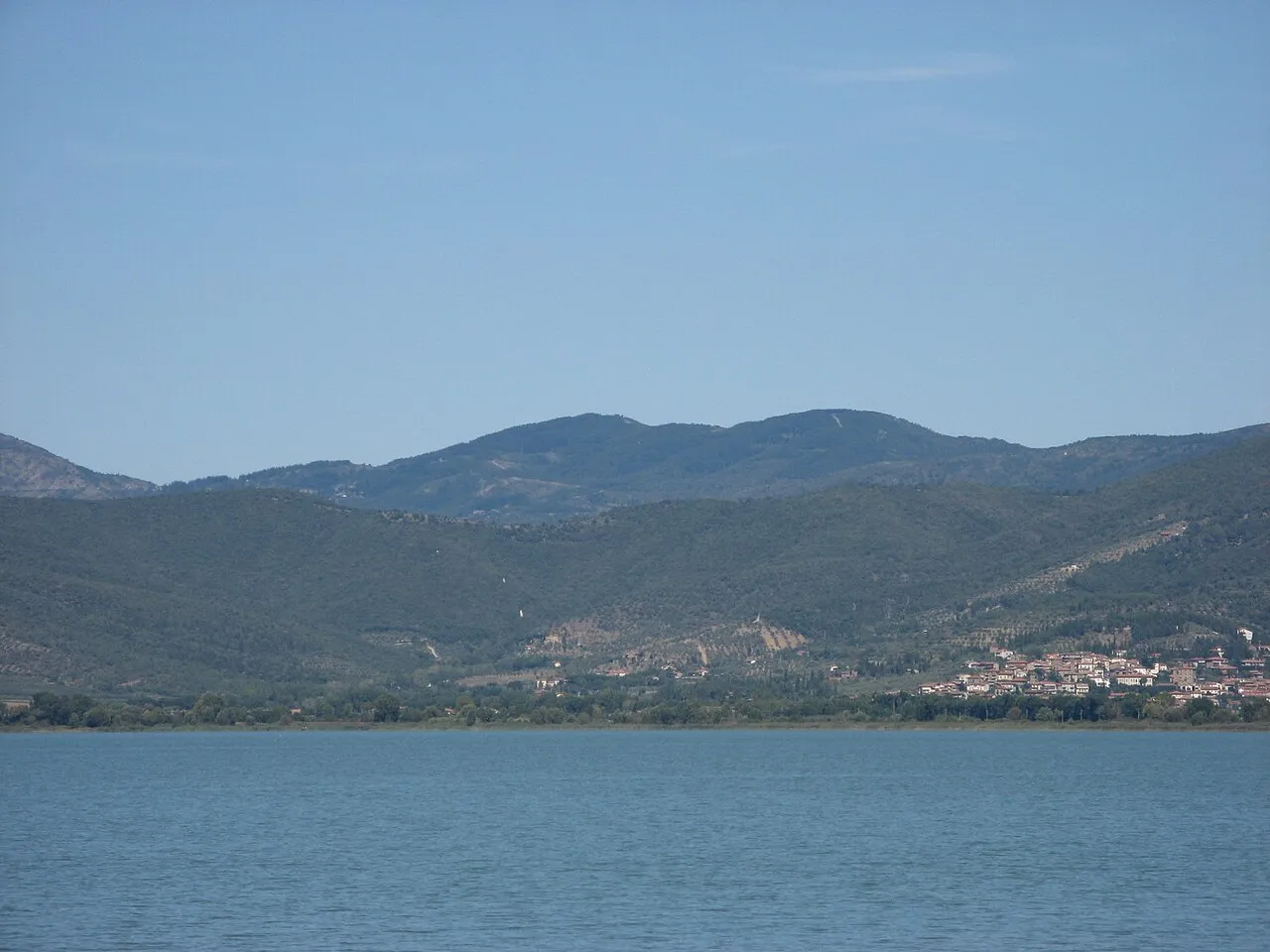 The north shore of Lake Trasimene near Tuoro, where the Roman column marched between the hills and the waterWikimedia Commons, Tom Bennett, CC BY-SA 3.0 (Trasimene battlefield.JPG)
In spring, probably in early May, Hannibal crosses the Apennines by a difficult route that neither army guards. Polybius writes that his men then march four days and three nights through the flooded marshes of the Arno. Hannibal loses a large part of his force there, and the sight of his right eye to an infection.
The Carthaginians march south past Flaminius’s army, burning villages and killing the men they find, to draw him into battle. Flaminius follows so closely that he scouts poorly, and the Romans come to believe that the enemy is fleeing. On 20 June the Carthaginians pass Cortona and march along the north shore of Lake Trasimene, where Hannibal decides to turn and fight.
Sources
- Polybius, Histories, book 3, 77 to 82.
- Livy, History of Rome, book 22, 1 to 4.
- Adrian Goldsworthy, The Fall of Carthage (2006).
Prev: The Roman centre breaks throughNext: The ambush is laid