215 – 213 BC
Syracuse changes sides
Hiero II of Syracuse, an ally of Rome since 263 BC, dies in 215 BC. His fifteen-year-old grandson Hieronymus succeeds him and, guided by his uncles, who favour Carthage, opens talks with Hannibal and Carthage. Conspirators kill him at Leontini in 214 BC, and the new republican government of Syracuse is divided between the two powers.
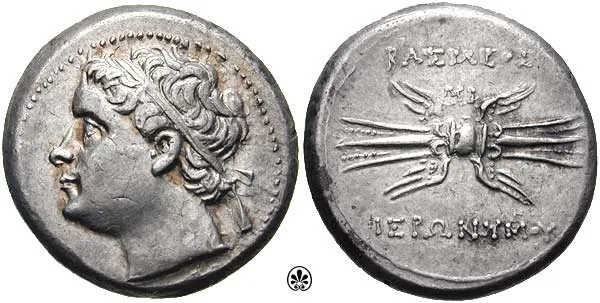 Silver coin of Hieronymus, king of Syracuse, 215 to 214 BCWikimedia Commons, WildWins, CC0 (Hyeronimus coin.jpg)
Hannibal’s envoys Hippocrates and Epicydes, Syracusans by descent who have served in his army, win over the soldiers. When Marcus Claudius Marcellus storms Leontini in 214 BC, they lead the troops back to Syracuse, kill the magistrates who favour Rome and take control of the city.
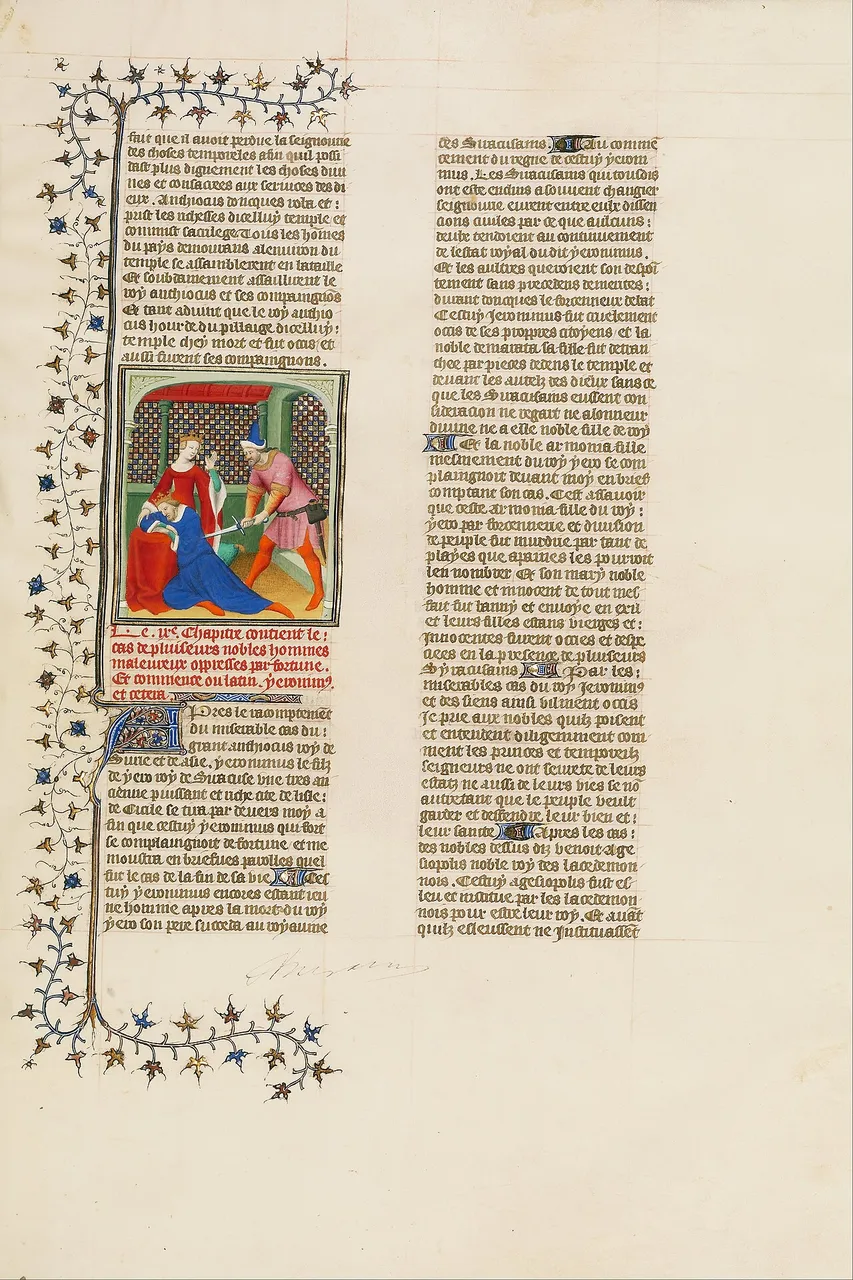 The assassination of Hieronymus at Leontini, French manuscript illumination of about 1413 to 1415Wikimedia Commons, unknown illuminator, Public domain (The Assassination of Hieronymus, King of Syracuse - Google Art Project.jpg)
In 213 BC Marcellus and the propraetor Appius Claudius Pulcher besiege Syracuse by land and sea. The city is one of the most strongly fortified in the Mediterranean, its walls enclosing the plateau of Epipolae as well as the districts of Achradina, Tyche and Neapolis and the island of Ortygia. A Carthaginian army under Himilco lands at Heraclea Minoa, retakes Agrigentum and wins over other towns of Sicily.
Sources
- Polybius, Histories, book 7.
- Livy, History of Rome, book 24.
- Dexter Hoyos, Mastering the West (2015).
Prev: The march on RomeNext: Archimedes against the assault