Autumn 212 BC
The fall of Achradina and Ortygia
Cut off from supplies, the inner city starves, and Syracusan envoys open talks with Marcellus. An Iberian captain named Moeriscus, one of the three commanders of Achradina, agrees to let the Romans in near the fountain of Arethusa on Ortygia. On the agreed signal, while the Romans make a diversionary attack on Achradina, he opens the gate. Ortygia falls, and Achradina surrenders.
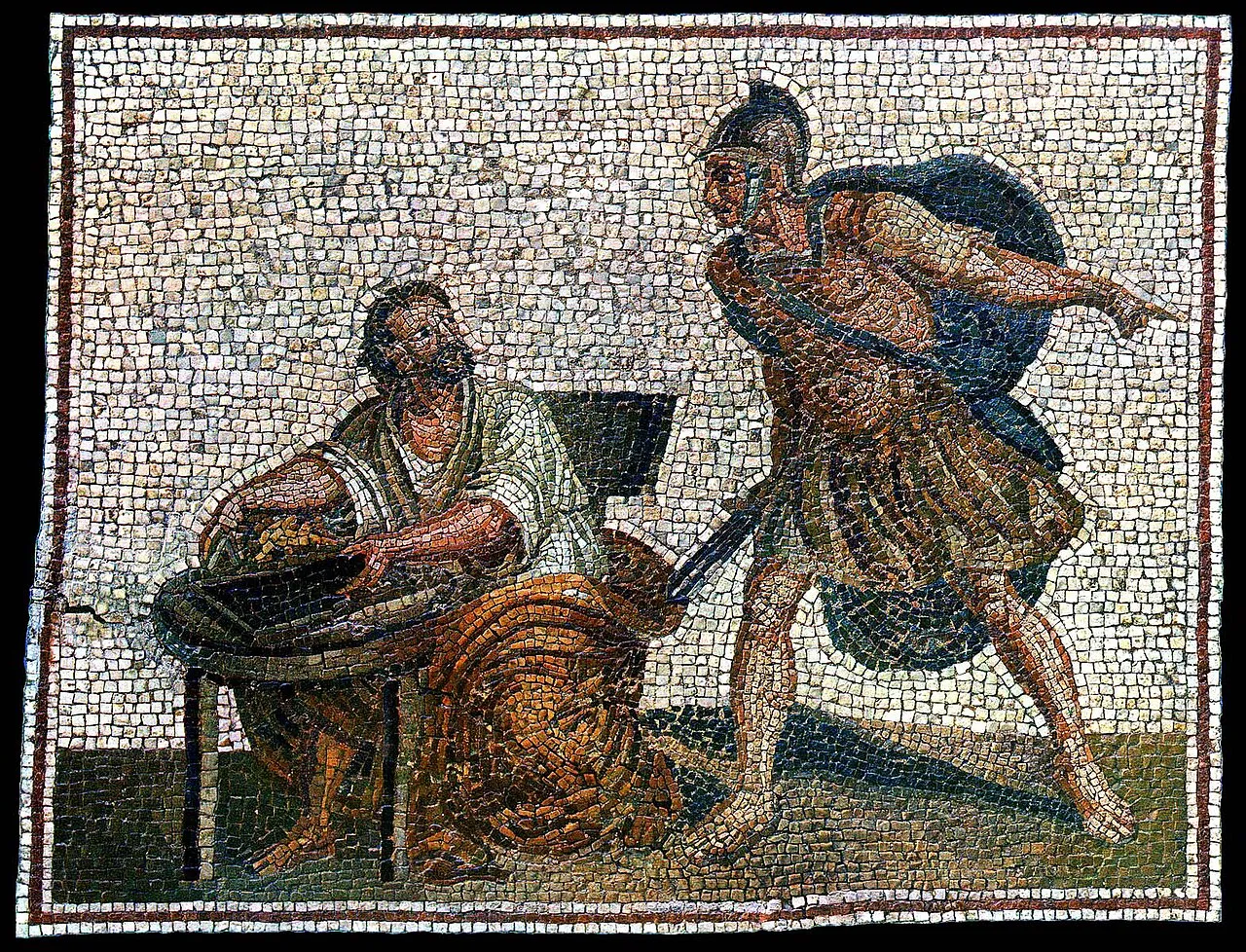 Archimedes and a Roman soldier, a mosaic long thought Roman and now dated to the 18th centuryWikimedia Commons, Public domain (Archimedes before his death with the Roman soldier, Roman mosaic.jpg)
Marcellus sets guards on the houses of the pro-Roman faction and gives the city to his soldiers to plunder. Archimedes, about 78 years old, is working at home when a Roman soldier who does not know him kills him, against Marcellus’s orders. By 210 BC the Romans have destroyed the last Carthaginian forces in Sicily and hold the whole island as a province.
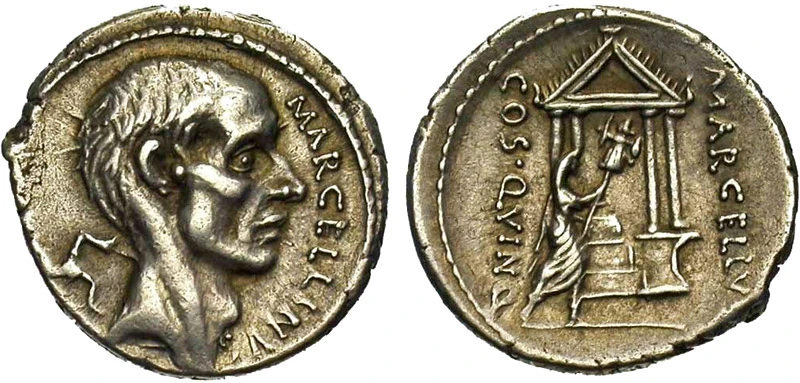 Denarius of about 50 BC honouring Marcellus, with his head and the three-legged emblem of SicilyWikimedia Commons, Public domain (Denarius Publius Cornelius Lentulus Marcellinus 3.png)
Sources
- Livy, History of Rome, book 25, 30 to 31.
- Plutarch, Life of Marcellus.
Prev: The relief army and the plagueNext: Scipio strikes at New Carthage