Late September 218 BC
Hanno goes upstream
Hannibal reaches the west bank of the Rhône about four days’ march from the sea and finds the Volcae gathered on the far bank around a fortified camp. For two days his men buy boats and canoes from the people along the river and build rafts.
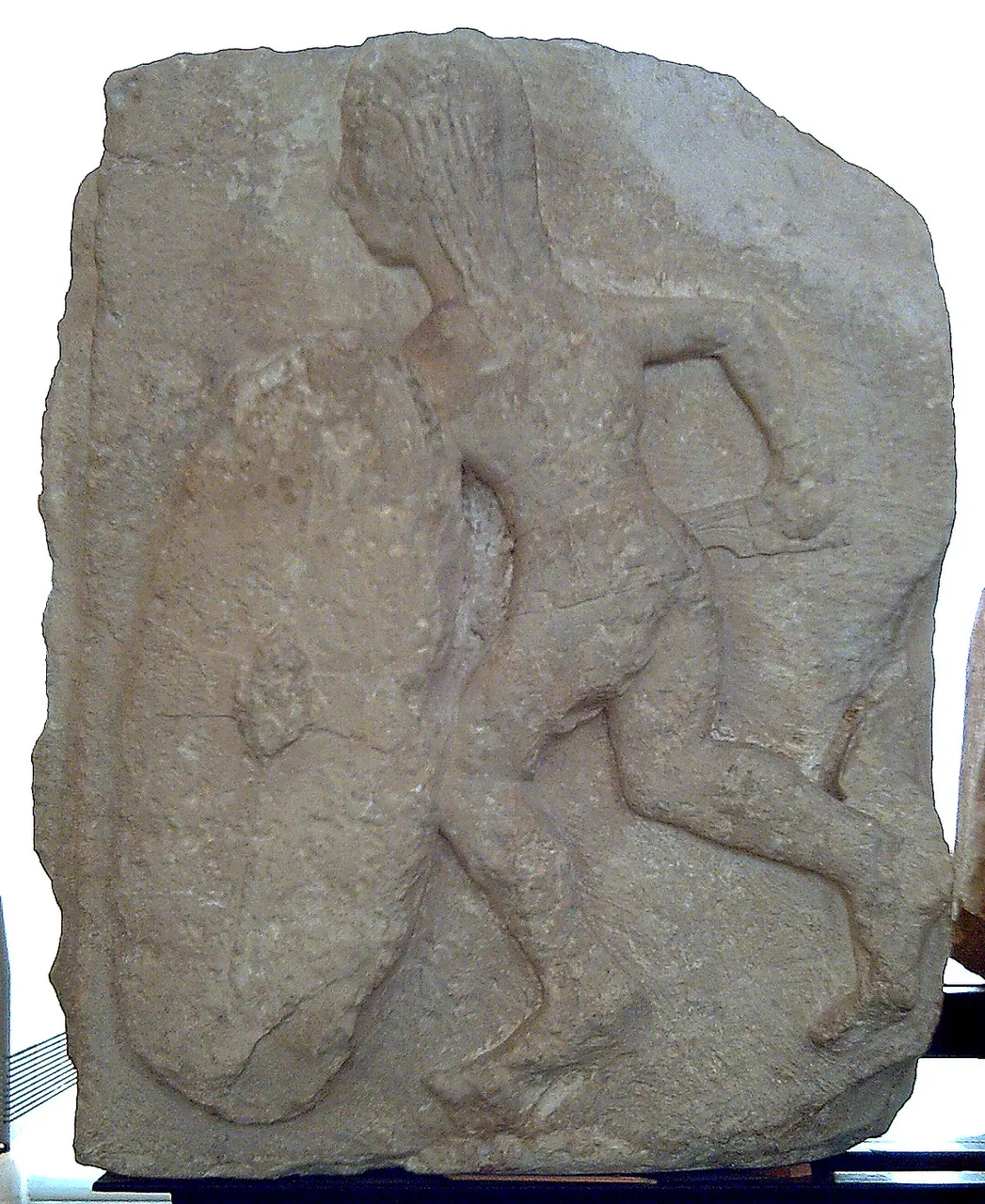 An Iberian warrior with a falcata and an oval shield, relief from Osuna, 2nd or 1st century BC, National Archaeological Museum of SpainWikimedia Commons, unknown sculptor, Public domain (Relieve de Osuna (M.A.N. Madrid) 03.jpg)
On the third night he sends Hanno, son of Bomilcar, upstream with a column of infantry and cavalry and local guides. About 40 km to the north, where an island divides the river, Hanno’s men cross on rafts, and the Iberians swim with their shields resting on inflated skins. They rest for a day, march south by night and take position on a hill behind the Gallic camp. At dawn on the fifth day a column of smoke tells Hannibal that they are there.
Sources
- Polybius, Histories, book 3, 42.
- Livy, History of Rome, book 21, 26 to 27.
- John Lazenby, Hannibal’s War (1978).
Prev: Hannibal’s march to ItalyNext: The crossing