Late 210 to early 209 BC
Scipio strikes at New Carthage
After the deaths of his father and uncle in 211 BC, Publius Cornelius Scipio, later called Africanus, lands at Tarraco late in 210 BC and takes command of all Roman forces in Iberia. He is in his mid-twenties and has held no senior office. He has 28,000 infantry and 3,000 cavalry. Three Carthaginian armies, each as large as his own, lie far apart: Hasdrubal Barca’s in central Iberia, Mago’s near Gades and Hasdrubal Gisco’s in Lusitania.
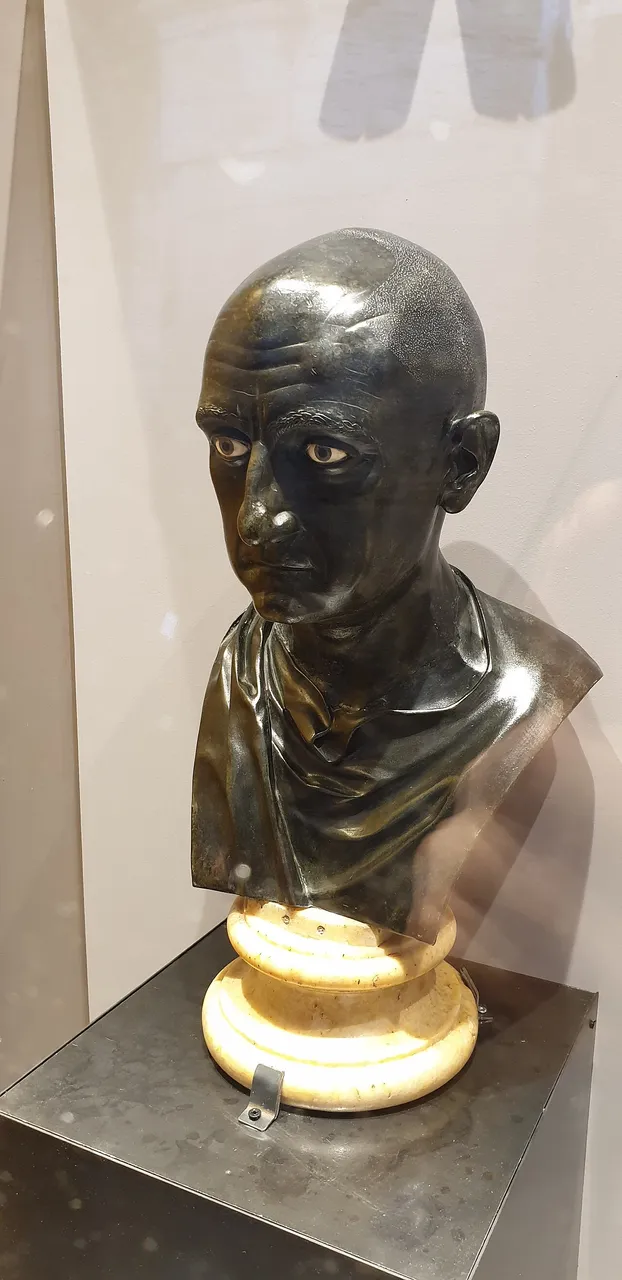 Bronze bust from the Villa of the Papyri at Herculaneum, traditionally identified as Scipio Africanus, Augustan ageWikimedia Commons, Jamie Heath, CC BY-SA 2.0 (Carthago exhibition - Male Bust known as "Scipio Africanus" (49340906552).jpg)
Scipio decides to strike at New Carthage, the Carthaginian capital in Iberia, which holds the treasury, the mint, the arsenal and the hostages of the Iberian tribes. The city stands on a hilly promontory between the harbour bay and a shallow lagoon. The promontory is joined to the mainland only by an isthmus about 300 m wide on the east. Its walls run for 3.7 km. Its commander, Mago, has 1,000 regular soldiers and about 2,000 armed townsmen.
Early in 209 BC Scipio leaves 3,300 men to hold the north and marches south with 25,000 infantry and 2,500 cavalry, while Gaius Laelius follows along the coast with 35 galleys. Only the two commanders know the destination. After a rapid march of about 450 km the army camps on a hill in the middle of the isthmus, opposite the main gate.
Sources
- Polybius, Histories, book 10, 2 to 9.
- Livy, History of Rome, book 26, 41 to 44.
- Nigel Bagnall, The Punic Wars (1990).
Prev: The fall of Achradina and OrtygiaNext: The first assault