238 – 237 BC
The end of the revolt
Late in 238 BC Hamilcar besieges Tunis, with half the army to the south under himself and half to the north under his deputy Hannibal. The rebel leaders taken at the Saw are crucified in view of the walls. A night attack by Matho overruns Hannibal’s camp, and Hannibal and 30 Carthaginian notables visiting the army are tortured and nailed to the same crosses. Hamilcar gives up the siege and withdraws north.
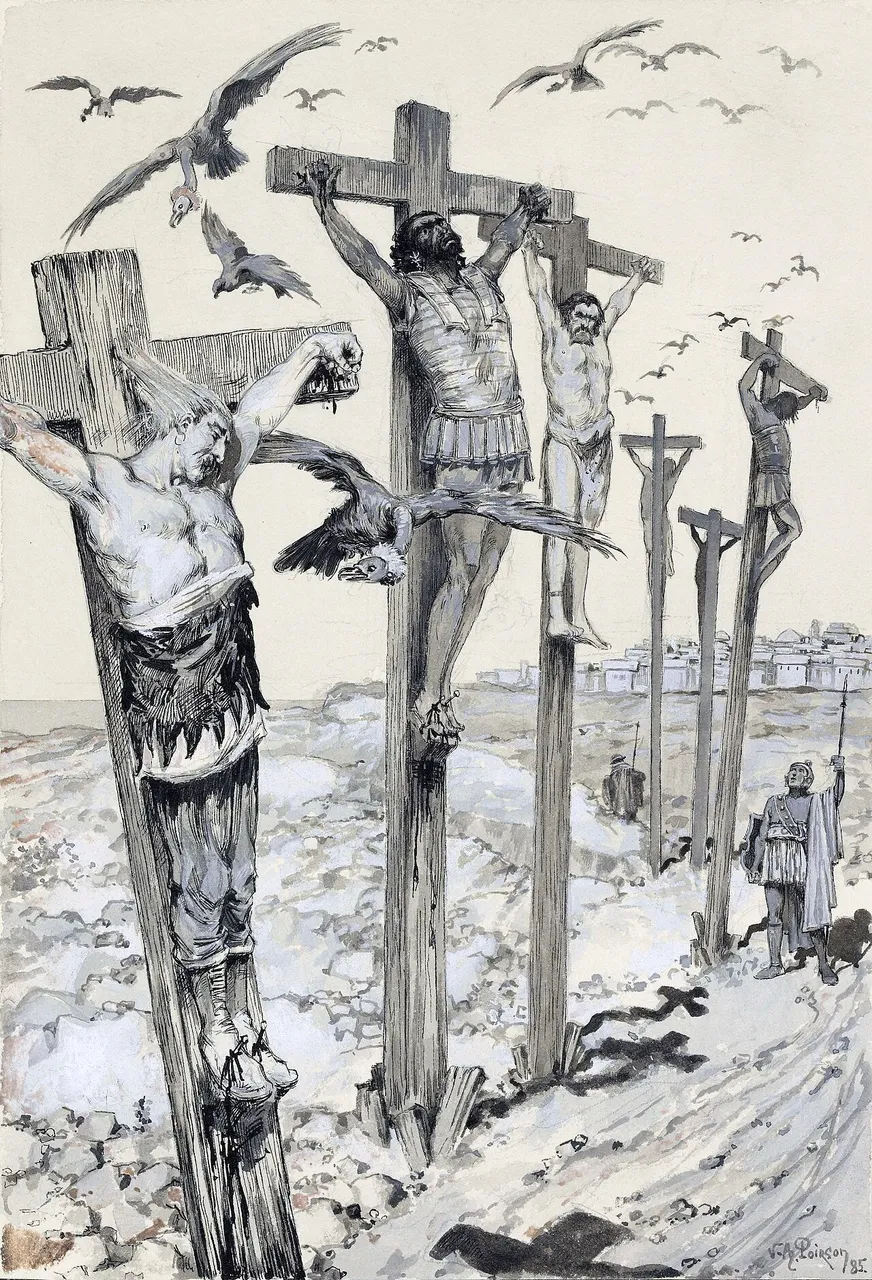 The crucifixion of Spendius before Tunis in Flaubert’s Salammbô, illustration by Victor-Armand Poirson, 1890Wikimedia Commons, Victor Armand Poirson, Public domain (Illustrations pour Salammbô Poirson Victor-Armand.jpeg)
Matho leads the rebel army 160 km south to the port of Leptis Parva. Hanno and Hamilcar follow with more than 25,000 men, every Carthaginian citizen of military age among them, and crush the rebels near the town. Matho is captured, dragged through the streets of Carthage and tortured to death.
Most towns now come to terms. Utica and Hippo, fearing revenge for their massacre of Carthaginians, hold out until late 238 or early 237 BC. The surrendered towns are treated leniently but receive Carthaginian governors.
Sources
- Polybius, Histories, book 1, 86 to 88.
- Dexter Hoyos, Truceless War: Carthage’s Fight for Survival, 241 to 237 BC (2007).
Prev: The destruction at the SawNext: Rome takes Sardinia and Corsica