250 – 249 BC
The siege of Lilybaeum
Encouraged by their victory at Panormus, the Romans besiege Lilybaeum, the main Carthaginian base on Sicily, in 250 BC with both consuls and blockade the harbour with 200 ships. They seal off the landward side with camps and walls of earth and timber, and try again and again to close the harbour mouth with a timber boom, which the sea breaks up.
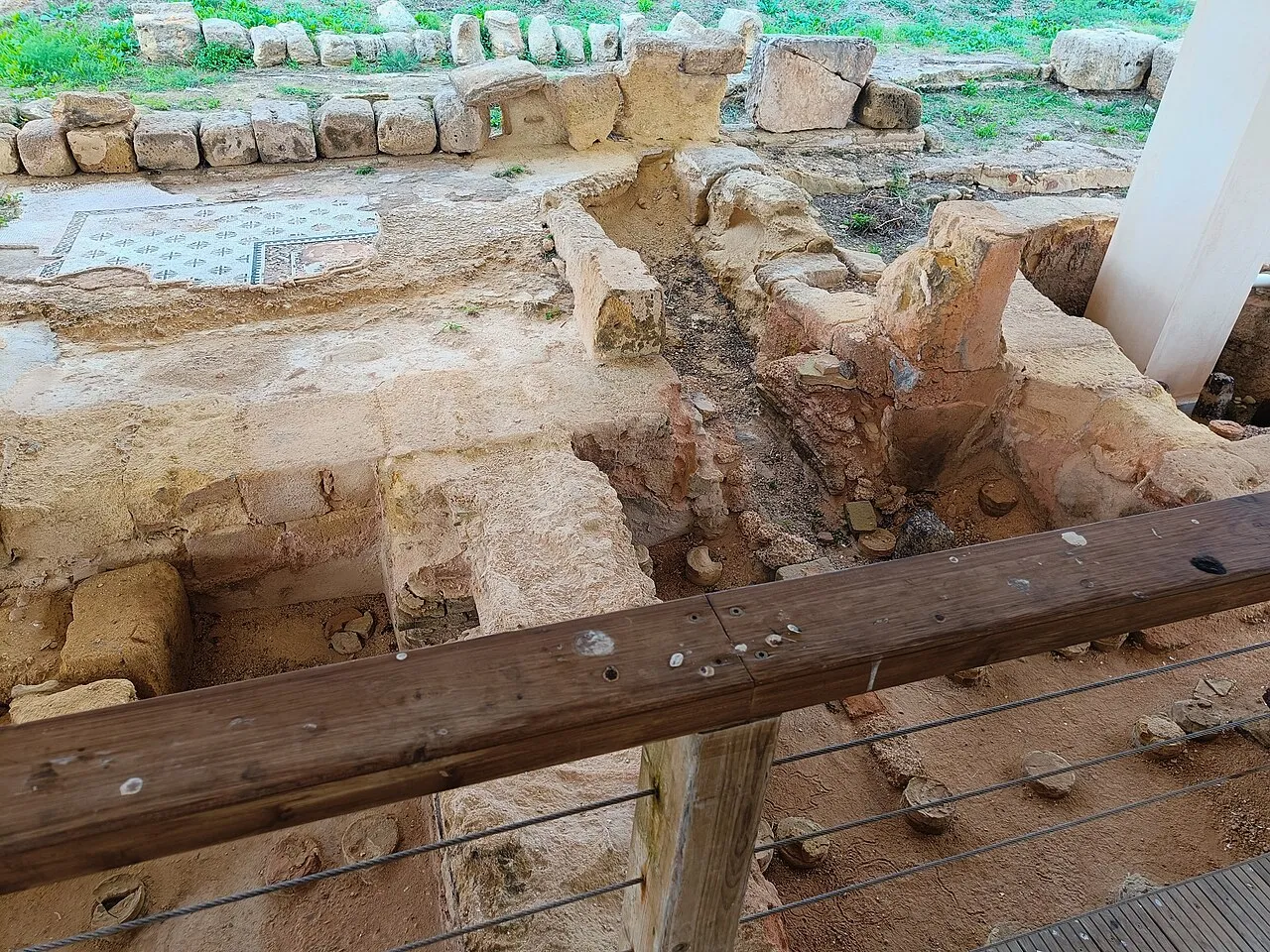 Remains of ancient Lilybaeum at Capo Boeo, MarsalaWikimedia Commons, Carlo Dell’Orto, CC BY-SA 4.0 (Lilybaeum Baglio Anselmi museum Marsala 11.jpg)
Early in the siege 50 Carthaginian quinqueremes gather off the Aegates Islands, wait for a strong west wind and run into the harbour before the Romans can react. They land 4,000 or 10,000 men, by different accounts, and leave by night with the cavalry. Light, fast ships with pilots who know the shoals keep the garrison supplied. The best known is captained by Hannibal the Rhodian, who runs the blockade again and again until the Romans capture his ship.
In 249 BC the consul Publius Claudius Pulcher, with 10,000 new oarsmen added to his crews, decides to attack the Carthaginian fleet at Drepana, 25 km to the north, and sails on a moonless night. Later writers tell that on the way the sacred chickens refuse to eat, and that Pulcher throws them overboard, saying that if they will not eat they may drink. The story is told only by writers later than Polybius.
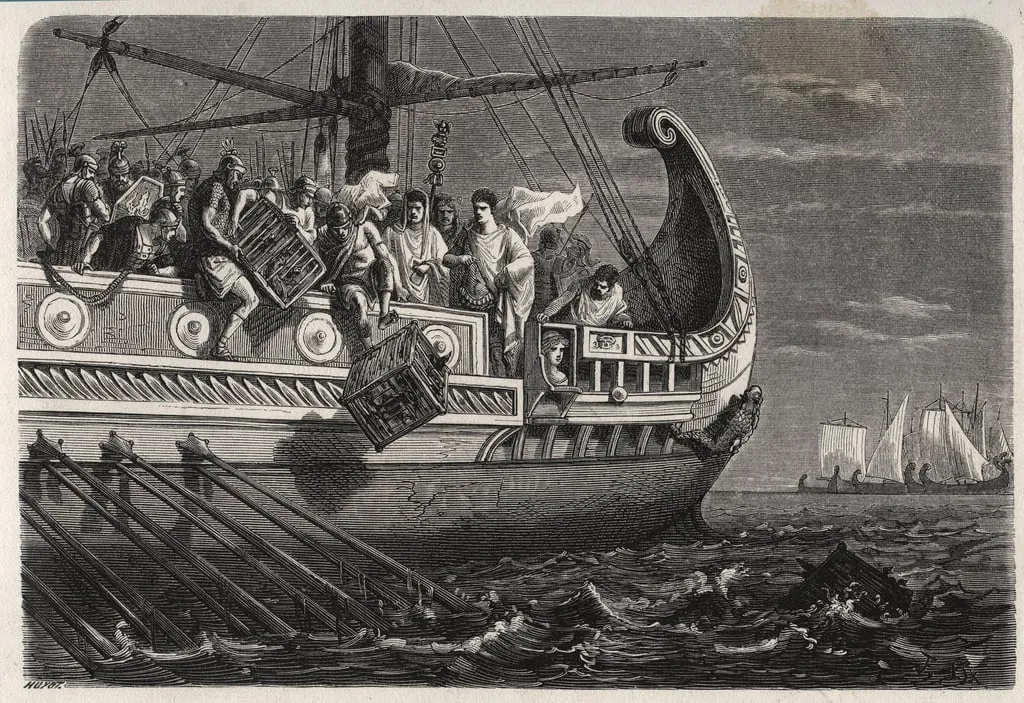 Publius Claudius Pulcher has the sacred chickens thrown into the sea before the battle of Drepana, engraving of about 1880Wikimedia Commons, unknown engraver, Public domain (Publius Claudius Appius Pulcher before the battle of Drepanum (249 BC) makes sacred chickens cast into the sea.jpg)
Sources
- Polybius, Histories, book 1, 41 to 49.
- John Lazenby, The First Punic War (1996).
- Adrian Goldsworthy, The Fall of Carthage (2006).
Prev: The elephants breakNext: Dawn off Drepana