c. 270 BC
Rome and Italy
Between 338 and 264 BC Rome conquers the Italian peninsula south of the Arno in almost continuous war. Part of the conquered land becomes Roman territory or is settled with Latin colonies, such as Ariminum in 268 BC. Most defeated peoples keep their land and self-government as allies, the socii, who send troops when Rome calls.
In 280 BC Tarentum, the largest Greek city of southern Italy, calls in King Pyrrhus of Epirus against Rome. Pyrrhus defeats the Romans at Heraclea in 280 BC and at Asculum in 279 BC, at heavy cost to his own army. He then fights Carthage in Sicily but cannot take Lilybaeum. After a battle at Beneventum in 275 BC he returns to Epirus, and Tarentum surrenders to Rome in 272 BC.
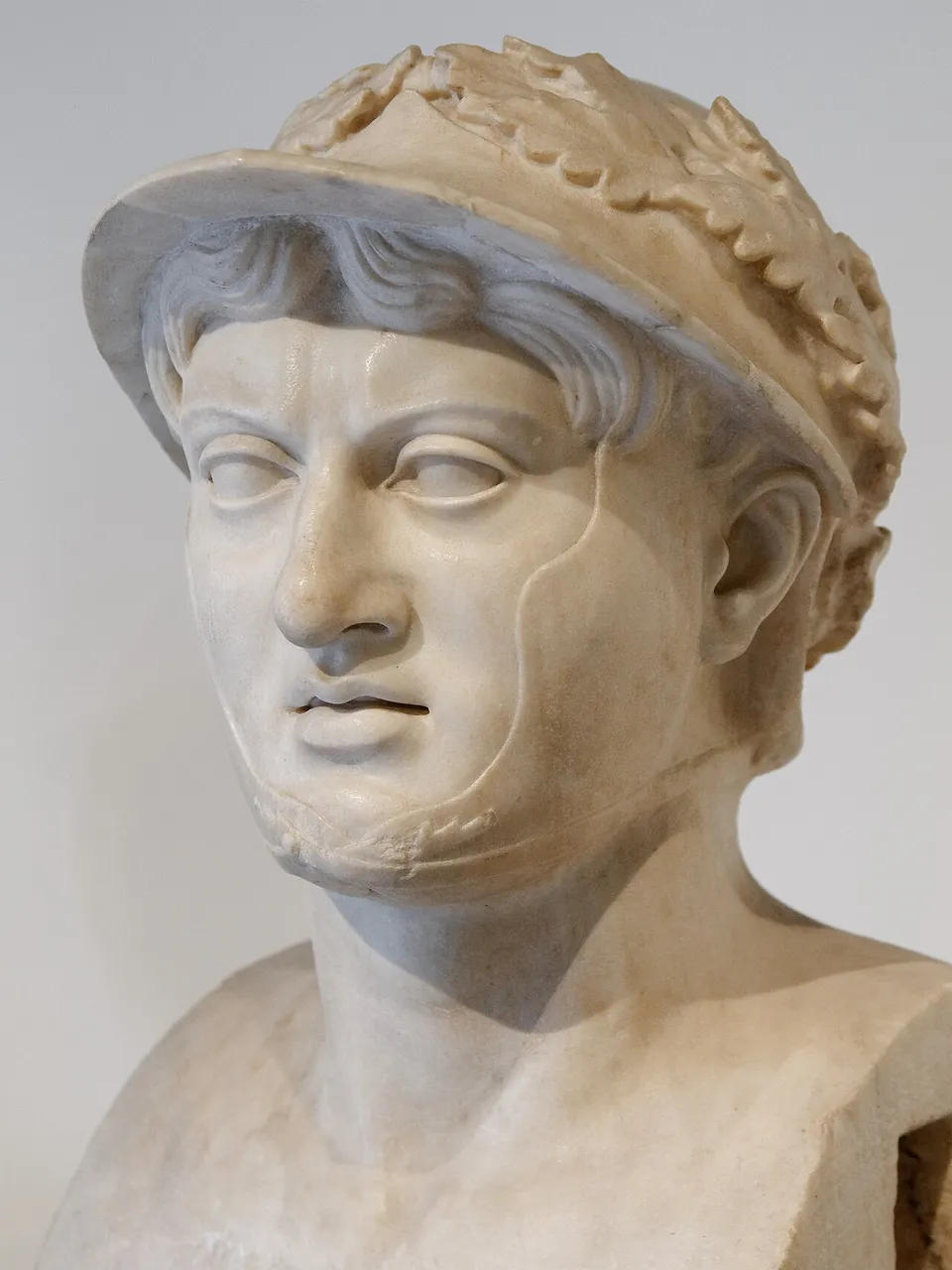 Bust of Pyrrhus of Epirus, a Roman copy of a Greek original, from the Villa of the Papyri at Herculaneum, National Archaeological Museum of NaplesWikimedia Commons, Marie-Lan Nguyen, Public domain (Pyrrhus MAN Napoli Inv6150 n03.jpg)
Every adult male Roman citizen is liable for military service, and two consuls elected each year lead the armies. An army usually joins a Roman legion of 4,200 infantry and 300 cavalry with an allied legion of the same size. Rome has little experience at sea and borrows small squadrons from its Latin and Greek allies when it needs ships.
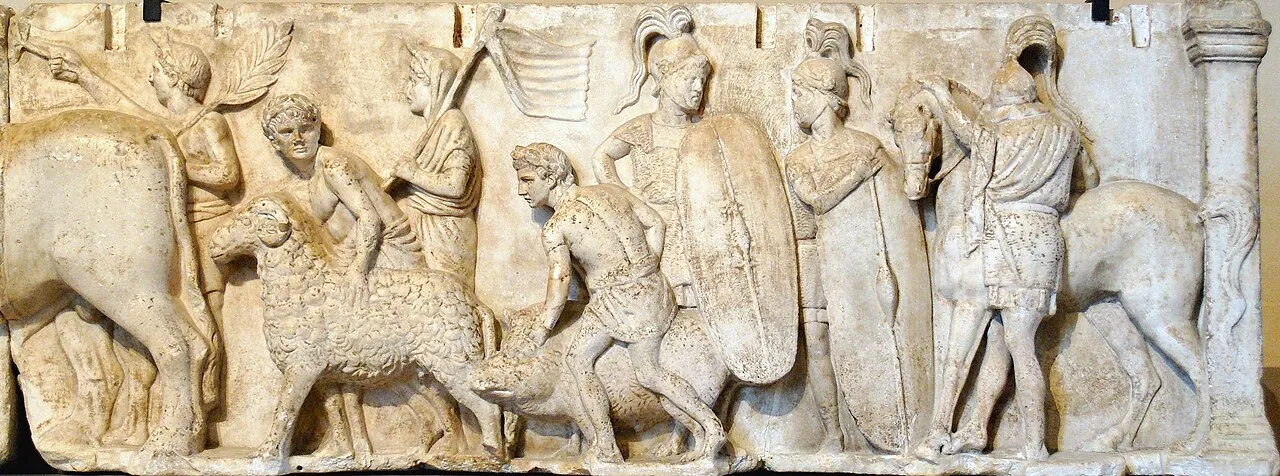 Roman soldiers at a census, part of the relief known as the Altar of Domitius Ahenobarbus, late 2nd century BC, LouvreWikimedia Commons, unknown artist, Public domain (Altar Domitius Ahenobarbus Louvre n3.jpg)
Sources
- Polybius, Histories, book 1.
- Adrian Goldsworthy, The Fall of Carthage (2006).
Prev: CarthageNext: The Mamertines and Messana