Spring 146 BC
Six days to the Byrsa
Appian describes three streets running up from the main square to the Byrsa, lined with houses six storeys high. The Romans work their way up them, killing everyone they meet and burning the houses behind them, at times crossing from roof to roof to escape missiles thrown from above. The fighting lasts six more days.
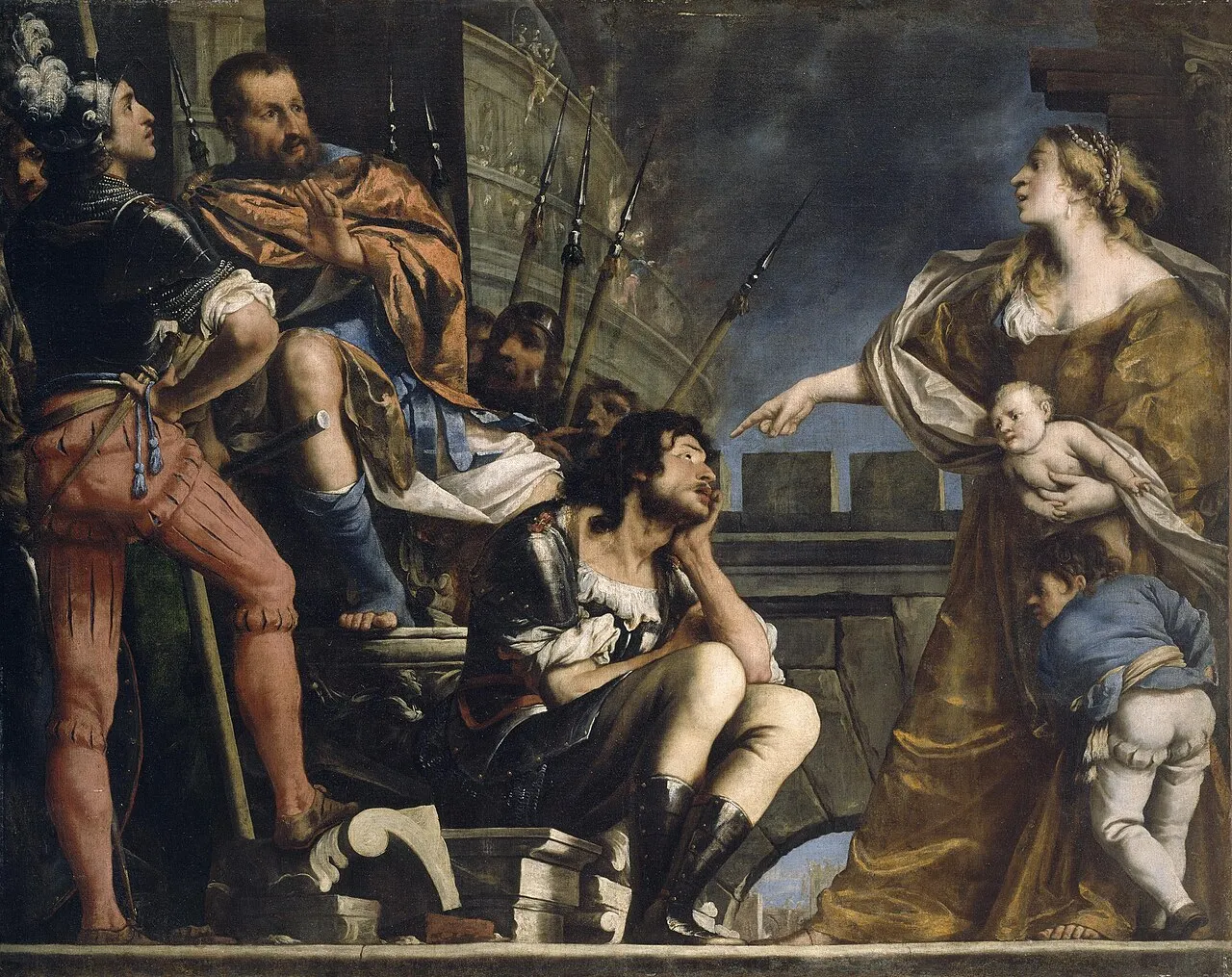 Hasdrubal’s wife denouncing her husband before Scipio, painting by Pietro della Vecchia, about 1650Wikimedia Commons, Pietro della Vecchia, Public domain (Pietro della Vecchia - Hasdrubal's wife denouncing her husband before Scipio Africanus.jpg)
On the last day Scipio agrees to take prisoners, and 50,000 people come down from the citadel and are sold into slavery. Hasdrubal surrenders on the promise of his life. The last defenders, among them 900 Roman deserters, burn the temple of Eshmoun around themselves, and Hasdrubal’s wife curses her husband and walks into the fire with her children.
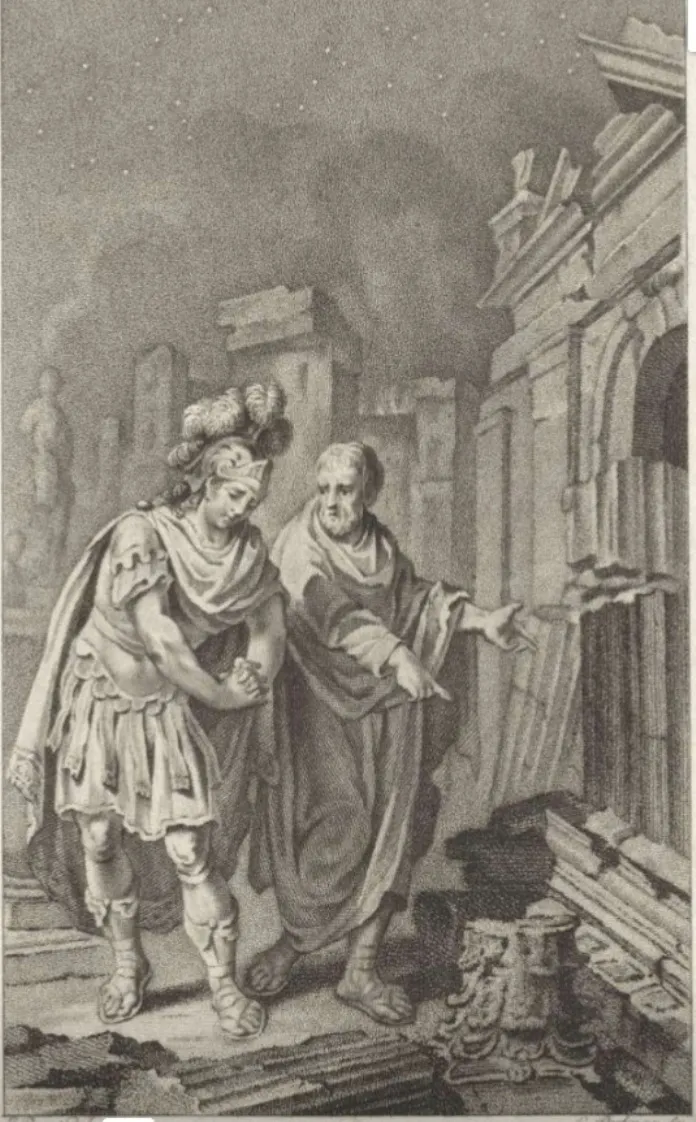 Scipio Aemilianus and Polybius before the ruins of Carthage, engraving after Jacobus Buys, 1797Wikimedia Commons, Jacobus Buys, Public domain (Scipion Emilien et Polybe devant les ruines de Carthage après la destruction de la ville.jpg)
A commission of ten senators orders whatever remains of Carthage to be destroyed and forbids anyone to settle there. Scipio celebrates a triumph and takes the name Africanus, as his adoptive grandfather had. In the same year a Roman army under Lucius Mummius destroys Corinth. The story that the Romans sowed the ground of Carthage with salt is modern, in print from 1863, and historians now reject it.
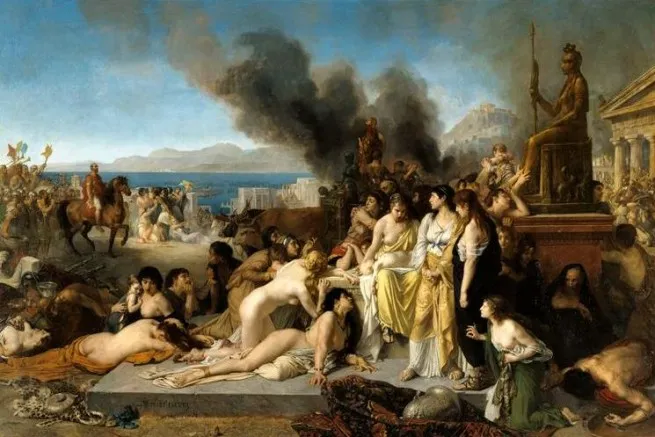 The Last Day of Corinth, painting by Tony Robert-Fleury, 1870Wikimedia Commons, Tony Robert-Fleury, Public domain (Robert-fleury-Le Dernier Jour de Corinthe.jpg)
Sources
- Appian, The Punic Wars, 128 to 135.
- Polybius, Histories, book 38.
- Richard Miles, Carthage Must Be Destroyed (2010).
Prev: The assault from the harbourNext: The province of Africa