Spring and summer 256 BC
The invasion fleet
In 256 BC Rome decides to carry the war to Africa. A fleet of 330 warships under the consuls Marcus Atilius Regulus and Lucius Manlius Vulso Longus sails from Italy, crosses to Sicily at Messana and takes on picked legionaries at Phintias, 80 to each ship. With rowers, crews and soldiers it carries about 140,000 men.
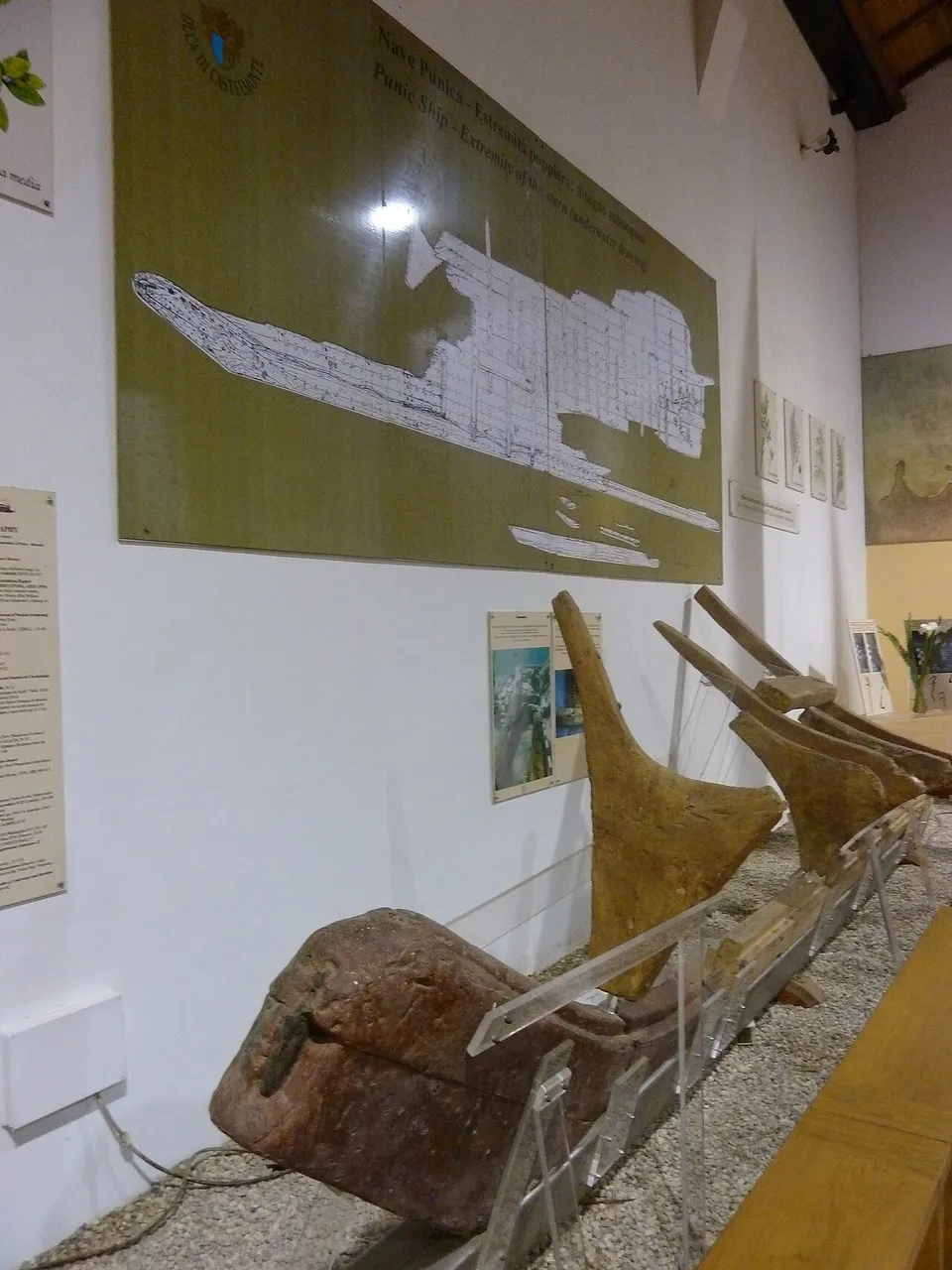 The stern of a Punic warship of the 3rd century BC found off Marsala, in the Baglio Anselmi museumWikimedia Commons, Ekem, CC BY-SA 3.0 (Punic.prow.JPG)
Carthage gathers 350 warships under Hamilcar and Hanno the Great, takes on soldiers at Lilybaeum and sails east to Heraclea Minoa, the easternmost town it still holds on the south coast. Polybius puts 150,000 men on board. The Romans sail west along the coast to cross to Africa at the narrowest point, and the Carthaginians move east to intercept them.
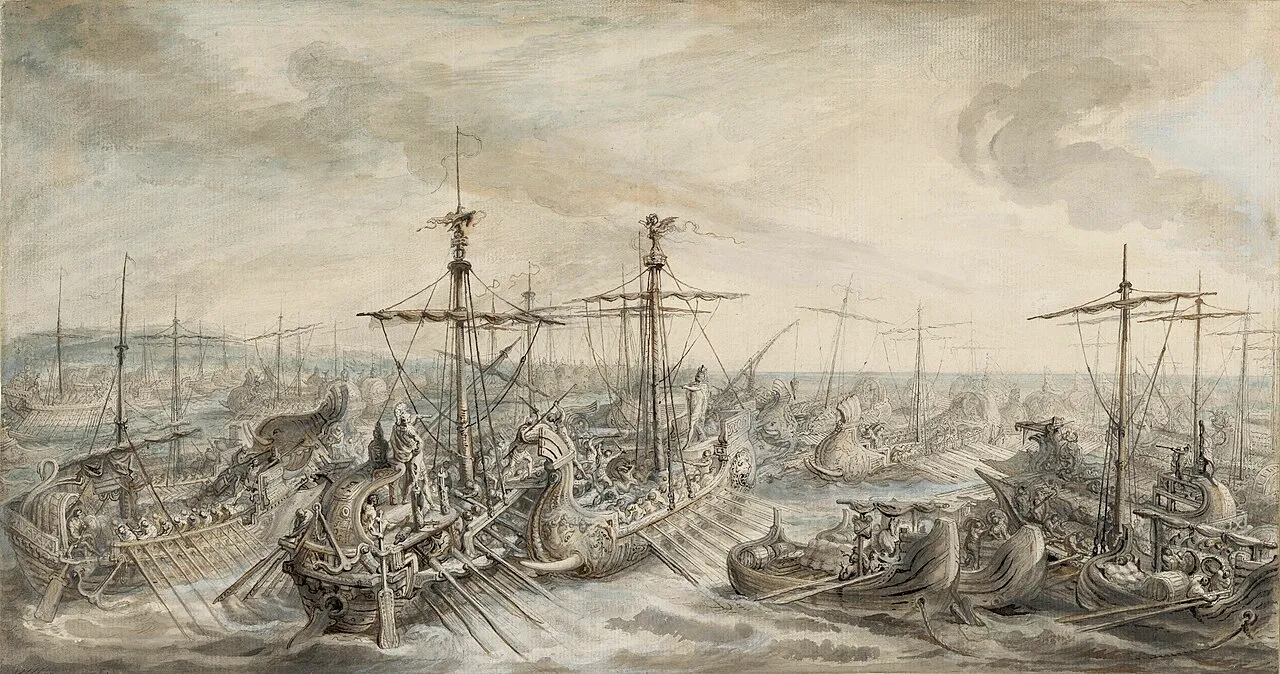 The Roman fleet victorious over the Carthaginians at Cape Ecnomus, drawing by Gabriel de Saint-Aubin, about 1763Wikimedia Commons, Gabriel de Saint-Aubin, Public domain (The Naval Battle Near Ecnomus (256 BC) (cropped).jpg)
The fleets meet east of Heraclea Minoa. The usual name, after Cape Ecnomus near Phintias, is a modern convention. With about 680 warships and up to 290,000 men, it is possibly the largest naval battle in history by the number of people involved.
Sources
- Polybius, Histories, book 1, 25 to 28.
- John Lazenby, The First Punic War (1996).
- Adrian Goldsworthy, The Fall of Carthage (2006).
Prev: The attack on the flanksNext: The wedge and the line