256 BC
Three separate fights
As the Roman wedge drives at the Carthaginian centre, Hamilcar’s ships fall back, probably rowing astern, and the consuls follow them. The third Roman squadron, slowed by its tows, falls behind, and a gap opens between the leading and the rear squadrons. Ancient and modern historians see this as Hamilcar’s plan: to break up the compact Roman formation and attack the ships from the side, away from the corvi.
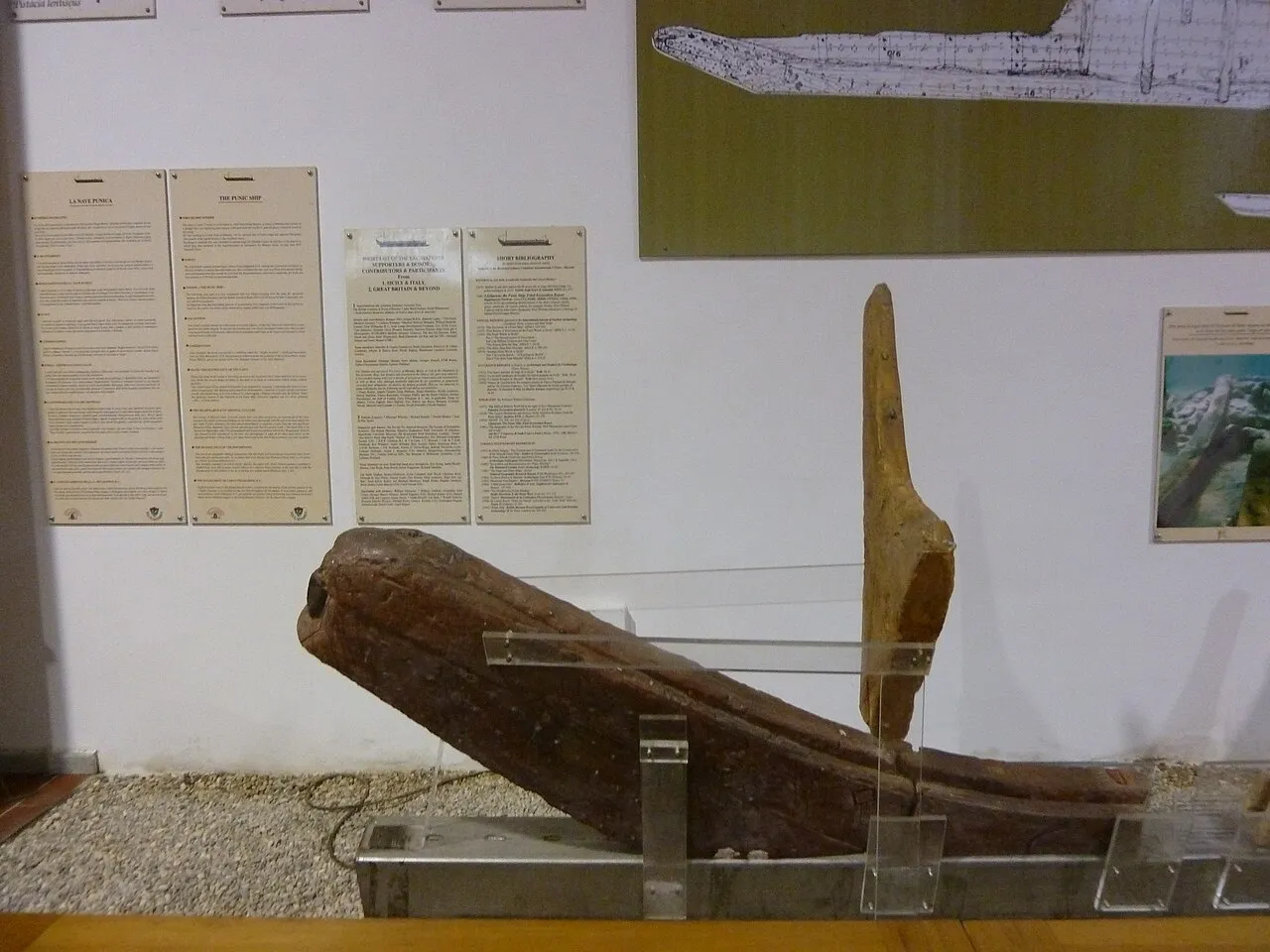 The keel of the Punic warship found off Marsala, 3rd century BCWikimedia Commons, Ekem, CC BY-SA 3.0 (Punic.keel.JPG)
The Carthaginian landward wing falls on the third squadron, which casts off the transports, retreats to the shore and stands in shallow water facing out to sea. Hanno’s seaward squadron attacks the fourth squadron at the rear, which is hampered by the drifting transports. Hamilcar turns his centre about and engages the consuls, and the battle becomes three separate fights.
Sources
- Polybius, Histories, book 1, 27 to 28.
- John Lazenby, The First Punic War (1996).
- Adrian Goldsworthy, The Fall of Carthage (2006).
Prev: The wedge and the lineNext: The Roman centre returns