c. 270 BC
Carthage
Phoenician settlers from Tyre found Carthage on the coast of present-day Tunisia, by tradition in 814 BC. By the 3rd century BC it is the leading power of the western Mediterranean. It holds the African coast from Cyrenaica to the Atlantic, western Sicily, Sardinia, Malta, the Balearic Islands and trading towns in southern Spain.
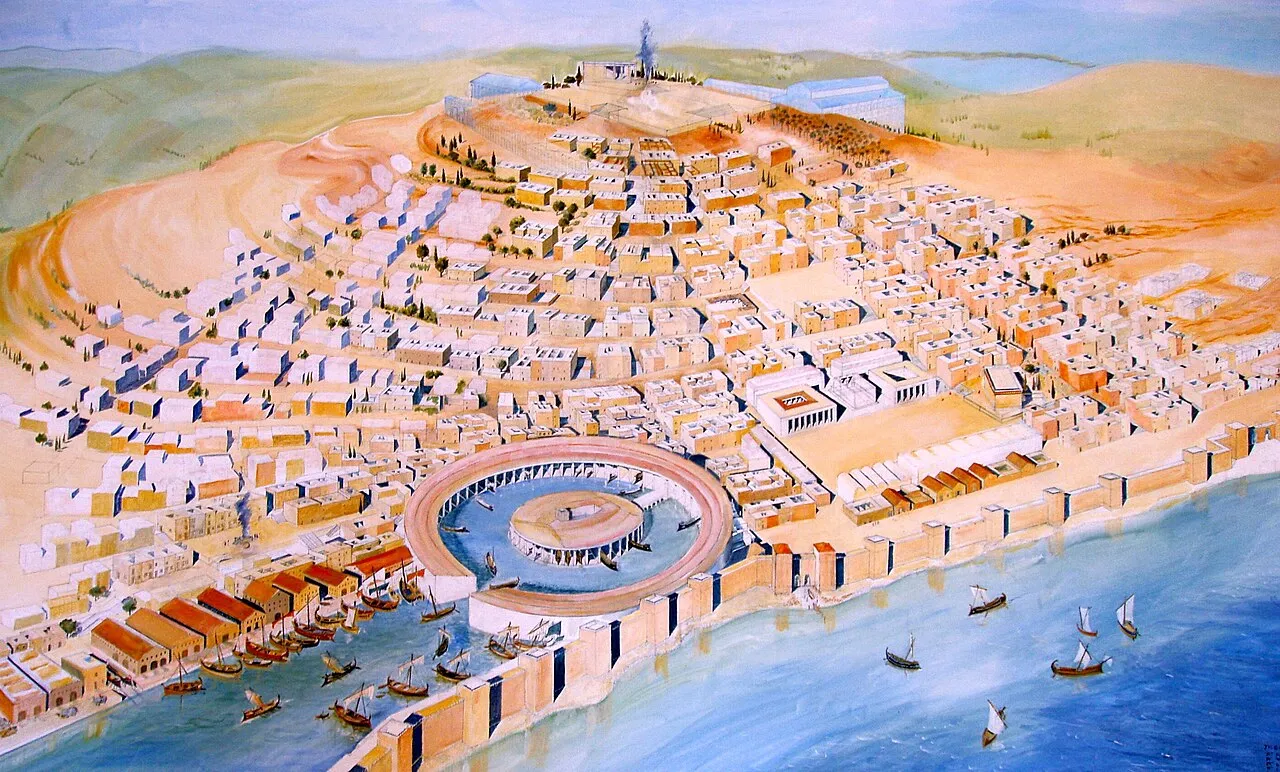 A painted reconstruction of Punic Carthage in the Carthage National Museum, with the circular naval harbour in front of the Byrsa hillWikimedia Commons, damian entwistle, CC BY-SA 2.0 (Carthage National Museum representation of city.jpg)
Two suffetes elected each year, a council of elders and a citizen assembly govern the city. Its wealth comes from sea trade and from the farmland of its African hinterland. The navy is the largest in the western Mediterranean. The army is made up mostly of mercenaries and subject peoples: Libyans, Numidians, Iberians, Gauls and Balearic slingers.
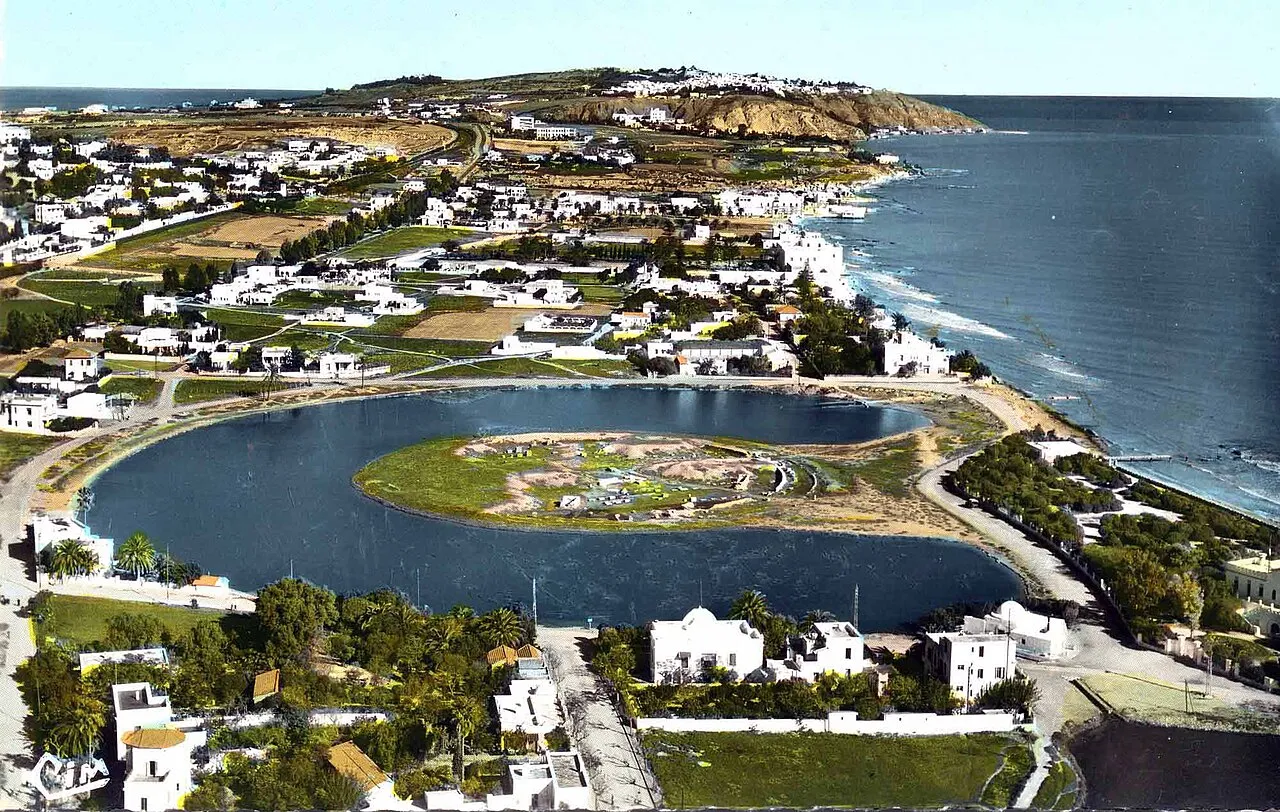 The circular naval harbour of Carthage with its central island, seen from the air before 1958Wikimedia Commons, unknown author, Public domain (Carthage-1958-PortsPuniques.jpg)
For more than two centuries Carthage fights the Greek cities of Sicily, led by Syracuse, for control of the island. A series of treaties with Rome divides the trade of the two cities. Polybius dates the first to 509 BC. The last, in 279 BC, joins them against Pyrrhus of Epirus.
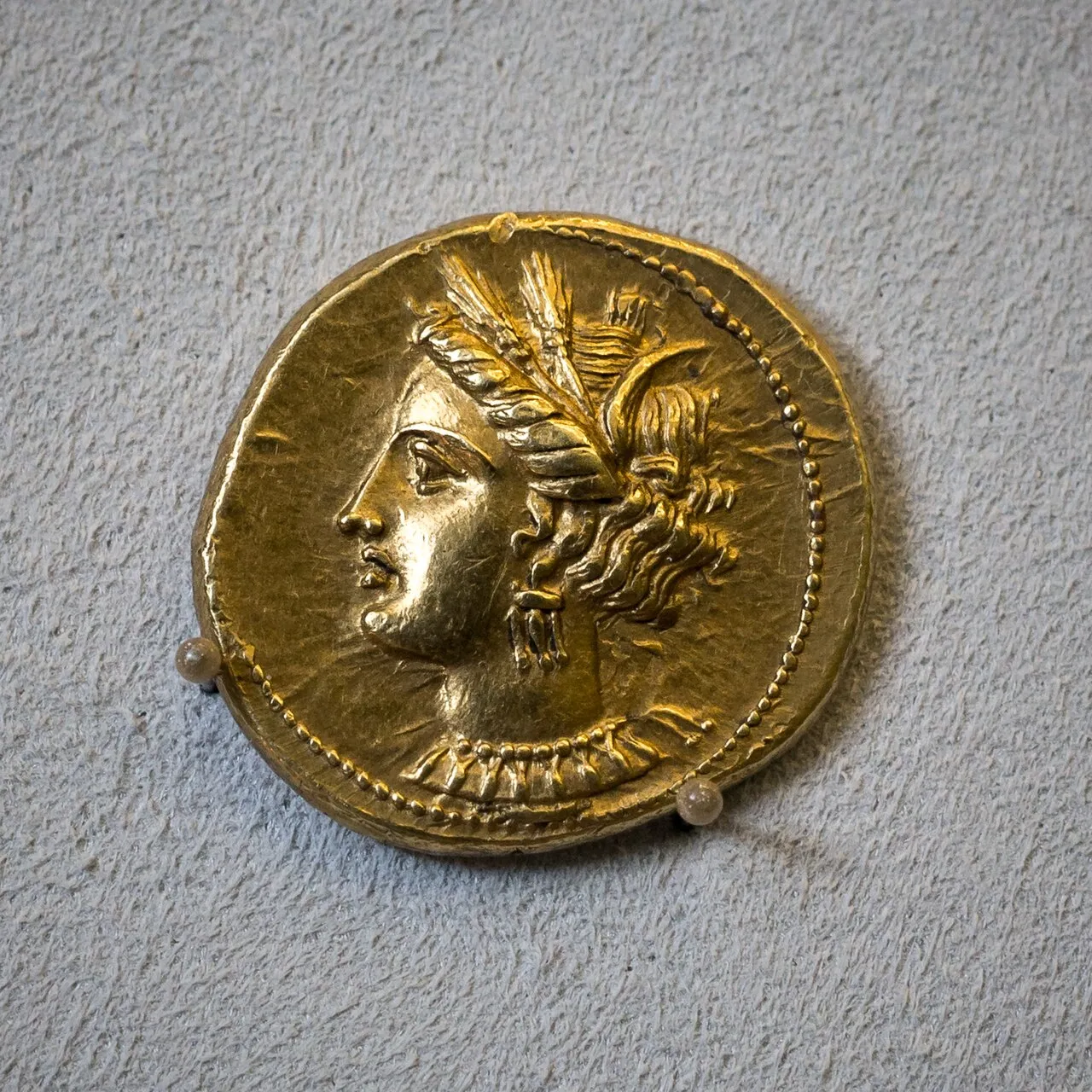 A Carthaginian gold stater with the head of Tanit and a horse, about 350 to 270 BC, Berlin coin cabinetWikimedia Commons, ArchaiOptix, CC BY-SA 4.0 (Carthago - 350-270 BC - gold stater - head of Tanit - horse - Berlin MK BM 18200188.jpg)
Sources
- Richard Miles, Carthage Must Be Destroyed (2010).
- Dexter Hoyos, The Carthaginians (2010).
- Polybius, Histories, book 3, 22 to 26.
Next: Rome and Italy