June to November 218 BC
Hannibal’s march to Italy
Hannibal leaves New Carthage with his army in May or June 218 BC. He crosses the Ebro in three columns, subdues the tribes between the river and the Pyrenees in two months of hard fighting, and leaves Hanno with 11,000 men to hold them. His brother Hasdrubal stays in command in Iberia. Polybius gives Hannibal 38,000 infantry, 8,000 cavalry and 37 elephants when he reaches the Rhône in late September.
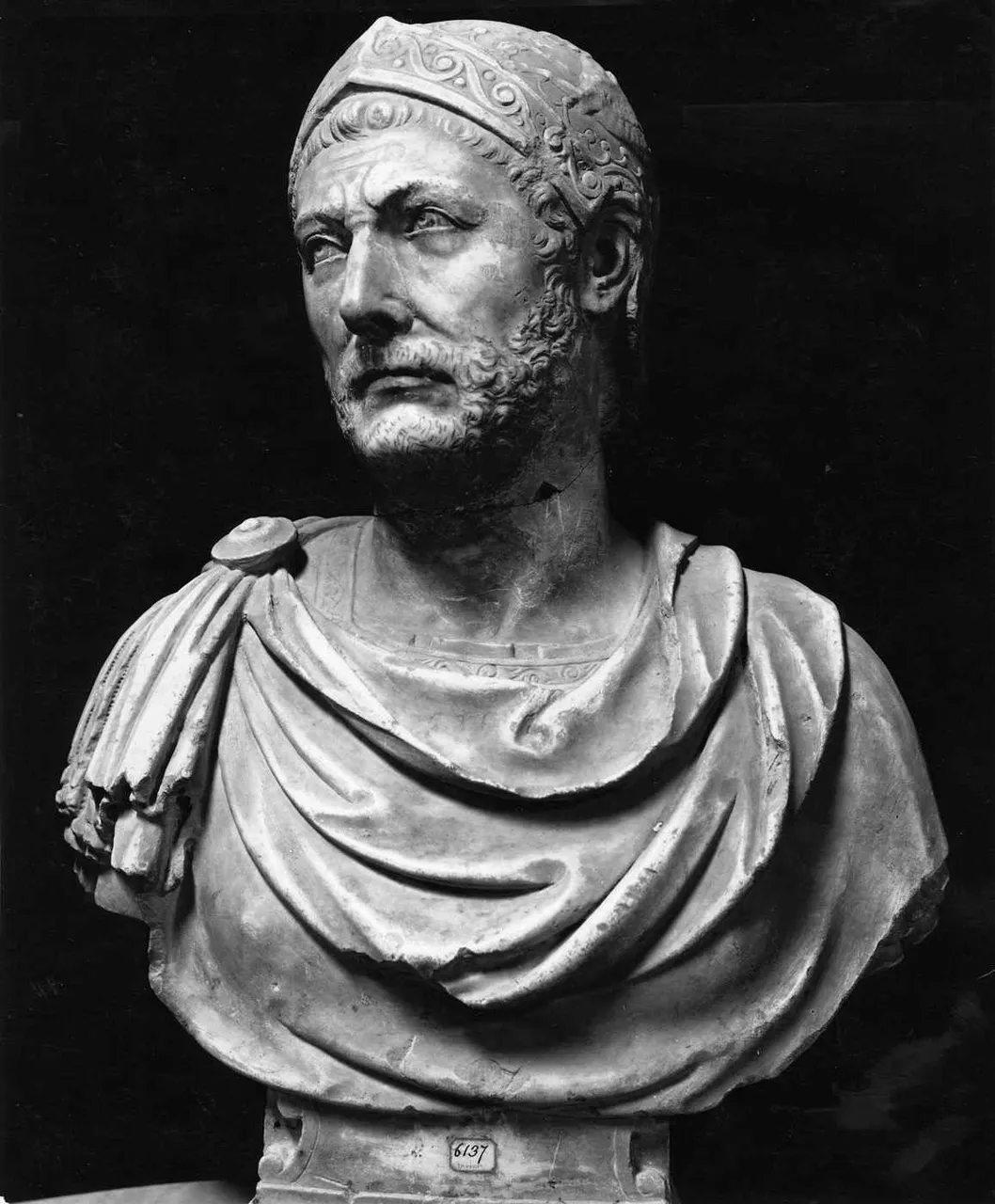 A marble bust found at Capua in 1667 and often identified as Hannibal, photograph by the Fratelli Alinari, about 1900Wikimedia Commons, Fratelli Alinari, Public domain (Hannibal Barca bust from Capua photo.jpg)
The consul Publius Cornelius Scipio, delayed by a Gallic rising in the Po valley, sails from Pisae and lands at the mouth of the Rhône while Hannibal is crossing the river upstream. When he finds that Hannibal has gone, he sends his brother Gnaeus on to Iberia with most of the army and returns by sea to take command in the Po valley.
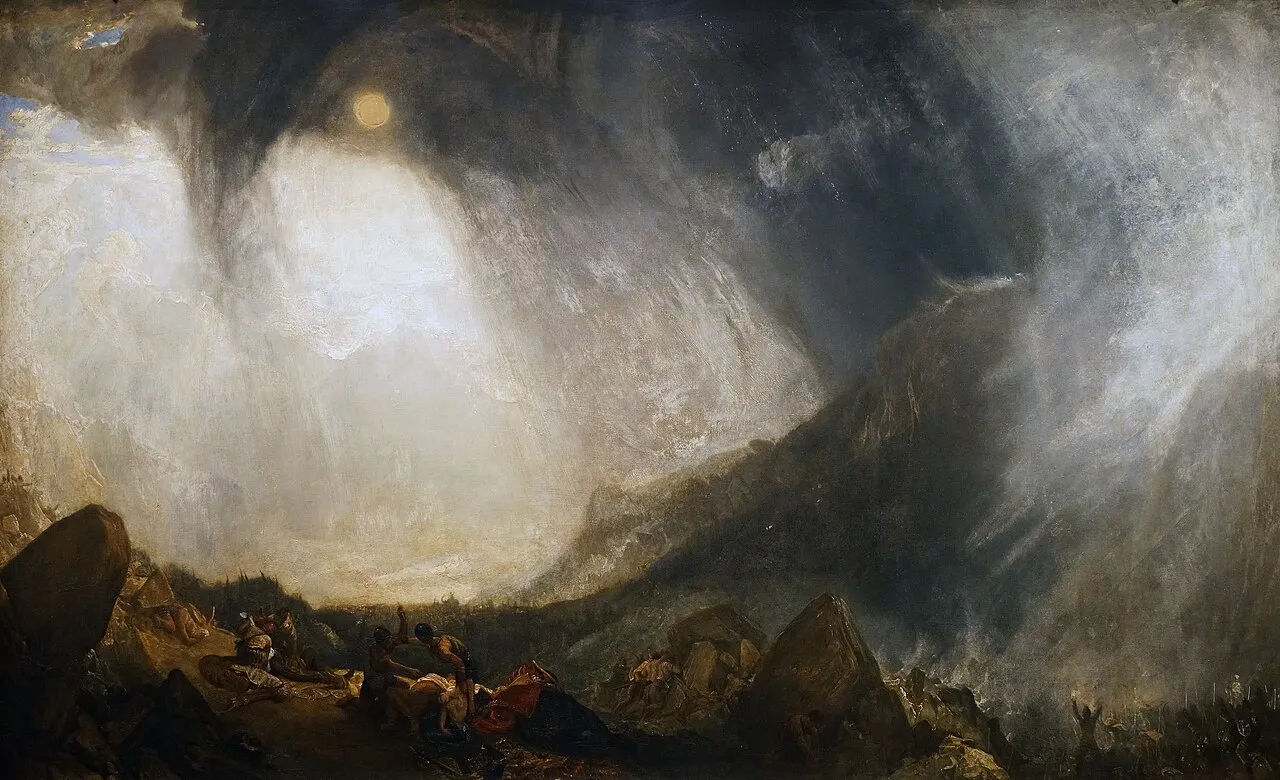 Snow Storm: Hannibal and his Army Crossing the Alps, painting by J. M. W. Turner, 1812, Tate BritainWikimedia Commons, Joseph Mallord William Turner, Public domain (Turner, Snow Storm, 50508403226 b272cf84c3 o.jpg)
Hannibal marches up the Rhône and crosses the Alps late in the season, through snow and attacks by the mountain tribes, in fifteen days by Polybius’s account. Which pass he takes is still debated. He reaches the Po valley with 20,000 infantry and 6,000 cavalry and takes the chief town of the Taurini after a three-day siege.
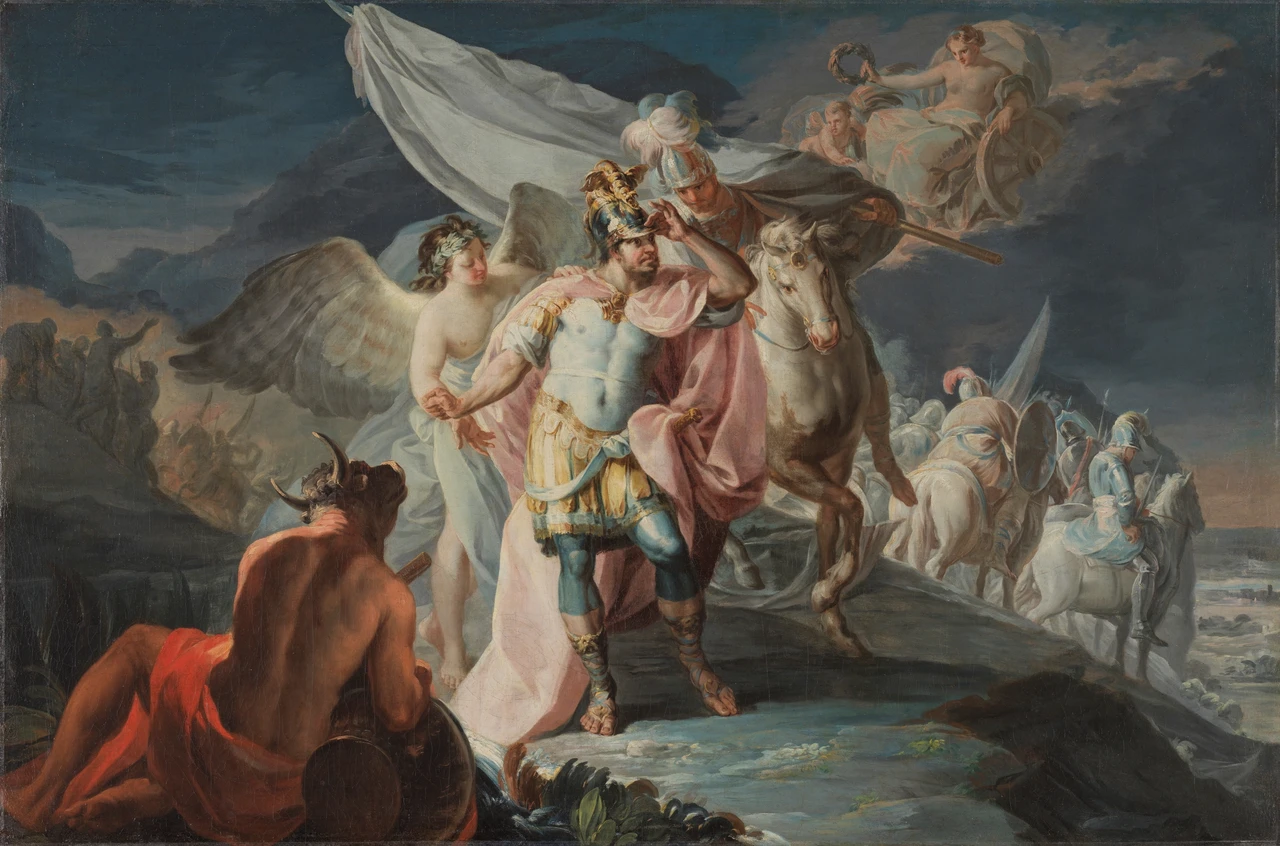 The Victorious Hannibal Seeing Italy from the Alps for the First Time, painting by Francisco Goya, 1771Wikimedia Commons, Francisco Goya, Public domain (The Victorious Hannibal Seeing Italy from the Alps for the First Time.png)
Sources
- Polybius, Histories, book 3, 33 to 56.
- Livy, History of Rome, book 21, 21 to 38.
- John Lazenby, Hannibal’s War (1978).
Prev: The fall of SaguntumNext: Hanno goes upstream