262 BC
The march on Agrigentum
Akragas, called Agrigentum by the Romans, stands on a plateau about 4 km from the south coast of Sicily, between the rivers Hypsas and Akragas. Steep slopes guard it on every side except the west. After the loss of Messana and the defection of Syracuse, Carthage makes it the centre of its defence on the island.
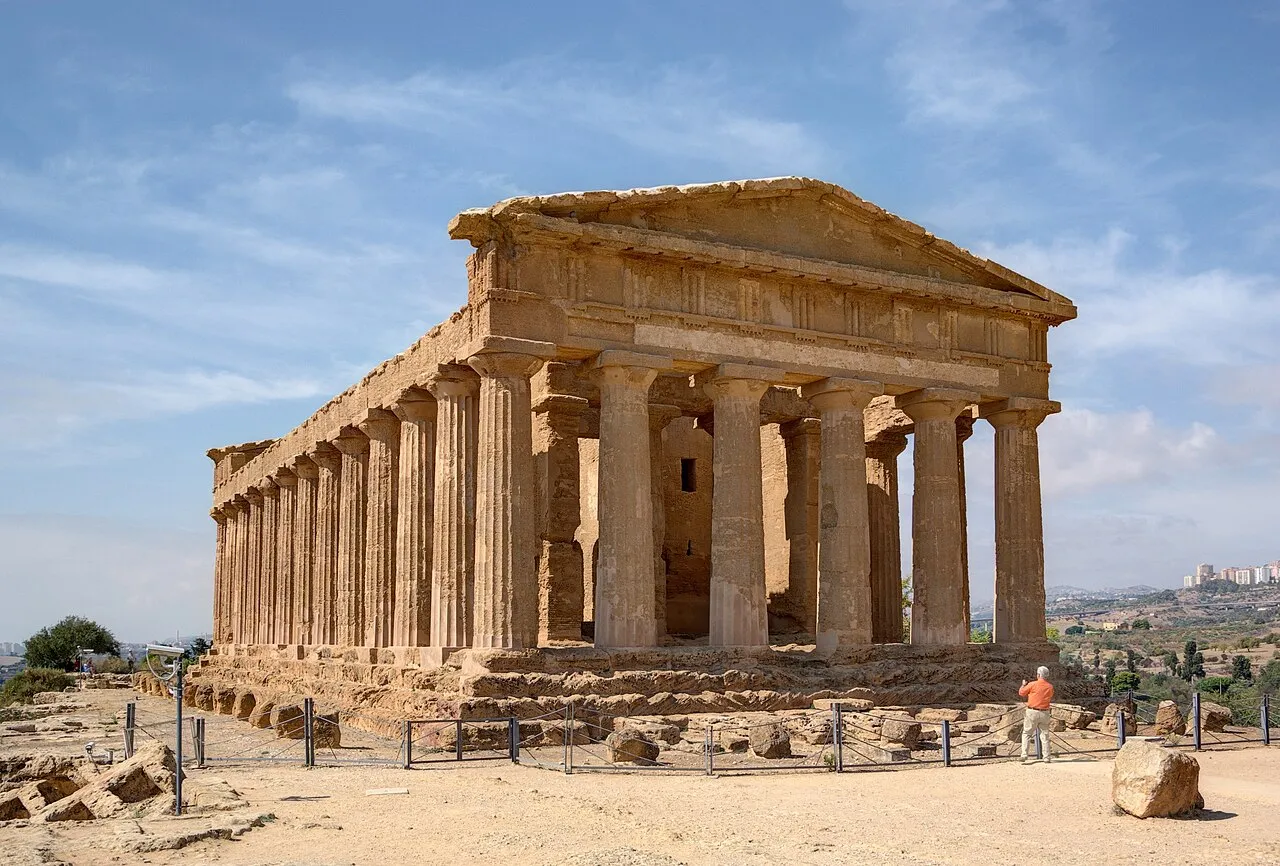 The Temple of Concordia at Agrigento, a Doric temple of the 5th century BC on the southern edge of the ancient cityWikimedia Commons, Berthold Werner, CC BY-SA 3.0 (Temple of Concordia, Agrigento BW 2012-10-07 13-09-13.jpg)
In 262 BC the consuls Lucius Postumius Megellus and Quintus Mamilius Vitulus march on the city with about 40,000 men. Hannibal Gisco, commander of the garrison, brings the people of the surrounding country inside the walls, which raises the population to about 50,000, and refuses battle. The Romans camp about 1.5 km from the city and gather the harvest in the fields around it.
Sources
- Polybius, Histories, book 1, 17 to 19.
- John Lazenby, The First Punic War (1996).
- Adrian Goldsworthy, The Fall of Carthage (2006).
Prev: The Carthaginians withdrawNext: The siege lines