Spring 261 BC
The battle and the fall of the city
With both armies close to starving and Hannibal Gisco signalling from the city with smoke and fire, Hanno accepts battle in the spring of 261 BC. The ancient accounts of the fighting differ. Probably Hanno draws up his infantry in two lines, with the elephants and reserves in the second and the cavalry on the wings. The Romans most likely form their usual three lines.
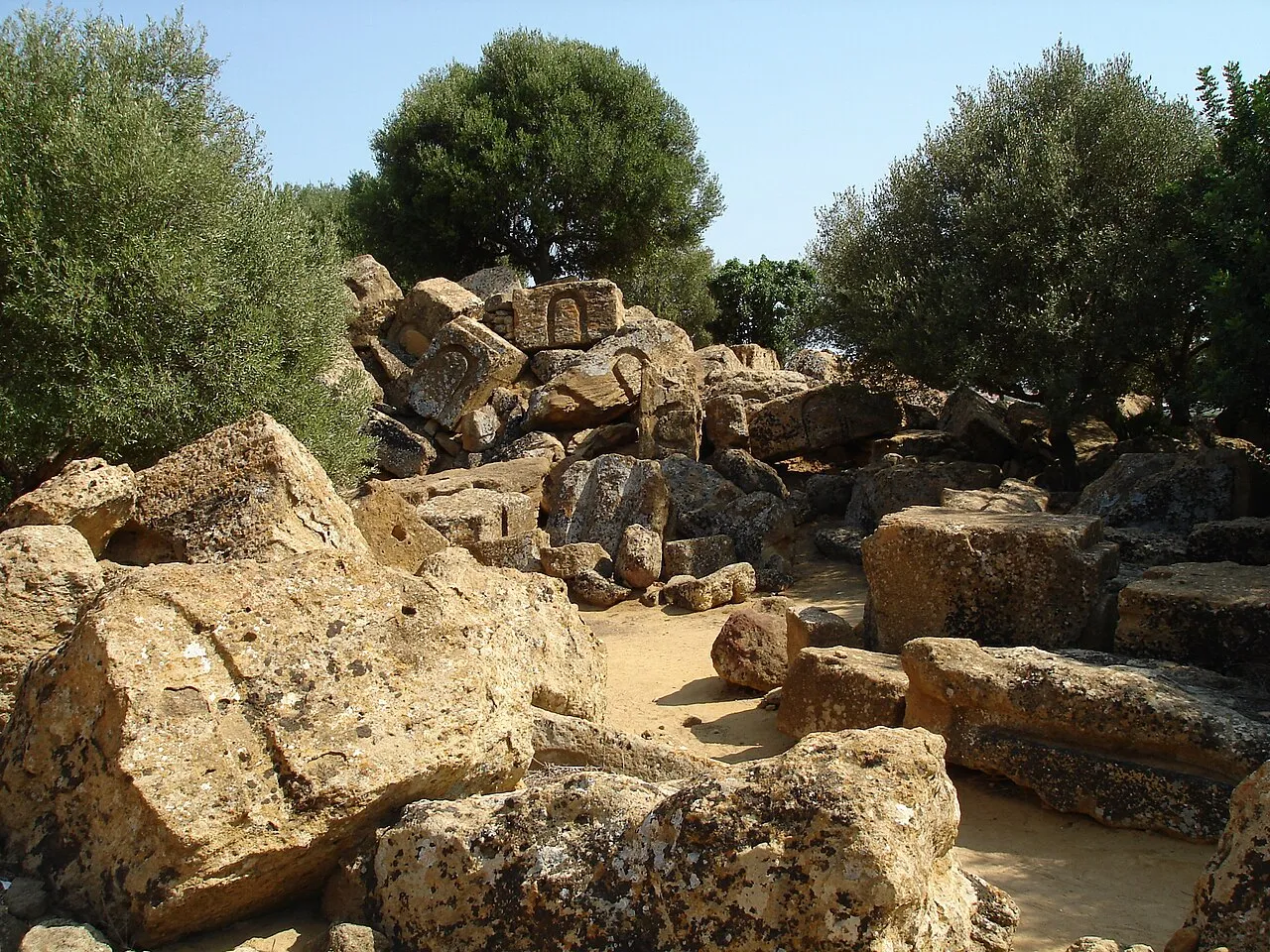 Ruins of the Temple of Olympian Zeus at Agrigento, inside the southern wall of the ancient cityWikimedia Commons, Ambra75, CC BY-SA 4.0 (Valle dei Templi, Agrigento, Sicilia 5.jpg)
After a long fight the Romans break the Carthaginian front. The reserves behind it panic and flee, and the Roman cavalry takes the Carthaginian camp and several elephants. Polybius gives Carthaginian losses of 3,000 infantry and 200 cavalry killed and 4,000 captured, with 8 elephants killed and 33 disabled.
That night Hannibal Gisco breaks out with his mercenaries, filling the Roman ditches with straw. The next morning the Romans enter the city unopposed, plunder it and sell 25,000 of its inhabitants into slavery. Because the garrison has escaped, neither consul is granted a triumph.
Sources
- Polybius, Histories, book 1, 19.
- John Zonaras, Epitome, book 8.
- John Lazenby, The First Punic War (1996).
Prev: Hanno’s relief armyNext: The Roman fleet