After 146 BC
The province of Africa
Rome annexes the land Carthage held at the end and makes it the province of Africa, with Utica as the seat of the governor. A ditch, the Fossa Regia, marks the border with the Numidian kingdom of Masinissa’s sons. Towns that stood by Carthage to the end are destroyed or lose their land. The others keep much of their own government, and Punic language and religion survive, with Punic spoken in North Africa until the 7th century AD.
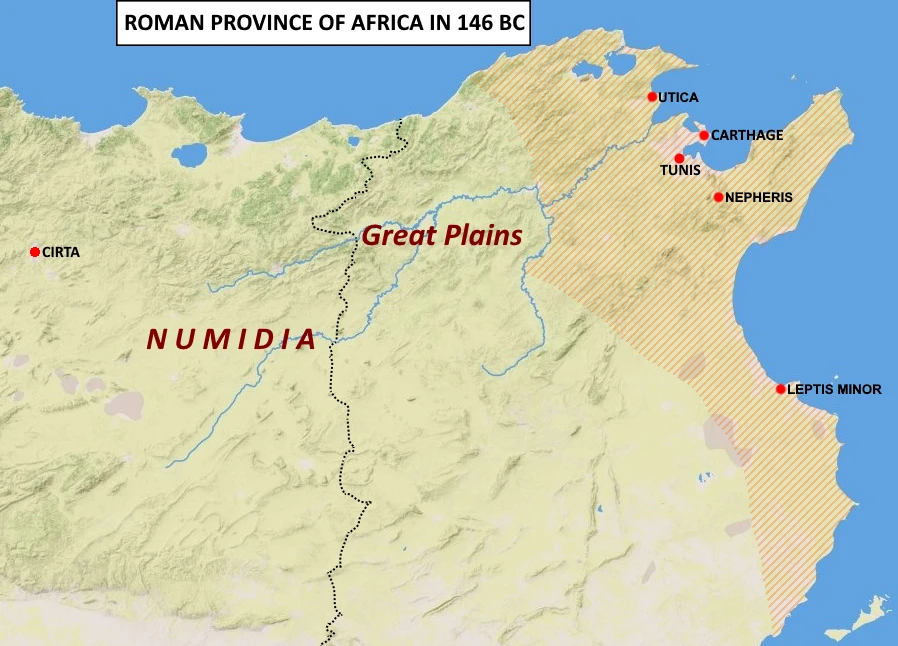 The province of Africa as it probably stood in 146 BC, after W. V. HarrisWikimedia Commons, T8612, CC BY-SA 4.0 (Roman Province of Africa in 146 BC.png)
The province becomes one of Rome’s main sources of grain. In 122 BC Gaius Gracchus founds a colony, Junonia, on the site of Carthage, and the Senate soon abolishes it. Julius Caesar plans a Roman city there, and Augustus founds it in 29 BC. Roman Carthage becomes the capital of the province and one of the main cities of Roman Africa.
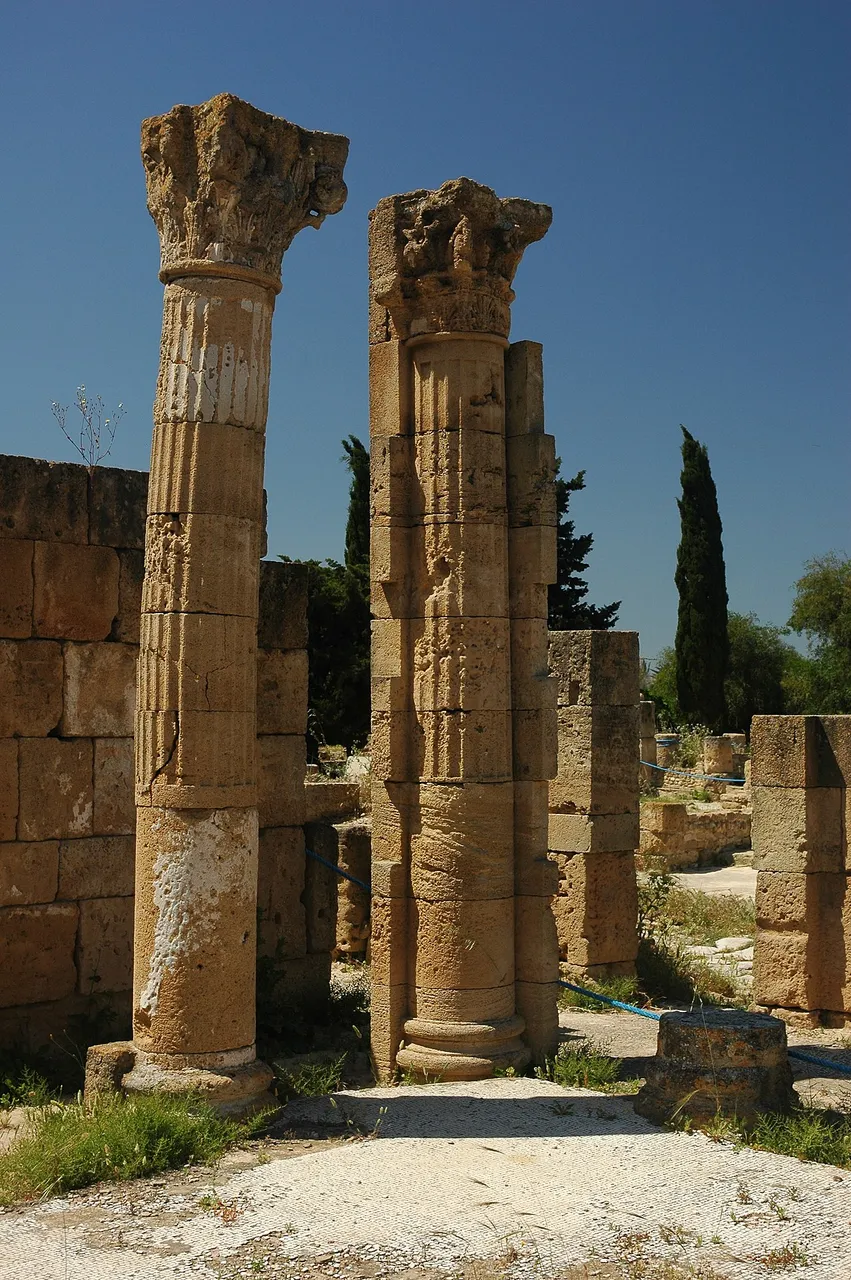 Columns of a Roman house at Utica, the seat of the governors of AfricaWikimedia Commons, GIRAUD Patrick, CC BY 3.0 (TUNISIE UTIQUE 03.JPG)
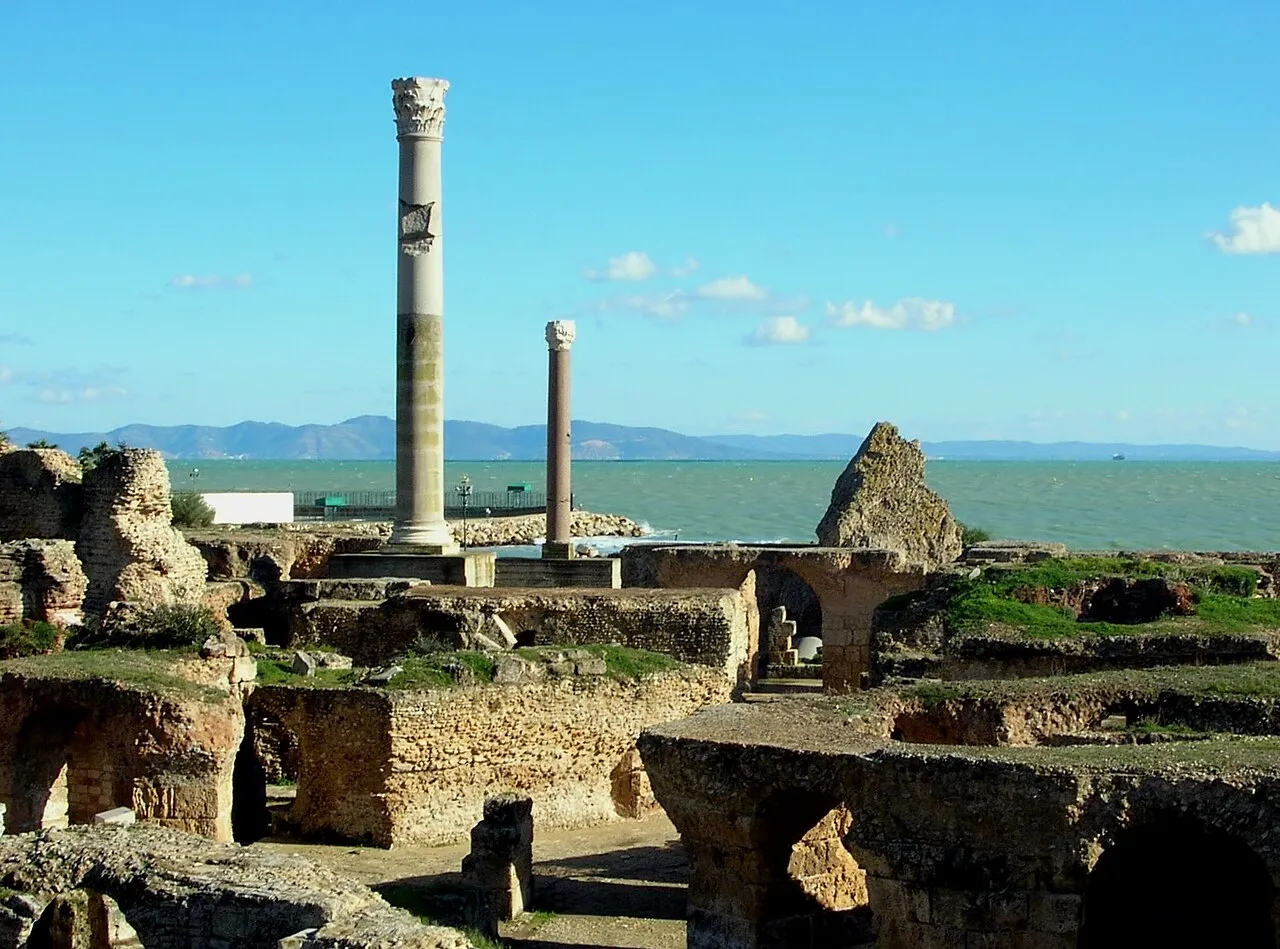 The Antonine Baths of Roman Carthage, built in the 2nd century ADWikimedia Commons, Bernard Gagnon, CC BY-SA 3.0 (Antonine Baths.jpg)
Sources
- Richard Miles, Carthage Must Be Destroyed (2010).
- M’hamed-Hassine Fantar, "Death and Transfiguration: Punic Culture after 146", in A Companion to the Punic Wars (2011).
Prev: Six days to the Byrsa