241 BC
The Treaty of Lutatius
The remains of Hanno’s fleet return to Carthage, where Hanno is crucified. A new fleet would take another nine months to fit out, and the cities in Sicily would run out of supplies first, so the Carthaginian Senate orders Hamilcar to make peace. He leaves the talks to Gisco, the commander of Lilybaeum.
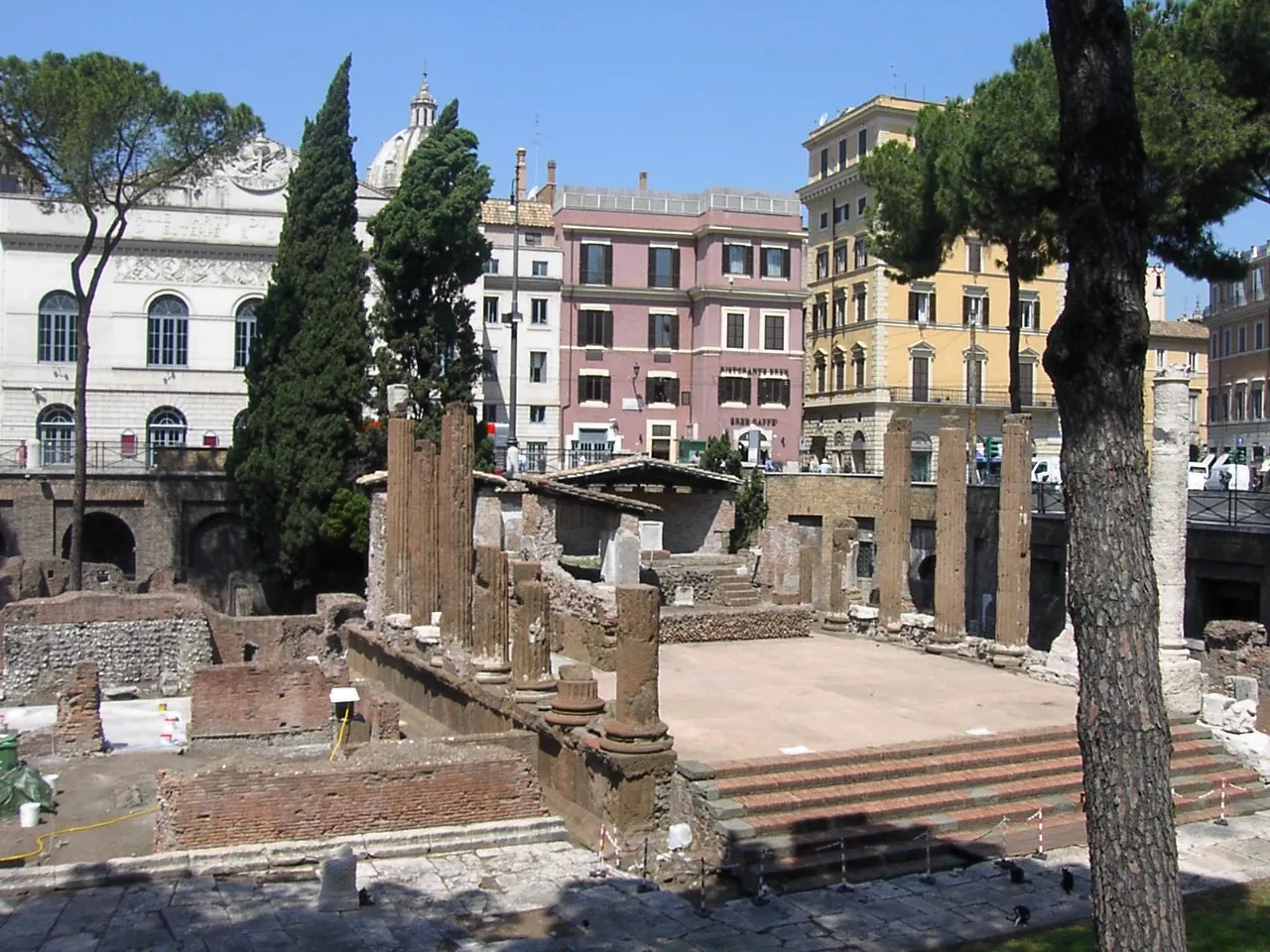 The temples of the Largo di Torre Argentina in Rome, where Catulus built a temple to Juturna after his victoryWikimedia Commons, Adam Carr, Public domain (PICT0510 - Largo di Torre Argentina.jpg)
Gisco and Catulus agree that Carthage will give up what it still holds of Sicily, release its Roman prisoners and pay 2,200 talents of silver over 20 years. The Roman assembly rejects the draft, and the final Treaty of Lutatius adds the islands near Sicily and raises the sum to 3,200 talents over ten years. Catulus and Falto each celebrate a triumph, and Catulus builds a temple to Juturna in the Campus Martius.
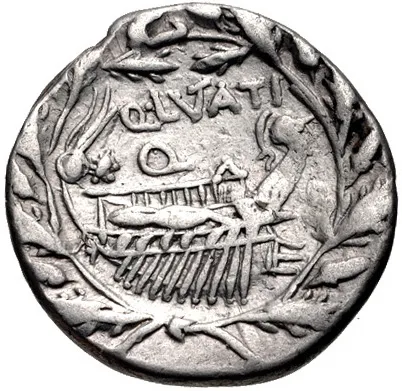 A denarius of Quintus Lutatius Cerco, 109 to 108 BC, with a warship in an oak wreath, recalling his family’s naval victoryWikimedia Commons, Classical Numismatic Group, Public domain (Q. Lutatius Cerco, denarius, 109-108 BC, RRC 305-1 (cropped).jpg)
After 23 years of war Rome is the leading military power in the western Mediterranean. Sicily becomes its first province, and Syracuse remains independent as an ally of Rome. The Carthaginian army of Sicily, about 20,000 men, is shipped back to Africa from Lilybaeum, still owed several years’ pay.
Sources
- Polybius, Histories, books 1, 62 to 63, and 3, 27.
- John Lazenby, The First Punic War (1996).
- Adrian Goldsworthy, The Fall of Carthage (2006).
Prev: Battle off the AegatesNext: The Mercenary War