1331 – 1388
Bursa, İznik and Edirne
Bursa grows into the Ottoman capital. In 1339–1340 Orhan founds a mosque there as part of a complex with an imaret, a kitchen that feeds the poor, a medrese, a school, a bath and the Emir Han, a caravanserai in the bazaar whose rents pay for the rest. Like other early Ottoman mosques it also lodges dervishes. Ibn Battuta describes Bursa as a great city with fine bazaars and wide streets, surrounded by gardens and springs.
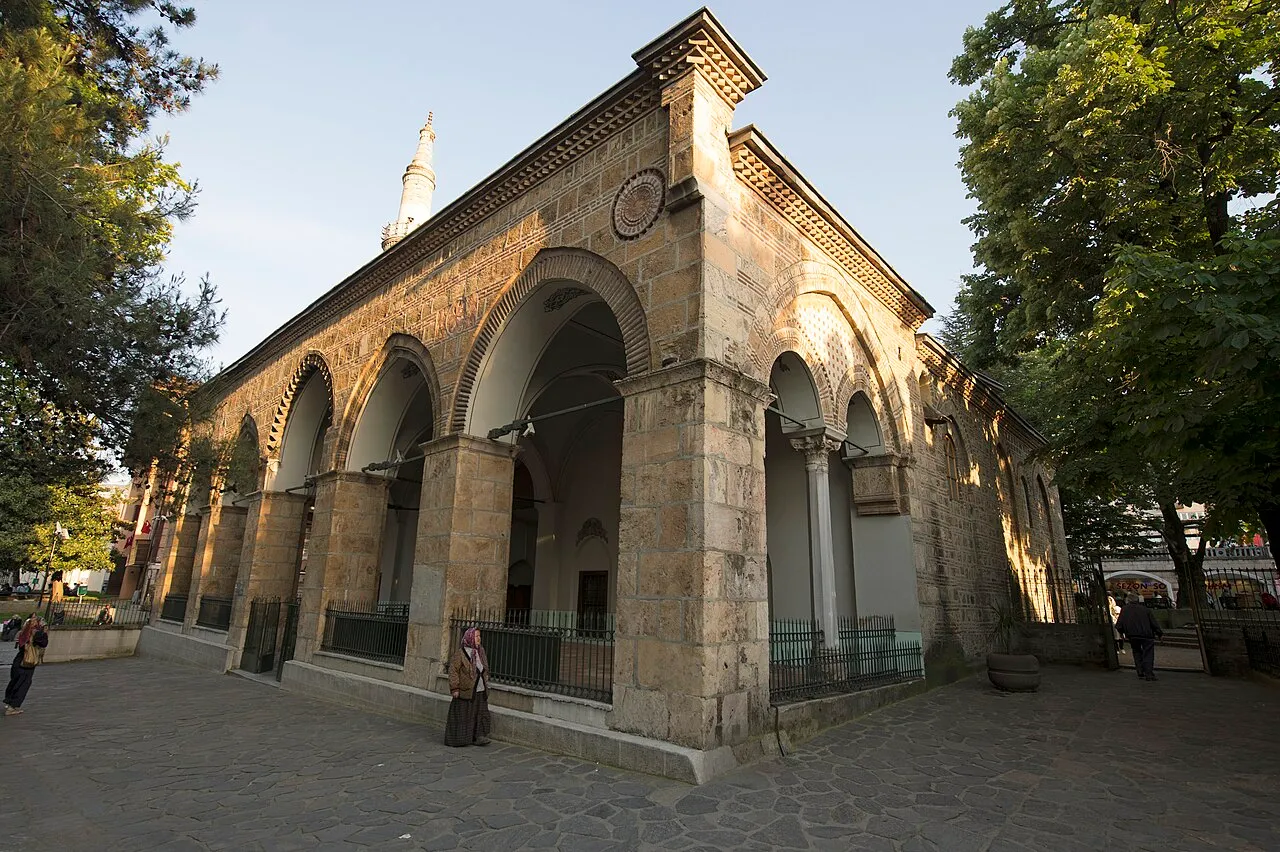 The Orhan Mosque in Bursa, founded in 1339–1340Wikimedia Commons, Dosseman, CC BY-SA 4.0 (Bursa Gazi Orhan Mosque Exterior 7212.jpg)
In İznik Orhan founds the first Ottoman medrese in 1331, soon after the city surrenders. The Hacı Özbek Mosque of 1333, a square hall under a single dome, is the oldest dated Ottoman mosque, and its walls of brick and cut stone follow Byzantine methods of building. In 1388 Murad builds an imaret near the Lefke Gate in memory of his mother Nilüfer Hatun.
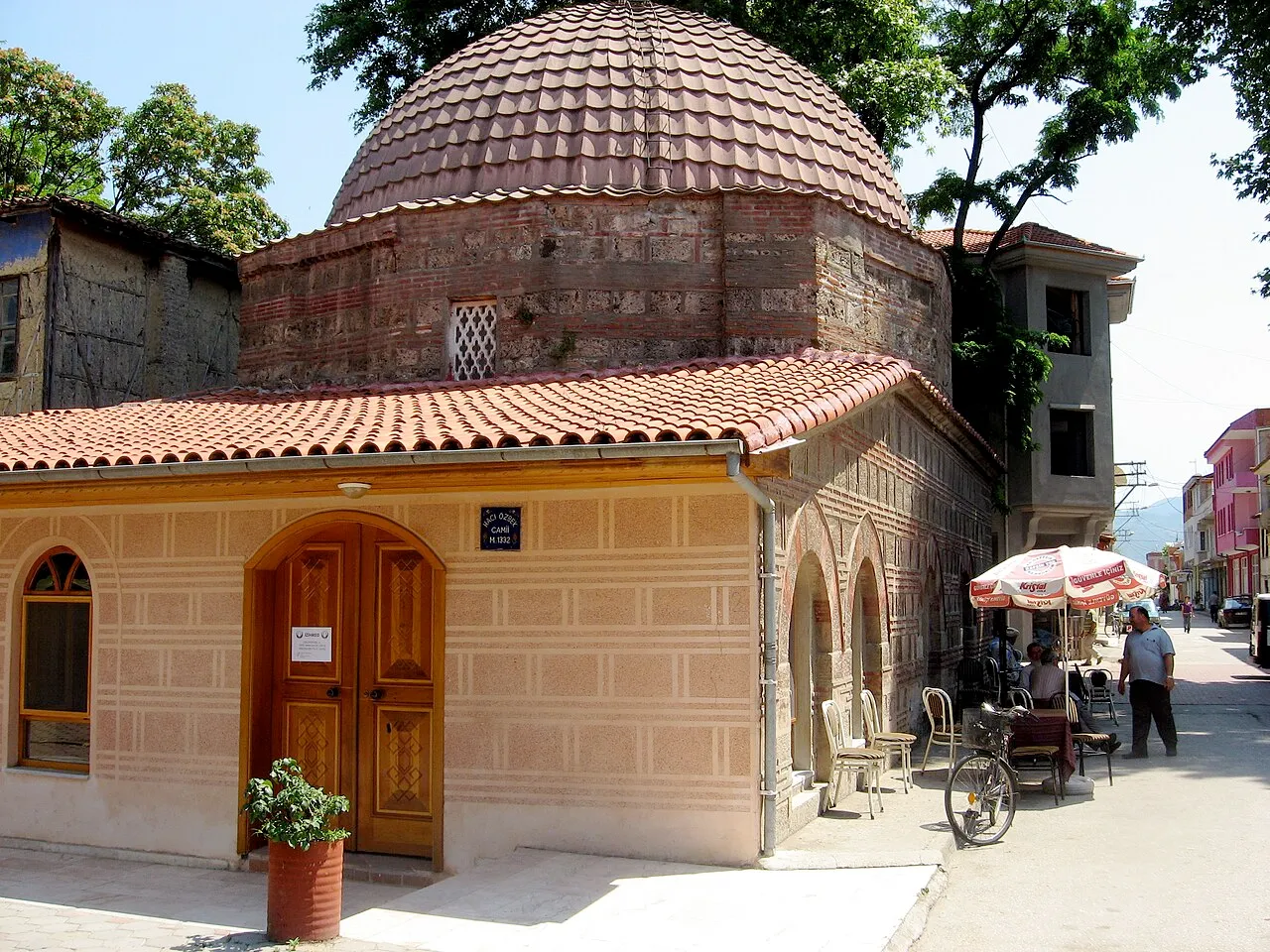 The Hacı Özbek Mosque in İznik, built in 1333, the oldest dated Ottoman mosqueWikimedia Commons, Paul, CC BY-SA 2.0 (IMG Hacı Özbek Mosque.jpg)
Between 1365 and 1385 Murad builds his own complex at Çekirge, west of Bursa, with a mosque, a medrese, a dervish lodge, an imaret and a bath. After the fall of Adrianople his court moves between Bursa, Didymoteicho and Edirne, where he builds palaces and mosques. Edirne becomes the main Ottoman base in the Balkans.
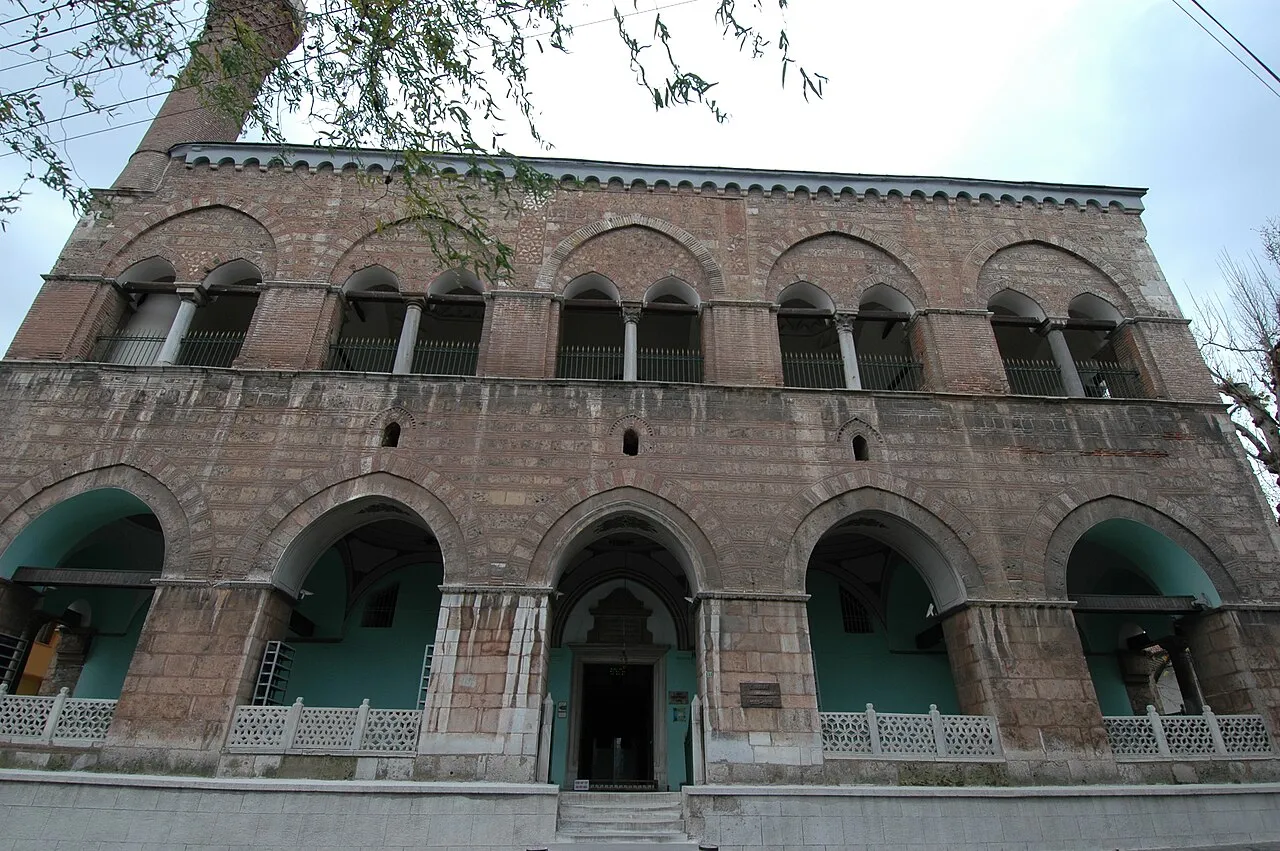 The mosque of Murad I at Çekirge in Bursa, with the medrese on its upper floorWikimedia Commons, Dosseman, CC BY-SA 4.0 (Hudavendigar Mosque 6044.jpg)
Sources
- Aptullah Kuran, The Mosque in Early Ottoman Architecture (1968).
- Godfrey Goodwin, A History of Ottoman Architecture (1971).
- Ibn Battuta, The Travels of Ibn Battuta, A.D. 1325–1354, translated by H. A. R. Gibb, vol. 2 (1962).
- Halil İnalcık, “Bursa”, in TDV İslâm Ansiklopedisi, vol. 6 (1992).
Prev: Yaya, müsellem, akıncı and the janissariesNext: Christians under the beys