November 1382 – 9 April 1387
Serres and Thessalonica, 1383–1387
In 1381 John V names Andronikos IV his heir again, passing over his second son Manuel. In November 1382 Manuel sets himself up as emperor in Thessalonica and acts against the Ottomans, extending his rule into Thessaly and Epirus, at least in name. Murad sends his grand vizier, Çandarlı Kara Halil Hayreddin Pasha. The Ottomans take Serres on 19 September 1383 and enslave its people, and in October they reach the walls of Thessalonica.
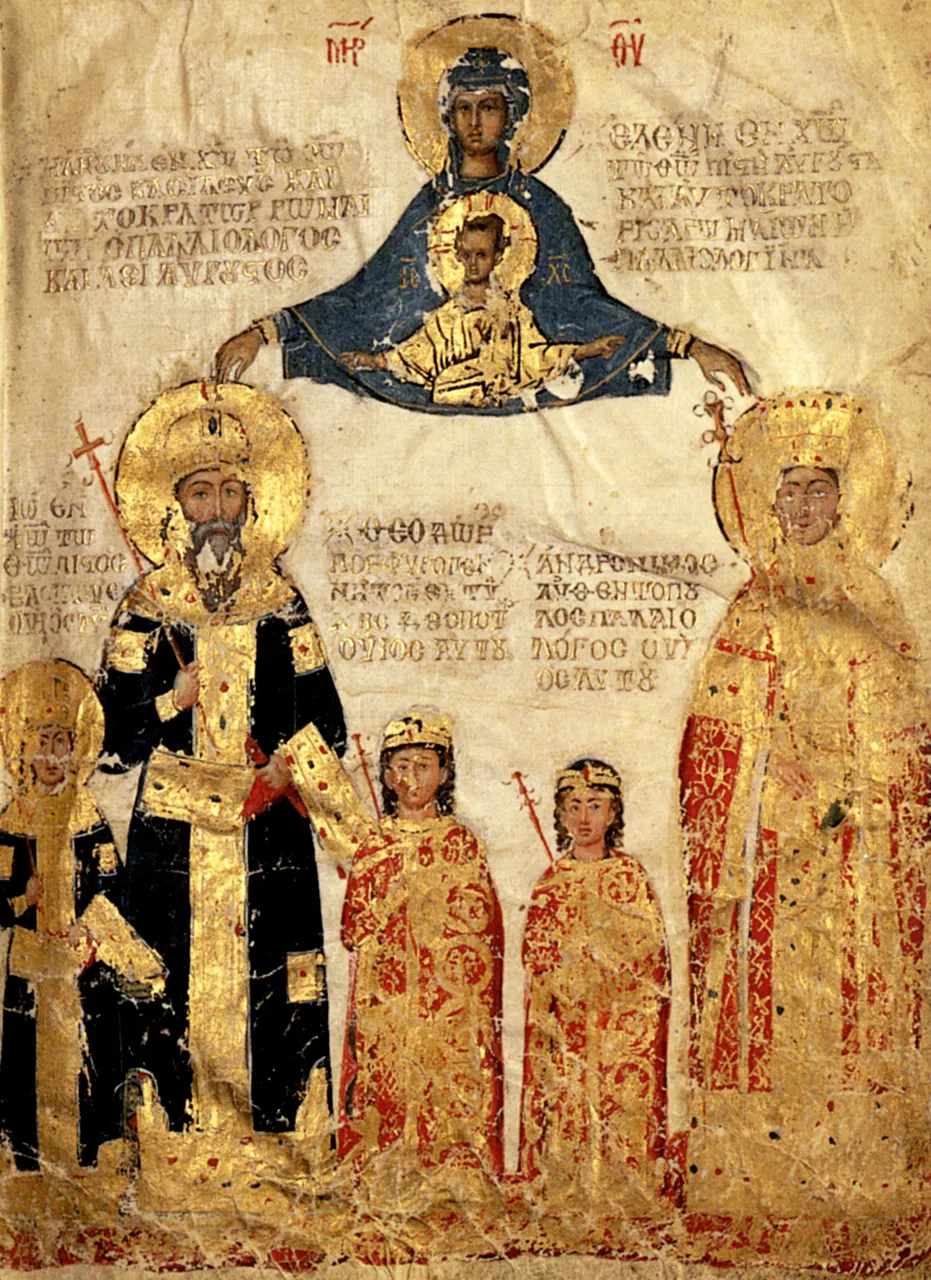 Manuel II Palaiologos with his wife Helena and three of their sons, in a manuscript of about 1404, LouvreWikimedia Commons, unknown illuminator, Public domain (Manuel II Helena sons.JPG)
Hayreddin demands the city’s surrender. Manuel calls the people to the main square and urges them to resist, but many would rather surrender than see the city plundered. The Ottomans have no fleet, and they change from siege to blockade. No help reaches the city by sea. Hayreddin dies at Serres on 22 January 1387. Afraid for their lives and their trade, the townspeople force Manuel to leave on 6 April 1387, and three days later they open the gates.
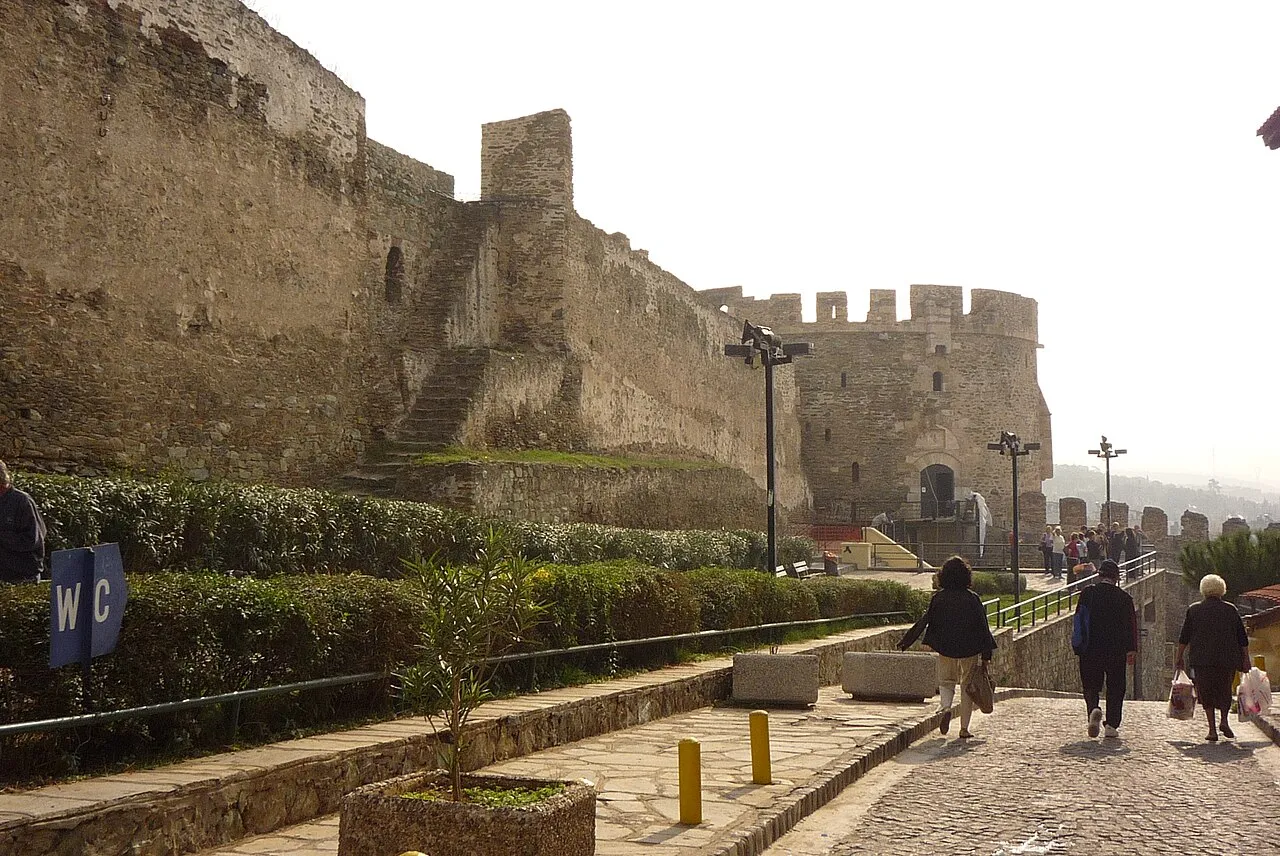 The Byzantine walls of ThessalonikiWikimedia Commons, Colin W, CC BY-SA 3.0 (The old Byzantine Walls, Thessaloniki - panoramio - Colin W.jpg)
The city is spared. It keeps its privileges in return for a tax and takes a small Ottoman garrison. Evrenos Bey makes Serres his base for raids deeper into Macedonia. Manuel makes his peace with the sultan, and John V sends him to live on Lemnos.
Sources
- George T. Dennis, The Reign of Manuel II Palaeologus in Thessalonica, 1382–1387 (1960).
- Donald M. Nicol, The Last Centuries of Byzantium, 1261–1453 (2nd ed., 1993).
- Colin Imber, The Ottoman Empire, 1300–1481 (1990).
Prev: Sofia and the Vardar, 1382–1385Next: Savra, 1385