c. 1280
Ertuğrul and Söğüt
By Ottoman tradition, Ertuğrul leads a group of the Kayı, a tribe of the Oghuz Turks, into Anatolia, and the Seljuk sultan grants him the frontier district of Söğüt. His people winter at Söğüt and drive their flocks to summer pastures on the mountain of Domaniç. Osman’s coins call him son of Ertuğrul, which confirms the father’s name, while the Kayı descent first appears in chronicles of the 15th century. Ertuğrul dies at Söğüt around 1280, and Osman succeeds him as bey.
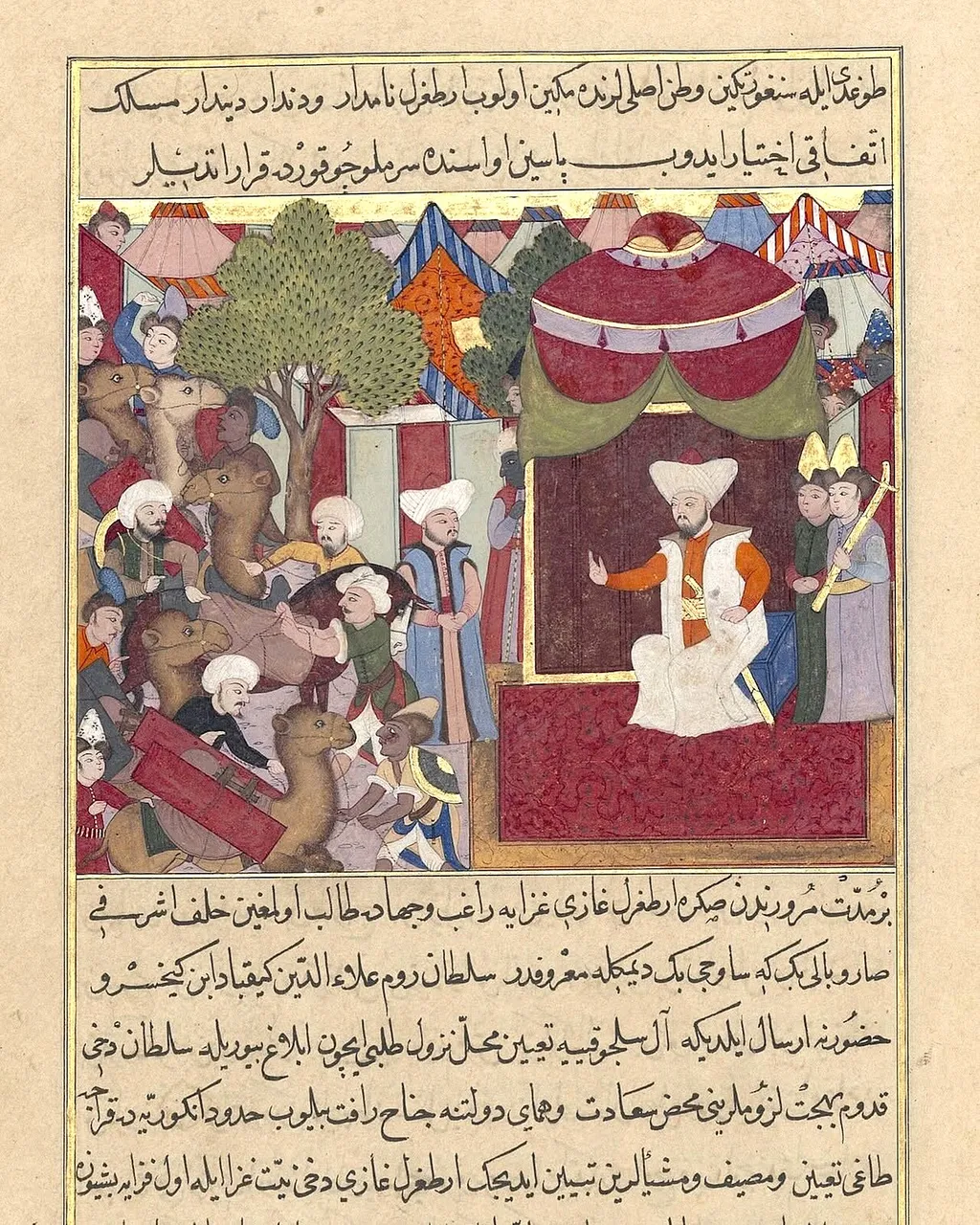 Ertuğrul’s son Savcı Bey leaves his father’s camp for the court of the Seljuk sultan, in the Tâcü’t-tevârîh, Istanbul, 1616Wikimedia Commons, unknown Ottoman painter, Public domain (Ertugrul Gazi sends his son Savci Bey to the Sultan Alaeddin Keykubad with the request to be allowed to populate a new area.. Miniature, Turkish, 1616. Tadj al-Tawarikh (The Crown of Chronicles).jpg)
Osman marries Rabia Bala, daughter of Sheikh Edebali, a leader of the dervishes on the frontier. Aşıkpaşazade, writing at the end of the 15th century, tells that Osman dreams in the sheikh’s house of a moon that rises from the sheikh’s breast and sinks into his own, and of a tree that grows from his navel and shades the world. Edebali reads the dream as a promise of rule to Osman’s descendants. Orhan’s mother is Osman’s other wife, Mal Hatun, daughter of Ömer Bey, as an endowment deed of Orhan from 1324 records.
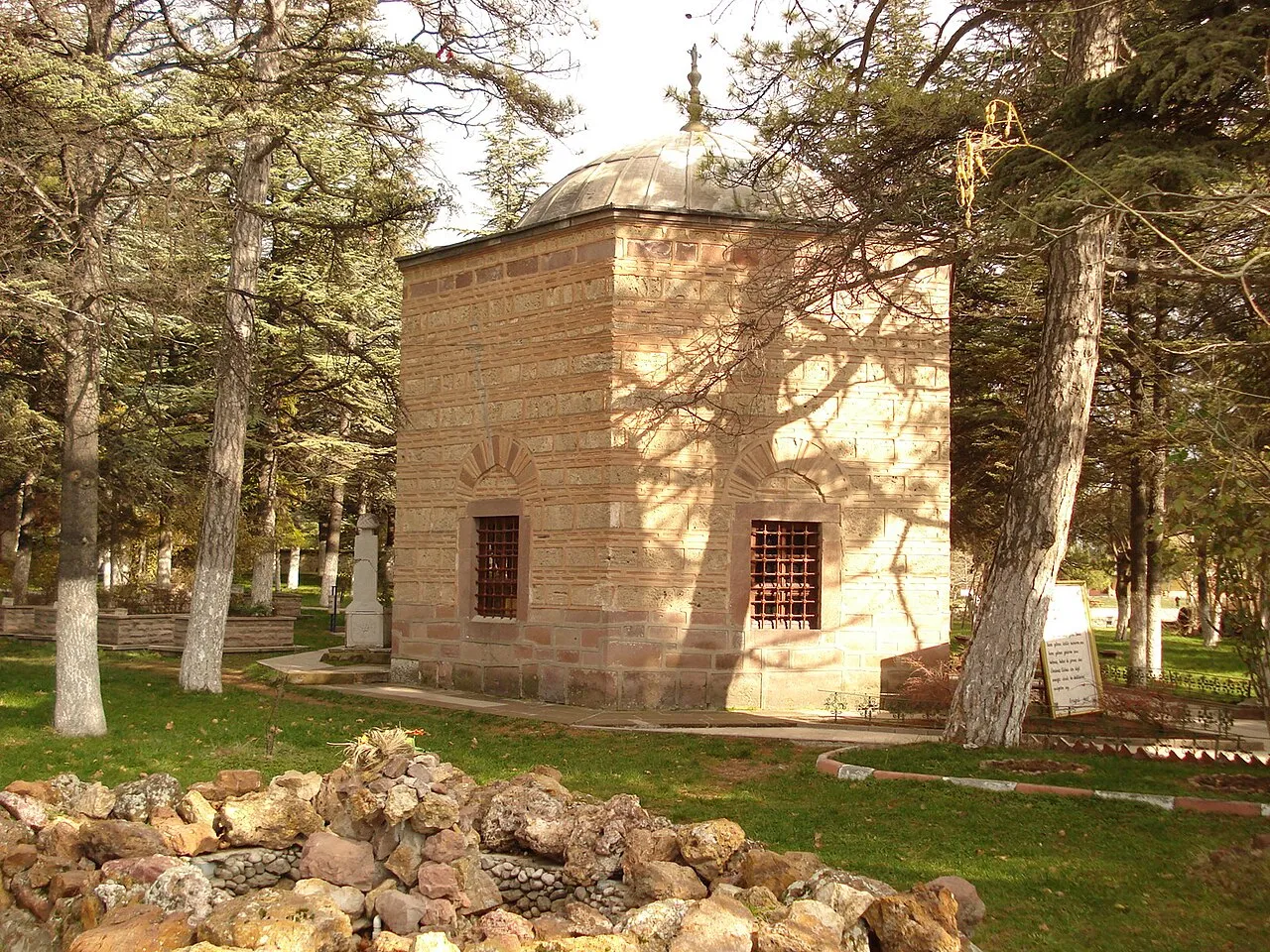 The tomb of Ertuğrul Gazi at SöğütWikimedia Commons, Maderibeyza, CC BY-SA 3.0 (Ertuğrul Gazi Türbesi.JPG)
The neighbouring forts belong to Byzantine lords, whom the Turks call tekfur: Bilecik, İnegöl, Yarhisar and Karacahisar. By tradition Osman’s people leave their goods in Bilecik when they go up to the summer pastures, and give its tekfur cheese, butter and carpets in return. Köse Mihal, the Greek lord of Harmankaya, is Osman’s friend and ally.
Sources
- Aşıkpaşazade, Tevârîh-i Âl-i Osmân (late 15th century).
- Cemal Kafadar, Between Two Worlds: The Construction of the Ottoman State (1995).
- Heath W. Lowry, The Nature of the Early Ottoman State (2003).
Prev: Anatolia around 1280Next: Osman’s first raids, 1284–1288