1324 – 1387
Bey, vizier and kadı
The bey rules through his household and his kin. Orhan’s endowment deed of 1324 for Mekece, written in Persian in the style of the Seljuk chancery, is the oldest surviving Ottoman document. The oldest dated Ottoman silver coin, an akçe of Orhan, is struck at Bursa in the Hijri year 727, 1326–1327. An inscription of 1337 in the citadel of Bursa calls Orhan sultan and gazi, son of the sultan of the gazis, and Ibn Battuta writes that he holds nearly a hundred fortresses and visits them in turn.
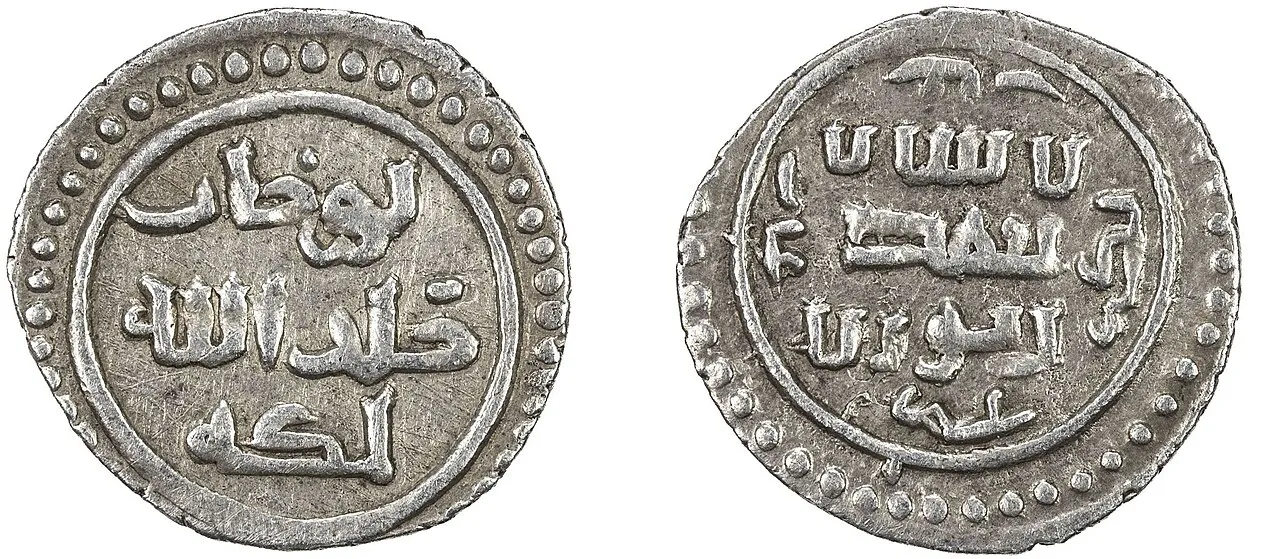 A silver akçe of OrhanWikimedia Commons, unknown author, Public domain (Orhan Gazi Akçe.jpg)
By Ottoman tradition Orhan’s brother Alaeddin advises him on the coinage, the dress of officials and the army. The first viziers come from the learned class. Çandarlı Kara Halil, a scholar from near Sivrihisar, serves as kadı of Bilecik, İznik and Bursa. Murad makes him the first kazasker, the judge of the army, and then vizier, in 1364 or 1372, and he holds the office until his death in 1387.
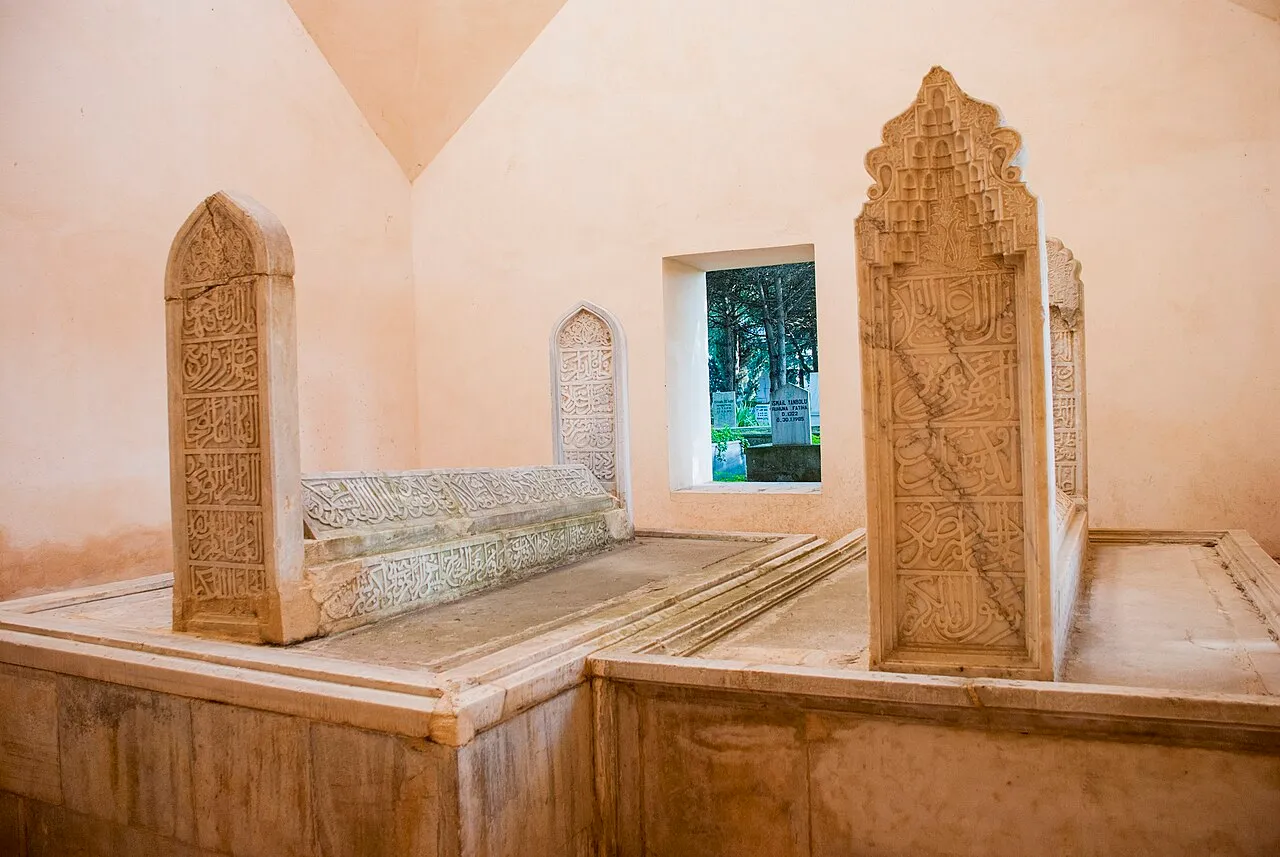 The graves of Çandarlı Kara Halil and his son Ali Pasha in İznikWikimedia Commons, Acar54, CC BY-SA 4.0 (Çandarlılar2.JPG)
Each town has a kadı, a judge of Islamic law who also oversees the market, and by tradition the first is Dursun Fakih, whom Osman appoints at Karacahisar. Horsemen receive the revenue of villages in return for service in war, a grant later called a timar. The grants take shape in the 14th century and are recorded in registers from the 15th, when some holders are Christians from old Byzantine families. The early Ottomans tax their subjects lightly.
Sources
- Halil İnalcık, The Ottoman Empire: The Classical Age, 1300–1600 (1973).
- Şevket Pamuk, A Monetary History of the Ottoman Empire (2000).
- İsmail Hakkı Uzunçarşılı, Çandarlı Vezir Ailesi (1974).
- Heath W. Lowry, The Nature of the Early Ottoman State (2003).
Prev: Gazis, dervishes and akhisNext: Yaya, müsellem, akıncı and the janissaries