1389
The march to Kosovo, 1389
After the defeats at Pločnik and Bileća, Murad demands that Prince Lazar accept Ottoman overlordship and pay tribute. Lazar refuses. He has made peace with King Sigismund of Hungary, and he wins the support of his son-in-law Vuk Branković, who holds Kosovo, and of King Tvrtko I of Bosnia. Tvrtko calls his army back from Dalmatia and sends it under Vlatko Vuković.
Murad brings troops from Anatolia, among them auxiliaries from the beylik of Candar at Kastamonu, and gathers his army at Philippopolis. He marches to Ihtiman and then west by Velbužd and Kratovo, through the lands of his vassal Konstantin Dragaš. This road is longer than the one by Sofia and the Nišava valley to Niš, but it leads to Kosovo, a crossroads from which he can strike the lands of either Lazar or Vuk Branković. After a halt at Kratovo the army moves on by Kumanovo, Preševo and Gjilan and reaches Priština on 14 June 1389.
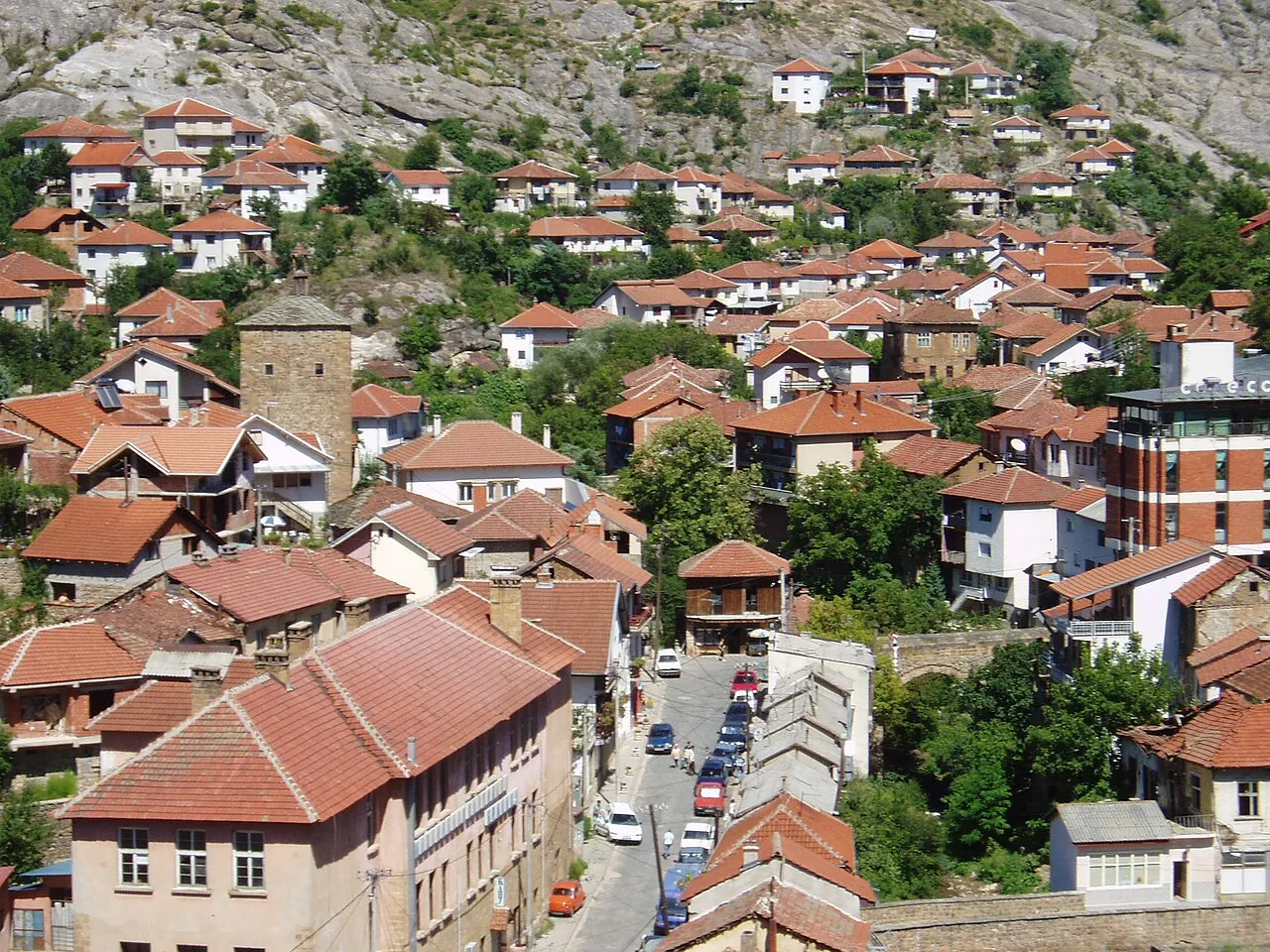 Kratovo, where Murad’s army halted on the march to KosovoWikimedia Commons, Dars, CC BY-SA 3.0 (Kratovo-panorama.jpg)
Lazar gathers his troops near Niš. When he learns that Murad has reached Velbužd, he marches by Prokuplje to Kosovo field, where he can block every road the Ottomans might take. Vuk Branković’s troops and the Bosnian contingent join him there.
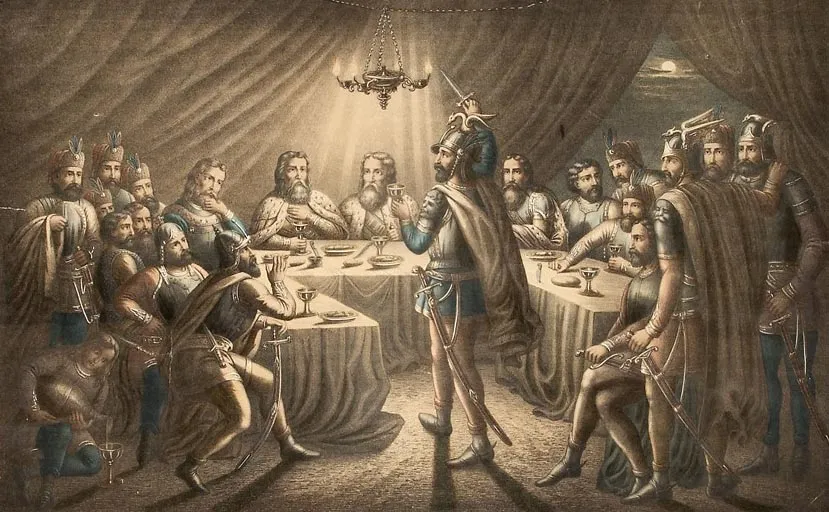 The Prince’s Supper, Lazar’s feast with his lords before the battle in Serbian tradition, lithograph by Adam Stefanović, 1871Wikimedia Commons, Adam Stefanović, Public domain (Adam Stefanović, Kneževa večera, 1871.jpg)
Sources
- John V. A. Fine, The Late Medieval Balkans (1987).
- Stephen W. Reinert, “From Niš to Kosovo Polje: Reflections on Murād I’s Final Years”, in The Ottoman Emirate (1300–1389) (1993).
- Noel Malcolm, Kosovo: A Short History (1998).
- Rade Mihaljčić, The Battle of Kosovo in History and in Popular Tradition (1989).
Prev: Ali Pasha in Bulgaria, 1388Next: The armies on Kosovo field