1284–1288
Osman’s first raids, 1284–1288
According to the chronicles, Osman’s raids turn into open fighting with his Byzantine neighbours in the 1280s, at dates that differ by a year or two between accounts. In 1284 the tekfur of İnegöl, Aya Nikola, ambushes Osman and his horsemen at the pass of Mount Armenia, Ermeni Beli, north of the İnegöl plain. Bay Hoca, a son of Osman’s brother Savcı, is killed, and Osman’s men break out. In 1285 Osman takes the fort of Kulaca Hisar near İnegöl in a night attack with 300 men, and its Christian inhabitants accept his rule.
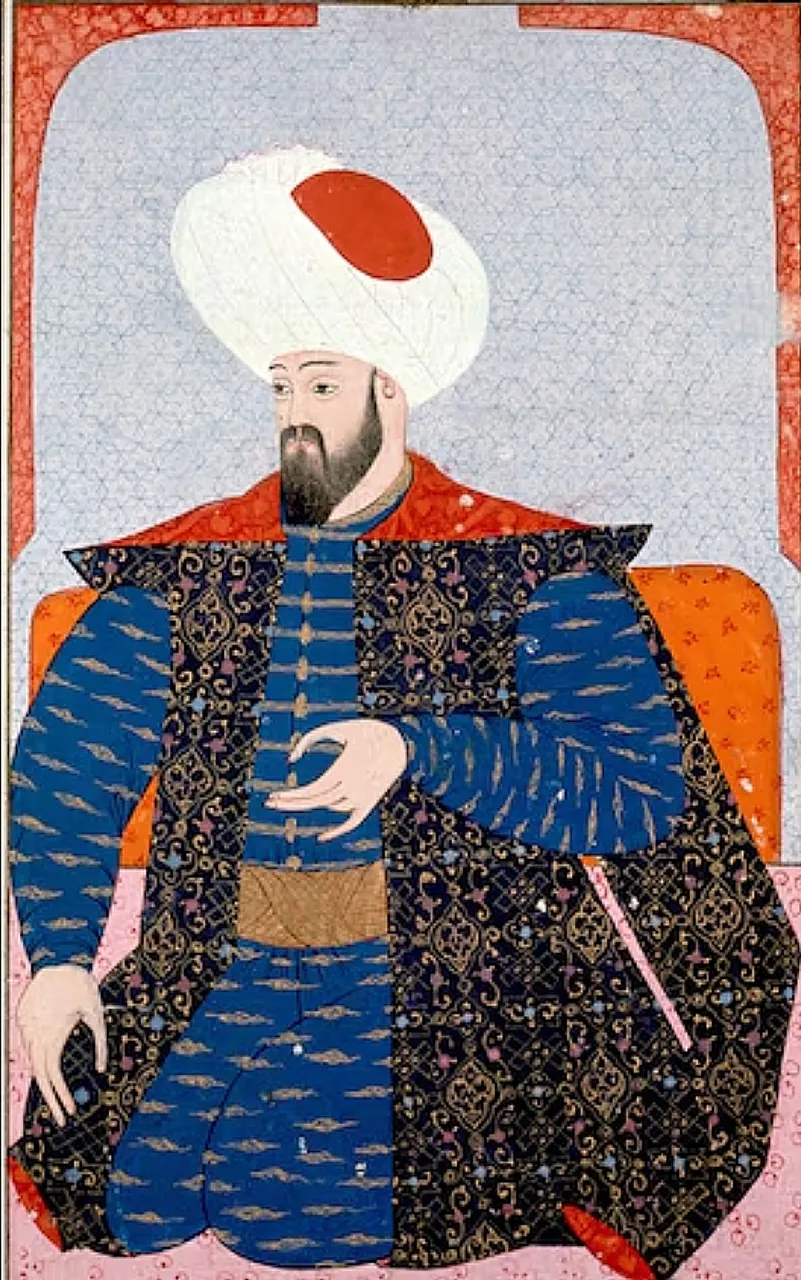 Osman I in an Ottoman miniature of 1579–1580, Topkapı Palace MuseumWikimedia Commons, unknown Ottoman painter, Public domain (I Osman.jpg)
In 1287, by tradition, the tekfurs of İnegöl and Karacahisar join forces under Kalanoz, brother of the tekfur of Karacahisar and called Pilatos in other accounts, and meet Osman at İkizce near Domaniç. Osman wins, and his brother Savcı and Kalanoz both fall. Osman then takes Karacahisar, near Eskişehir, in 1288 by the traditional date, while historians place the conquest between 1286 and 1291.
The chronicles say that Osman turns the church of Karacahisar into a mosque, appoints a kadı, and has Dursun Fakih read the Friday sermon in his name there. By tradition the Seljuk sultan sends him a banner, a drum and a horse-tail standard, and grants him Eskişehir and İnönü. These accounts were written down more than a century after the events.
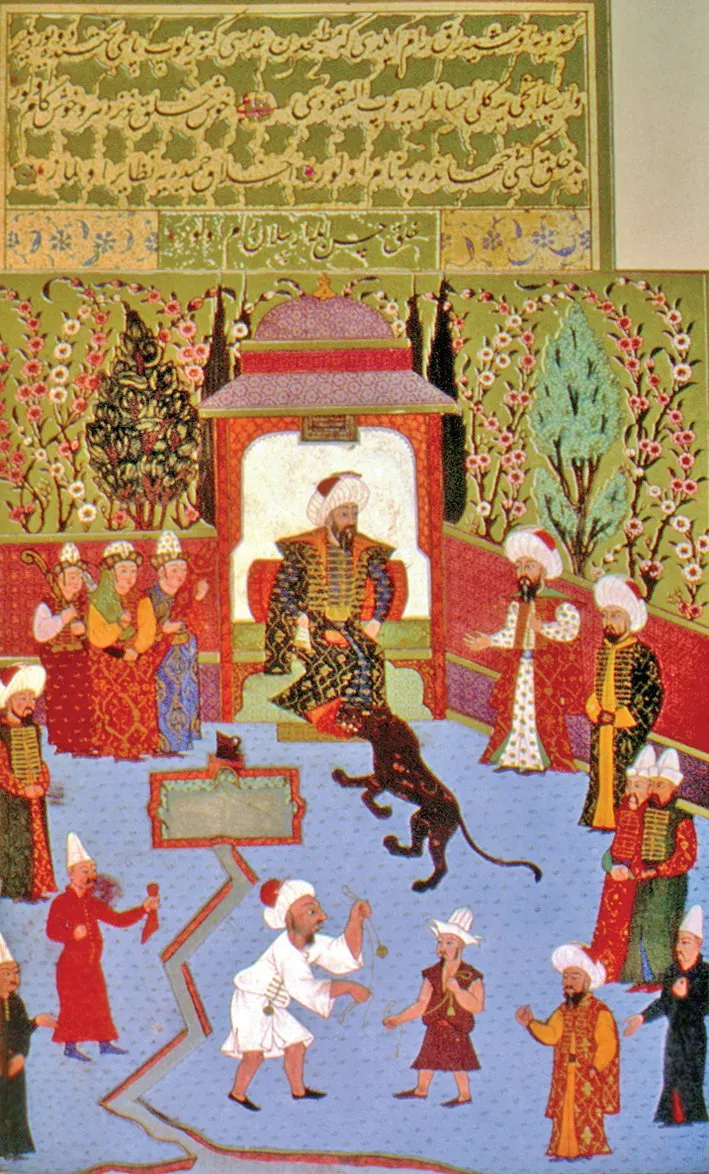 Osman I in the Hünernâme, the illustrated history of the dynasty painted under Nakkaş Osman in 1584Wikimedia Commons, Nakkaş Osman, CC BY-SA 4.0 (Osman I miniature by Nakkaş Osman.jpg)
Sources
- Aşıkpaşazade, Tevârîh-i Âl-i Osmân (late 15th century).
- Mehmed Neşri, Kitâb-ı Cihan-nümâ (late 15th century).
- Halil İnalcık, The Ottoman Empire: The Classical Age, 1300–1600 (1973).
Prev: Ertuğrul and SöğütNext: Bilecik, Yarhisar and İnegöl, 1299