April – 27 July 1302
Bapheus, 1302
By 1301 Osman’s men besiege Nicaea and raid the countryside of Prusa and Nicomedia, keeping the peasants from their harvest. Andronikos II hires Alans, horsemen who have fled the Mongols into the empire, for two campaigns in Asia. In April 1302 his son and co-emperor Michael IX marches to Magnesia on the Hermos. The Turks avoid battle, the local troops leave to defend their homes, the Alans go back to Thrace, and Michael withdraws to Pergamon and Adramyttion.
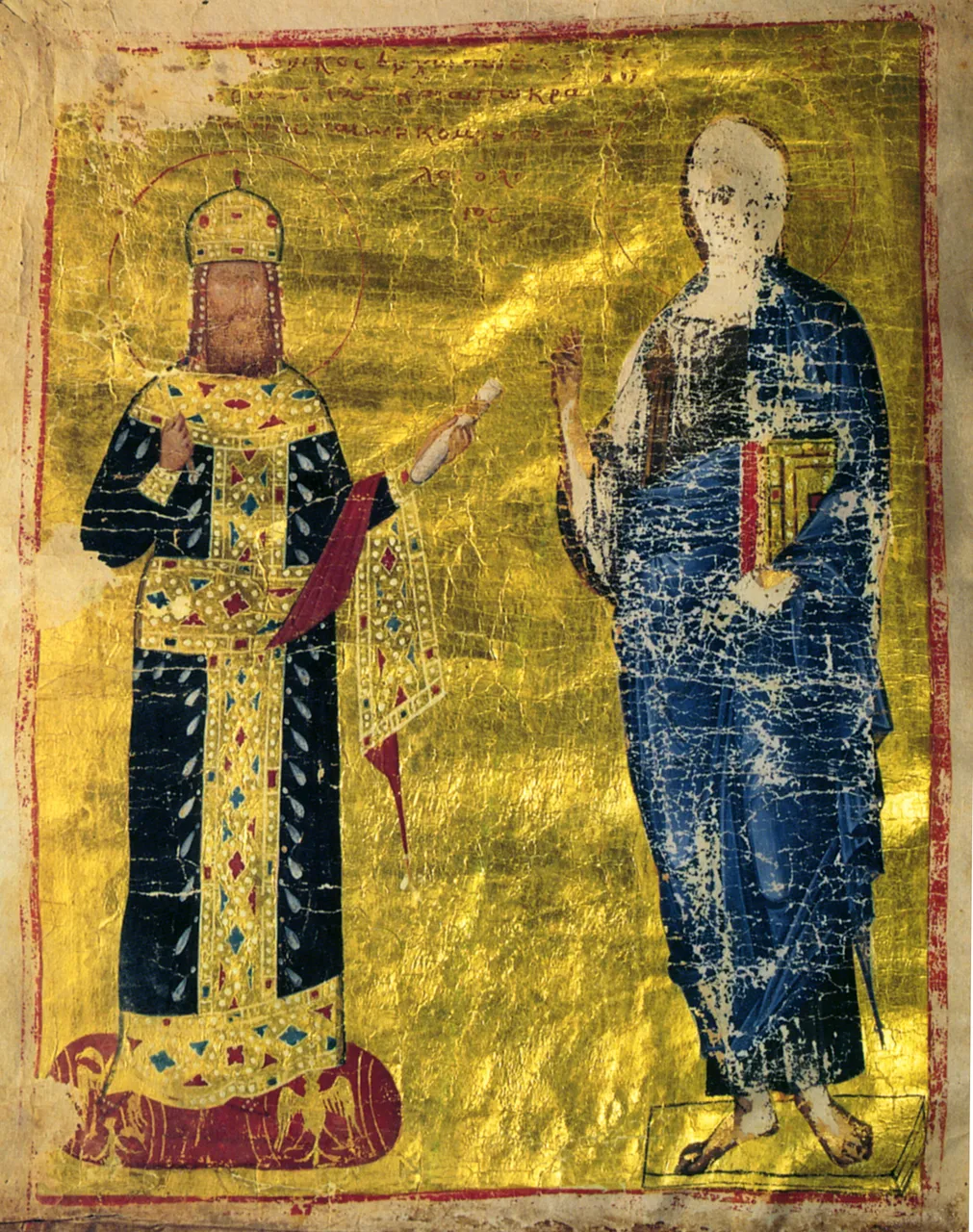 Andronikos II Palaiologos before Christ in a chrysobull for the metropolitan of Monemvasia, 1301Wikimedia Commons, unknown Byzantine artist, Public domain (Chrysobull of Andronikos II Palaiologos.jpg)
A second force under the megas hetaireiarches George Mouzalon, about 2,000 men of whom half are Alans, crosses the Bosporus to protect Nicomedia. On 27 July 1302, on the plain of Bapheus, it meets about 5,000 light horsemen under Osman, his own men and allies from Paphlagonia and the Maeander. The Alans hold back, the Turks break the Byzantine line, and Mouzalon withdraws into Nicomedia under cover of the Alans. After the battle the Byzantines keep only their walled towns in Bithynia, refugees cross to Constantinople and Thrace, and fighters from the interior of Anatolia join Osman.
George Pachymeres, a Byzantine historian of these years, places Bapheus near Nicomedia, while Ottoman tradition and Halil İnalcık place it at Koyunhisar, south-west of Nicaea. Some historians date the battle to 1299 from another reading of Pachymeres. Bapheus is the first event in Osman’s life that a contemporary writer records.
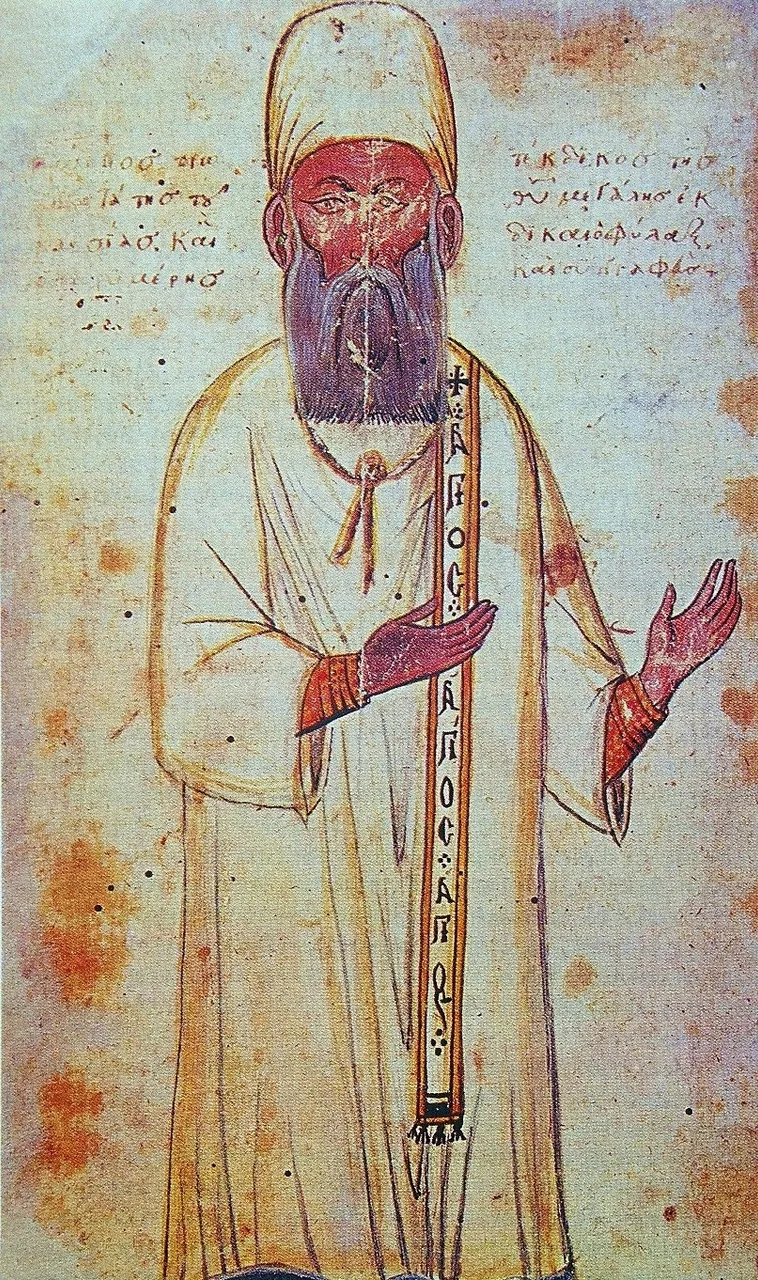 The Byzantine historian George Pachymeres in a manuscript of the 14th centuryWikimedia Commons, unknown illuminator, Public domain (Georgius Pachymeres.jpg)
Sources
- George Pachymeres, Relations historiques, ed. Albert Failler (1984–2000).
- Halil İnalcık, “Osman Ghazi’s Siege of Nicaea and the Battle of Bapheus”, in Elizabeth Zachariadou (ed.), The Ottoman Emirate (1300–1389) (1993).
- Angeliki E. Laiou, Constantinople and the Latins: The Foreign Policy of Andronicus II, 1282–1328 (1972).
Prev: The beyliks around 1300Next: Dimbos and the Sakarya, 1303–1308