1320s – 1380s
Yaya, müsellem, akıncı and the janissaries
Osman’s army is made of tribal horsemen who ride out for booty and go home after each campaign. By Ottoman tradition Orhan raises paid troops on the advice of his brother Alaeddin and of Kara Halil: foot soldiers called yaya and horsemen called müsellem. They are Turkish villagers who serve in turns, receive pay and hold their farms free of taxes.
The raiders, the akıncı, are light horsemen who strike beyond the border and live on booty. They follow the frontier lords, the uç beyleri, who hold marches on the border and pass them to their sons. Evrenos, who serves Süleyman Pasha and Murad, takes Keşan, Feres and Komotini (Gümülcine), and the descendants of Köse Mihal, the Mihaloğulları, lead raiders in the 15th and 16th centuries. Murad appoints the frontier lords himself and puts the troops in Europe under Lala Şahin as beylerbey of Rumelia.
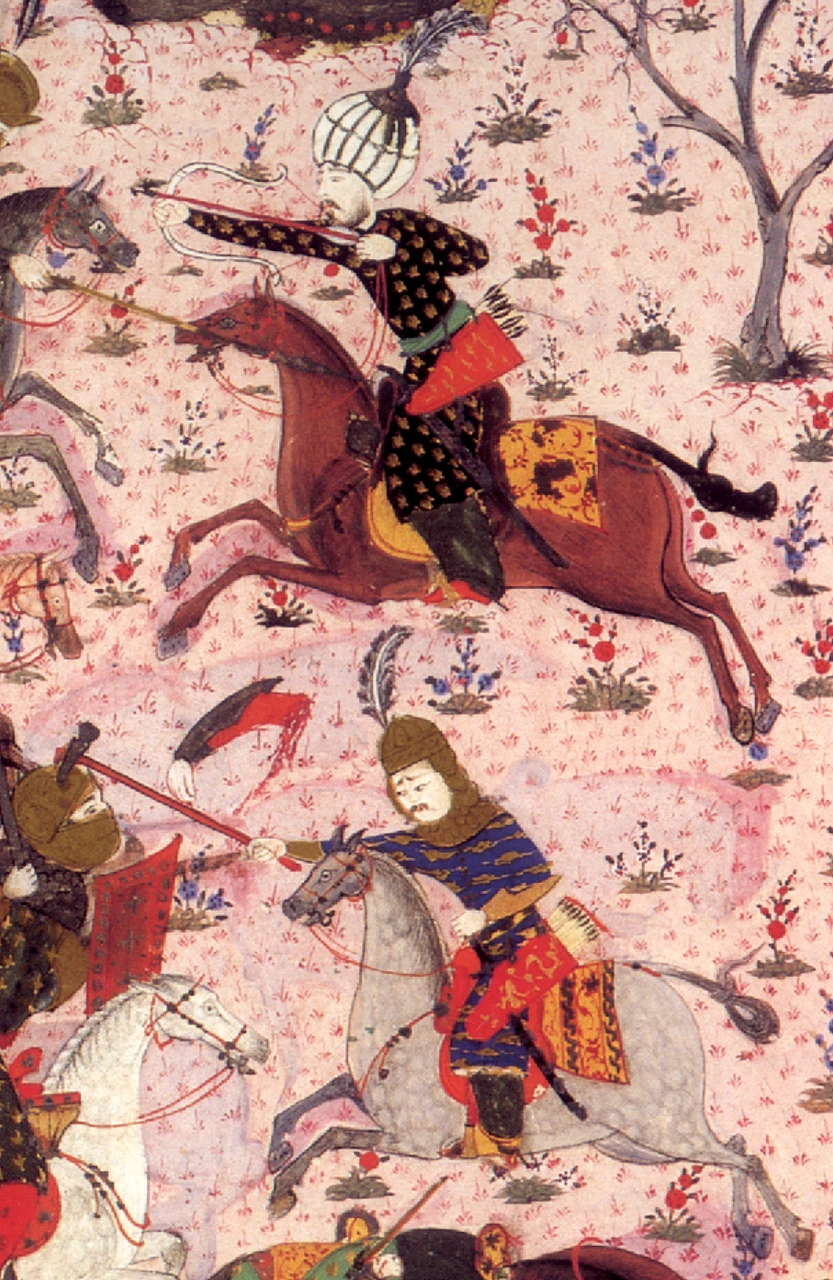 Two akıncı leaders in the Süleymanname, 1558Wikimedia Commons, unknown Ottoman painter, Public domain (Sueleymanname Akinci-Beys.png)
On the proposal of the scholar Kara Rüstem, backed by Kara Halil, Murad takes a fifth of all captives, the pençik, a rule that Ottoman tradition dates to 1363 and some historians to after 1376. By Aşıkpaşazade’s account the fifth is taken at Gallipoli, where the raiders bring their captives across to Anatolia. The young captives work for Turkish farmers and learn Turkish, then join a new infantry that serves the sultan alone, the yeniçeri or janissaries. The levy of boys from the sultan’s own Christian subjects, the devşirme, is first attested in the 1390s.
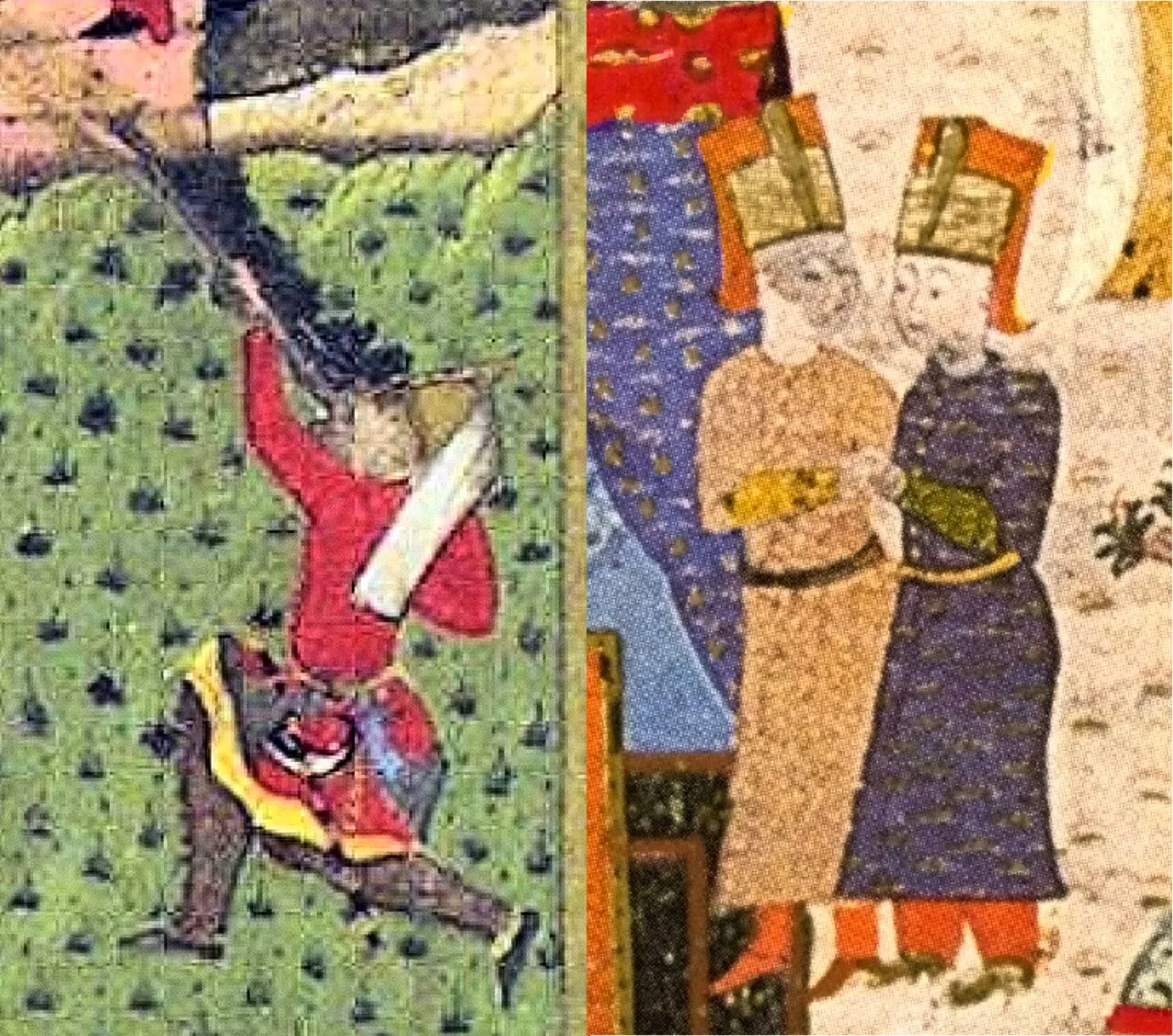 Janissaries in the Futûhât-ı Cemîle of Arifi, 1558, Topkapı Palace MuseumWikimedia Commons, unknown Ottoman painter, Public domain (Janissaries in 1558. Futūhāt-i jamīla of Arifi. Istanbul, Topkapi Palace Museum, H. 1592.jpg)
Sources
- Aşıkpaşazade, Tevârîh-i Âl-i Osmân (late 15th century).
- Halil İnalcık, The Ottoman Empire: The Classical Age, 1300–1600 (1973).
- Colin Imber, The Ottoman Empire, 1300–1481 (1990).
- Heath W. Lowry, The Shaping of the Ottoman Balkans, 1350–1550 (2008).
Prev: Bey, vizier and kadıNext: Bursa, İznik and Edirne