c. 1280
Anatolia around 1280
The Seljuk Sultanate of Rûm has been subject to the Mongols since its defeat at Köse Dağ in 1243, and to the Ilkhanate, the Mongol state in Iran, since 1256. Sultan Kaykhusraw III reigns in Konya, while the Ilkhan’s governors and the sultan’s regents hold the power. In 1277 the Mamluk sultan Baibars defeats the Mongols at Elbistan, and the Karamanids hold Konya for a short time. In 1284 the Ilkhan Ahmad Tekuder has Kaykhusraw executed and makes Mesud II sultan.
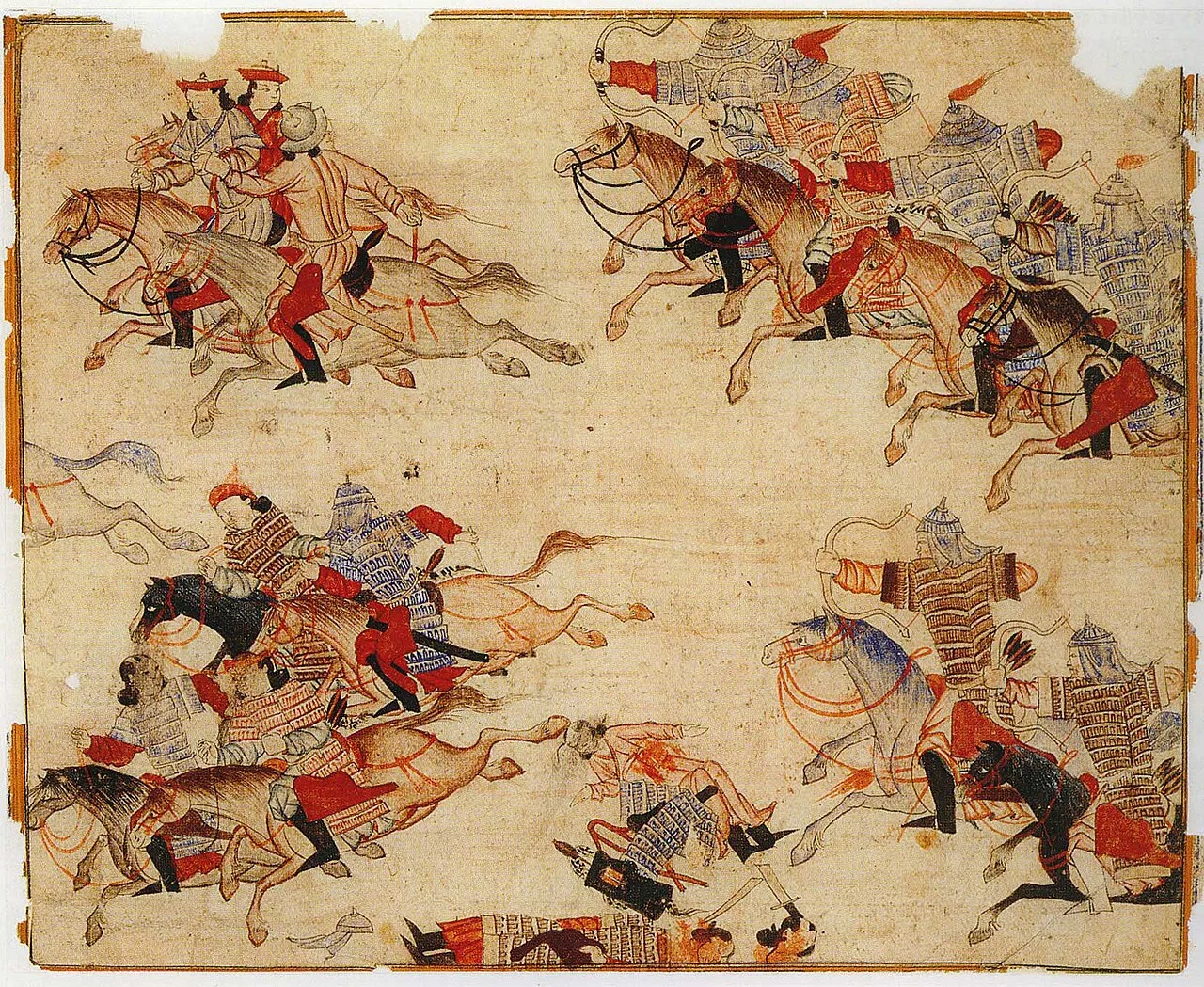 Mongol horsemen in pursuit, in Rashid al-Din’s Compendium of Chronicles, Tabriz, early 14th centuryWikimedia Commons, unknown painter, Public domain (DiezAlbumsArmedRiders I.jpg)
The marches (uç) on the western edge of the plateau face the Byzantine border. Turkmen nomads graze their herds there, and their beys raid Byzantine land and name the sultan in the Friday sermon. The strongest are the Germiyan at Kütahya, whom the Seljuks settled there to hold the other Turkmen in check. Ertuğrul’s people keep their pastures at Söğüt, on the march that faces Bithynia.
Michael VIII Palaiologos has ruled from Constantinople since his troops took the city back from the Latins in 1261. In Asia the empire holds Bithynia with Nicaea, the valleys of the Hermos and the Maeander, and the Aegean coast. In 1280 his son and co-emperor Andronikos rebuilds Tralles in the Maeander valley. Further east lie the Empire of Trebizond on the Black Sea, the Armenian kingdom of Cilicia with its capital at Sis, and the Mamluk sultanate in Syria and Egypt.
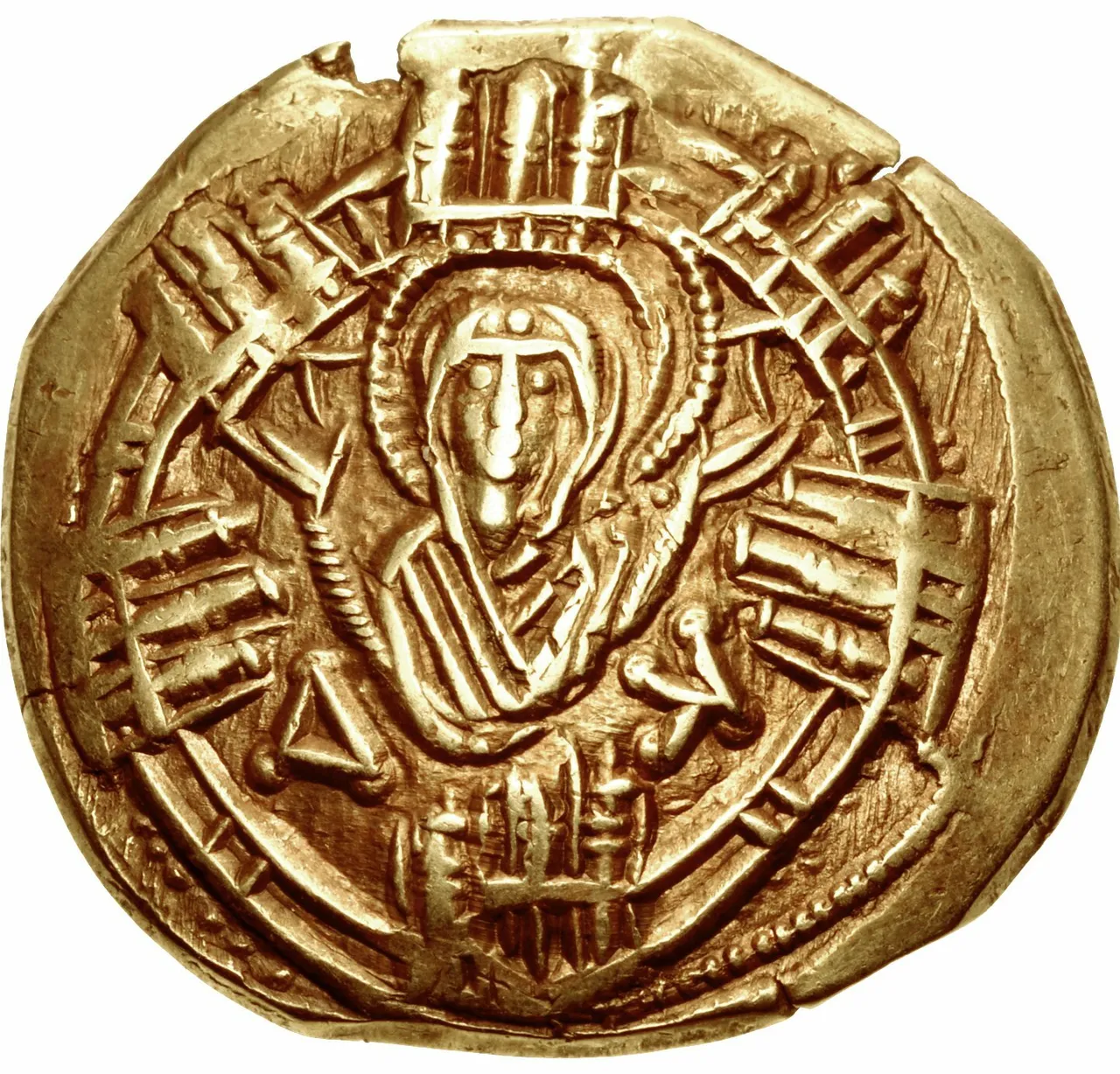 Gold hyperpyron of Michael VIII Palaiologos with the Virgin inside the walls of Constantinople, struck after 1261Wikimedia Commons, CNG, CC BY-SA 2.5 (Hyperpyron of Michael VIII Palaiologos (obverse).jpg)
Sources
- Claude Cahen, Pre-Ottoman Turkey (1968).
- Charles Melville, “Anatolia under the Mongols”, in The Cambridge History of Turkey, vol. 1 (2009).
- Donald M. Nicol, The Last Centuries of Byzantium, 1261–1453 (2nd ed., 1993).
Next: Ertuğrul and Söğüt